A reliable plumbing network is the backbone of almost every commercial building in the United States. While customers rarely notice when sinks drain smoothly or restrooms stay clean, they immediately notice when something goes wrong. A single backed-up floor drain in a restaurant kitchen or an out-of-order restroom in a retail store can bring daily business operations to a sudden halt.
When commercial plumbing systems fail, the fallout extends far beyond a simple repair bill:
- Daily operations stall: Kitchens cannot prep food, office floors lose restroom access, and manufacturing lines that rely on process water must shut down.
- Employees and customers are affected: Poor sanitation, foul sewer odors, or cold water in hospitality settings hurt employee morale and drive paying customers away.
- Safety and hygiene are compromised: Standing water creates slip-and-fall liabilities, while sewage backups or cross-connections introduce serious health hazards.
- Revenue and productivity take a hit: Forced closures—whether voluntary or mandated by a local health inspector—directly cut into daily revenue.
- Maintenance expenses skyrocket: Slow, hidden leaks behind walls or under concrete slabs rot structural framing, ruin drywall, and drive up monthly municipal water bills.
Investing in professional commercial plumbing services protects your building, keeps you compliant with local health and building codes, and ensures your business runs without unexpected interruptions. Lets deep dive into “Commercial Plumbing Services: Complete Guide for Businesses”
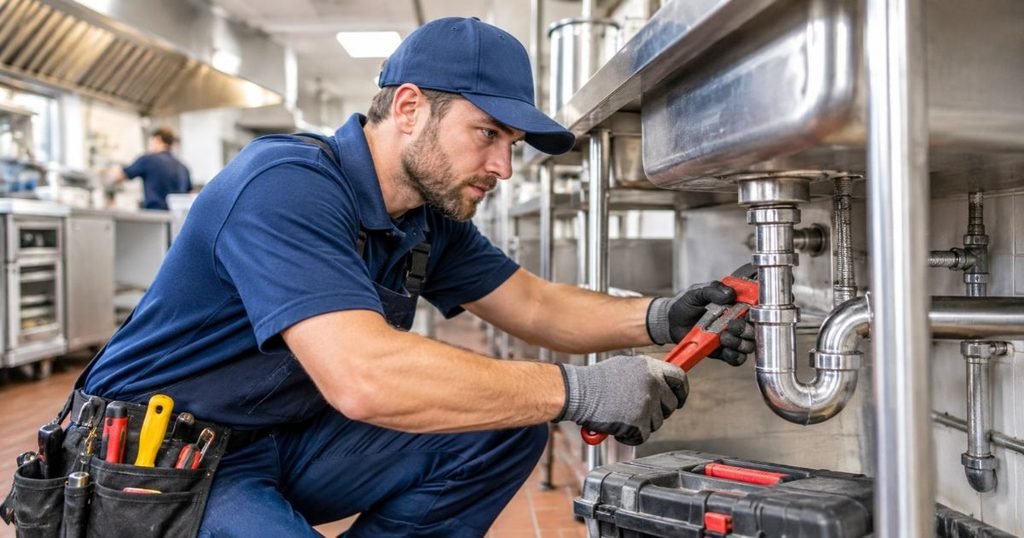
What Are Commercial Plumbing Services?
Commercial plumbing services encompass the specialized installation, maintenance, repair, and code compliance of water supply, drainage, waste, and venting systems in non-residential and multi-unit properties. Unlike residential work, commercial plumbing handles high-volume usage, complex multi-story piping networks, heavy-duty fixtures, and strict municipal health and safety regulations.
While residential plumbers focus on single-family homes, commercial plumbing contractors manage systems built for heavy, continuous traffic. A household bathroom might be used a dozen times a day; a public restroom in an airport, shopping center, or office tower can see hundreds of flushes per hour.
Several factors set commercial plumbing apart from residential work:
- Larger, more complex networks: Commercial buildings often span multiple stories or wide footprints, requiring booster pumps to push water to upper floors, complex venting stacks, and extensive underground sewer mains.
- Higher water and drainage demands: Restaurants, laundromats, gyms, and factories consume thousands of gallons of water daily, placing constant stress on supply lines, valves, and drains.
- Multiple restrooms and specialized fixtures: Commercial spaces rely on flushometer-style toilets (tankless valves that use water line pressure), sensor-operated faucets, commercial dishwashers, mop sinks, and floor drains.
- Commercial-grade water heating: Businesses use high-recovery storage tanks, multi-unit tankless racks, or boiler systems to deliver continuous hot water without running dry during peak hours.
- Strict codes, permitting, and inspections: Commercial projects must comply with adopted model codes—such as the International Plumbing Code (IPC) or Uniform Plumbing Code (UPC)—alongside Americans with Disabilities Act (ADA) accessibility standards and local health department rules.
Common properties that rely on commercial plumbing companies include restaurants, retail plazas, high-rise office buildings, hotels, hospitals, schools, warehouses, and multi-family apartment complexes.
READ MORE: Septic Tank Pumping Services: Costs, Signs & Complete Guide
Types of Commercial Plumbing Services
Full-service commercial plumbing companies handle everything from ground-up construction to middle-of-the-night emergencies. Understanding what these services cover helps property managers hire the right specialist for each job.
1. Commercial Plumbing Installation
Whether constructing a new building from the ground up or renovating an existing tenant space, commercial plumbing installation involves designing and laying out supply lines, waste stacks, and vent pipes.
Contractors install heavy-duty piping materials such as Type L or Type K copper, cast iron (valued for sound dampening in multi-story buildings), Schedule 40/80 PVC, CPVC, or commercial-grade PEX alongside ADA-compliant sinks, touchless faucets, and commercial water closets.
During build-outs, plumbers coordinate closely with general contractors and municipal inspectors to ensure every rough-in passes pressure and leak tests before walls are closed.
2. Commercial Plumbing Repair
Daily wear and tear eventually takes a toll on even the toughest commercial fixtures. Commercial plumbing repair addresses everyday mechanical failures before they escalate into property damage.
Common repairs include replacing worn diaphragm valves in flushometer toilets, fixing dripping commercial faucets, repairing leaking supply pipes, replacing faulty pressure-reducing valves (PRVs), and resolving low or fluctuating water pressure across different zones of a building.
3. Commercial Drain Cleaning
Commercial drains take a beating from grease, soap scum, hair, paper products, and debris washed down floor drains. Over time, buildup narrows pipe walls and causes sluggish drainage or complete blockages.
Rather than relying on harsh chemical drain cleaners which can corrode metal pipes and damage seals, professional plumbers use heavy-duty mechanical augers (drain snakes) and hydro jetting.
Hydro jetting uses high-pressure streams of water to scour the inside of pipes, blasting away hardened grease, mineral scale, and sludge to restore full pipe diameter.
4. Commercial Sewer Line Services
Main sewer lines carry wastewater from the building out to the municipal sewer main. When tree roots infiltrate underground joints, aging cast-iron or clay pipes corrode, or heavy debris creates a blockage, the entire facility is at risk of a sewage backup.
Commercial sewer line repair typically begins with a high-definition video camera inspection to pinpoint the exact location and cause of the problem. Depending on the damage, contractors may perform targeted excavation or use trenchless pipe relining (cured-in-place pipe) to rehabilitate damaged lines without tearing up parking lots or landscaping.
5. Commercial Water Heater Services
Running out of hot water is a major liability for food service, hospitality, healthcare, and salon businesses. Commercial water heater repair and installation cover high-capacity gas and electric storage tank heaters, commercial tankless water heater arrays, and recirculating pump systems that deliver instant hot water to distant fixtures.
Technicians perform routine flushing to remove sediment buildup, replace faulty thermostats or heating elements, test temperature and pressure (T&P) relief valves, and size replacement systems to match peak hourly demand.
6. Backflow Prevention and Testing
Backflow occurs when a sudden drop in municipal water pressure such as during a water main break or heavy firefighting hydrant use causes contaminated water from a building’s plumbing system to flow backward into the public drinking water supply.
Commercial buildings with irrigation systems, fire sprinkler lines, boilers, or chemical dispensers use cross-connection control devices like Reduced Pressure Zone (RPZ) assemblies or Double Check Valve Assemblies (DCVA). Most U.S. water utilities and municipalities require certified backflow prevention services to test these assemblies annually and submit compliance reports.
7. Commercial Grease Trap Services
Restaurants, cafeterias, and food processing facilities generate large amounts of fats, oils, and grease (FOG). If FOG enters the municipal sewer system, it cools, solidifies, and causes massive blockages.
Under the International Plumbing Code and local municipal ordinances, food establishments must install either indoor hydromechanical grease traps or large outdoor concrete/fiberglass gravity grease interceptors.
Commercial plumbers size, install, inspect, and maintain these units, coordinating with licensed waste haulers for scheduled pumping before grease levels exceed municipal limits (often capped at 25% of the trap’s liquid depth).
8. Emergency Commercial Plumbing Services
Plumbing disasters rarely happen during convenient business hours. Emergency commercial plumbing services provide 24/7 rapid response for urgent failures that threaten safety, property, or operations. This includes burst supply pipes, active ceiling leaks, overflowing public restrooms, main sewer backups, and total hot water loss in a restaurant or hotel.
Emergency crews arrive equipped to isolate water zones, stop active flooding, clear critical blockages, and stabilize the system so the business can reopen safely.
READ MORE: Commercial Electrical Contractors: Services, Costs & How to Hire
Commercial Plumbing Services for Different Types of Businesses
Every industry puts unique demands on its water and drainage infrastructure. What works for a small retail boutique will fail quickly in a high-volume hotel or manufacturing plant.
- Restaurants and commercial kitchens: Food service businesses rely heavily on specialized restaurant plumbing services. Pre-rinse spray valves, three-compartment sinks, commercial dishwashers, floor troughs, and grease interceptors run continuously. A single clogged kitchen floor drain or failed water heater can force an immediate health-code closure.
- Office buildings: Multi-story office towers depend on consistent water pressure across all floors, requiring booster pumps and pressure zones. Facility managers focus on high-efficiency, touchless restroom fixtures, breakroom plumbing, and preventative maintenance to avoid disruptive leaks over tenant workspaces.
- Retail stores and shopping centers: Strip malls and retail centers often share main water lines and sewer laterals across multiple tenants. Plumbers frequently handle tenant improvement build-outs, public restroom maintenance, and roof drain clearing to prevent storm water ponding.
- Hotels and hospitality businesses: Hotels experience extreme peak demand in the morning and evening when dozens or hundreds of guests shower simultaneously. Commercial water heater racks, recirculation loops, laundry facility drains, and guest-room stack maintenance are top priorities.
- Hospitals and healthcare facilities: Medical buildings require strict infection-control protocols, specialized medical gas piping (installed by certified specialists), thermostatic mixing valves to prevent scalding, and rigorous backflow and Legionella water-management programs.
- Schools and educational buildings: Campuses endure heavy, concentrated bursts of restroom usage between class periods, alongside science lab acid-neutralization tanks, locker room showers, and cafeteria grease traps. Summer breaks are typically used for major pipe upgrades and fixture replacements.
- Warehouses and industrial facilities: Industrial properties require high-capacity floor drains, oil-water separators for vehicle bays, emergency eyewash and safety shower stations (compliant with OSHA and ANSI standards), and process water lines.
- Apartment complexes and multi-unit properties: Property managers oversee centralized boiler systems, shared vertical waste stacks, main sewer cleanouts, and unit-by-unit shutoff valves so repairs in one apartment do not force water shutoffs for an entire building.
READ MORE: Professional Water Leak Detection Services: Costs & Guide
Common Commercial Plumbing Problems
Recognizing the early warning signs of plumbing trouble allows facility managers to schedule repairs during off-hours rather than dealing with a daytime crisis.
1. Clogged Commercial Drains
- Causes: Accumulation of grease, food scraps, paper towels, feminine hygiene products, mop strings, and mineral deposits.
- Warning signs: Water pooling around floor drains, slow-draining sinks, or gurgling noises when nearby fixtures are used.
- When to call a pro: If plunging does not clear a single fixture immediately, or if multiple drains slow down at once, call a plumber for mechanical snaking or hydro jetting.
2. Leaking or Burst Pipes
- Causes: Corrosion in older galvanized or copper pipes, excessive water pressure, loose joints, or physical impact in utility areas.
- Warning signs: Water stains on ceiling tiles, warped baseboards, musty odors, damp carpet, or audible hissing inside walls.
- When to call a pro: Immediately. Even a pinhole leak can waste thousands of gallons a month and trigger mold growth.
3. Low or Inconsistent Water Pressure
- Causes: Failing booster pumps, clogged aerators, partially closed main valves, mineral scale inside aging pipes, or a malfunctioning pressure-reducing valve.
- Warning signs: Weak flow from faucets, slow-filling toilet tanks, or pressure drops on upper floors when lower floors run water.
- When to call a pro: When cleaning faucet aerators does not restore pressure, a licensed technician should test system PSI and inspect valves and pumps.
4. Sewer Line Blockages
- Causes: Tree root intrusion, flushed non-dispersible items (like “flushable” wipes), grease buildup, or collapsed underground piping.
- Warning signs: Sewage odors near floor drains, water backing up into lower-level drains when upper toilets flush, or soggy patches over exterior sewer lines.
- When to call a pro: Immediately. Sewage backups pose serious biohazard risks and require professional camera inspection and clearing.
5. Malfunctioning Commercial Water Heaters
- Causes: Sediment accumulation at the bottom of tanks, burned-out heating elements, faulty gas control valves, or failing recirculation pumps.
- Warning signs: Lukewarm water, fluctuating temperatures, rumbling or popping noises from the tank, or rust-colored hot water.
- When to call a pro: Anytime water temperatures drop below health-code minimums (especially in restaurants) or if you spot water pooling around the heater base.
6. Running Toilets and Damaged Restroom Fixtures
- Causes: Worn flushometer diaphragms, damaged sensor eyes, mineral buildup in valve seats, or loose mounting bolts.
- Warning signs: Toilets that run continuously after flushing, phantom flushing, or water seeping around the base of a bowl.
- When to call a pro: Promptly, as a single continuously running commercial toilet can waste hundreds of gallons of water per day.
7. Grease Trap Problems
- Causes: Missed pumping schedules, broken internal baffles, or pouring hot fryer oil directly down sinks.
- Warning signs: Foul odors in the kitchen, slow sink drainage, or grease overflowing from the interceptor lid.
- When to call a pro: Whenever backups occur or during routine inspections to check baffle integrity and flow-control devices.
8. Backflow Prevention Issues
- Causes: Debris lodged in check valves, worn rubber seals, or thermal expansion within closed plumbing loops.
- Warning signs: Water dripping or discharging from an RPZ relief valve, or a failed annual municipal compliance test.
- When to call a pro: Immediately—only certified backflow testers are legally permitted in most jurisdictions to repair and recertify these assemblies.
9. Frozen Pipes During Winter
- Causes: Uninsulated pipes in exterior walls, unheated loading docks, roof spaces, or crawlspaces exposed to sub-freezing temperatures.
- Warning signs: Frost on exposed pipes, little to no water coming from faucets on cold mornings, or bulging pipe sections.
- When to call a pro: Immediately if a pipe freezes or bursts. Never use an open flame to thaw pipes; a plumber can safely thaw lines and repair split sections.
READ MORE: Plumbing Repair Cost: How Much Does a Plumber Cost?
How Much Do Commercial Plumbing Services Cost?
Commercial plumbing pricing in the United States varies widely depending on the scope of work, local labor rates, and building complexity. Unlike simple residential tasks that often follow flat-rate menus, larger commercial projects are typically priced using time-and-materials (T&M) rates or detailed project bids.
Several key factors influence what your business will pay:
- Type of service: Clearing a minor sink blockage costs far less than hydro jetting a 200-foot main sewer line or replacing a commercial booster pump.
- Building size and accessibility: Working on pipes hidden behind concrete block walls, above 20-foot warehouse ceilings, or beneath concrete slabs requires extra labor and specialized equipment.
- Labor rates and project duration: Licensed commercial plumbers in the U.S. generally charge between $100 and $250+ per hour depending on the region, with major metropolitan areas (such as New York, Chicago, San Francisco, or Boston) commanding higher rates than rural markets.
- Materials and commercial-grade equipment: Commercial fixtures, cast-iron piping, RPZ valves, and high-recovery water heaters cost substantially more than residential hardware.
- Emergency and after-hours rates: Calling a plumber on nights, weekends, or holidays typically carries an after-hours dispatch fee or an hourly rate multiplier of 1.5x to 2x standard rates.
- Permits and inspections: Major installations, repiping, water heater replacements, and sewer work require municipal building permits and inspection fees, which can add $100 to $1,500+ depending on the city and project value.
The table below outlines realistic, general cost ranges across the U.S. for common commercial plumbing services.
| Service Type | Estimated Cost Range (USD) | Typical Scope & Notes |
| Standard Service Call / Diagnostic | $100 – $300 | Covers dispatch, initial troubleshooting, and minor adjustments |
| Commercial Drain Cleaning (Snaking) | $200 – $600 | Clearing localized sink, toilet, or floor drain blockages |
| Hydro Jetting Service | $400 – $1,200+ | High-pressure cleaning for heavy grease or main drain lines |
| Video Sewer Camera Inspection | $250 – $600 | Diagnostic imaging of underground sewer laterals |
| Annual Backflow Testing | $100 – $350 per device | Certified testing and municipal filing (repairs extra) |
| Minor Commercial Pipe / Fixture Repair | $300 – $1,500 | Replacing flushometers, valves, faucets, or accessible pipe sections |
| Commercial Water Heater Replacement | $3,000 – $12,000+ | Varies widely between single tank units and multi-unit tankless systems |
| Main Sewer Line Repair / Relining | $3,000 – $20,000+ | Depends on pipe depth, length, and trenchless vs. excavation methods |
Note: These figures are broad national estimates for planning purposes, not guaranteed quotes. Actual costs depend on your specific geographic location, building age, code requirements, and chosen contractor.
READ MORE: Emergency Drain Cleaning Service: Expert Guide & Costs
Commercial Plumbing vs. Residential Plumbing: What’s the Difference?
While both fields rely on the fundamental physics of water supply and gravity drainage, the scale, hardware, and regulatory environment of commercial plumbing demand specialized expertise.
| Comparison Factor | Commercial Plumbing | Residential Plumbing |
| System Size | Multi-story risers, extensive underground mains, and zoned loops | Single-family or duplex layouts with straightforward pipe runs |
| Water Demand | High-volume, continuous usage throughout operating hours | Lower, intermittent usage concentrated in mornings and evenings |
| Number of Fixtures | Dozens to hundreds of toilets, urinals, sinks, and floor drains | Typically 2 to 5 bathrooms, one kitchen, and a laundry area |
| Equipment | Flushometers, booster pumps, grease interceptors, RPZ backflow devices, high-recovery heaters | Tank-style toilets, standard 40–50 gallon water heaters, residential sump pumps |
| Maintenance Needs | Scheduled monthly, quarterly, and annual preventive maintenance | Mostly as-needed repairs and occasional annual water heater flushing |
| Plumbing Complexity | Complex venting calculations, pressure zones, and specialized waste systems | Standard branch piping and basic gravity drainage |
| Regulations | Strict IPC/UPC commercial codes, ADA rules, health department, and EPA/utility mandates | Standard residential building codes (such as IRC) with fewer ongoing compliance filings |
| Emergency Impact | Business closure, lost revenue, health-code violations, and multi-tenant disruption | Household inconvenience and localized property damage |
Because commercial systems involve complex pressure balancing, specialized valves, and strict municipal documentation, hiring a residential handyman or house plumber for a commercial building often leads to failed inspections, improper sizing, and voided equipment warranties.
How to Choose the Right Commercial Plumbing Contractor
Selecting the right commercial plumbing contractor is a critical operational decision. A reliable partner not only fixes immediate issues but also helps you plan long-term capital upgrades and maintain code compliance.
When evaluating commercial plumbing companies in your area, look for these essential qualifications:
- Proper state and local licensing: Verify that the contractor holds an active commercial plumbing license in your state or municipality (requirements vary; some states issue statewide Master Plumber licenses, while others license at the county or city level).
- Comprehensive insurance coverage: Request a Certificate of Insurance (COI) showing active general liability insurance and workers’ compensation coverage to protect your business from liability on-site.
- Proven commercial experience: Ask about their experience with buildings similar to yours whether that means commercial kitchens, medical offices, warehouses, or high-rise properties.
- 24/7 emergency availability: Confirm that they offer true around-the-clock emergency dispatch with clear guaranteed or target response times.
- Written estimates and transparent pricing: Reliable contractors provide detailed written scopes of work, clear hourly or flat-rate pricing, and transparent explanations of material markups before starting work.
- Preventive maintenance programs: Look for companies that offer structured annual or quarterly maintenance agreements tailored to your facility’s equipment.
- Code and permitting familiarity: Your contractor should handle pulling necessary municipal permits and coordinating directly with local building and health inspectors.
- Strong local reputation: Check verified B2B reviews, ask for references from local property managers, and look for consistent communication.
Why the cheapest quote is rarely the best value: An unusually low bid often signals that a contractor is cutting corners such as using lighter-grade residential materials, skipping required permits, underestimating labor hours, or lacking proper insurance. In a commercial setting, fixing a botched installation or paying municipal fines for unpermitted work costs far more than hiring a qualified contractor from the start.
READ MORE: Plumber for Clogged Shower Drain: When to Call & Cost
When Should You Call a Professional Commercial Plumber?
While your in-house maintenance staff can handle basic tasks like replacing a toilet seat or plunging a minor sink clog, many warning signs require immediate attention from a licensed commercial plumber:
- Multiple clogged drains at once: If several sinks or floor drains back up simultaneously, the blockage is likely in a main branch or sewer line rather than a single fixture trap.
- Repeated sewer backups: Recurring backups point to underlying structural issues like root intrusion, pipe bellies, or collapsed sewer mains.
- Sudden water pressure drops or spikes: Unexplained pressure changes can indicate a hidden main leak, a failing booster pump, or a broken pressure regulator that could burst pipes.
- Unexplained spikes in your water bill: A sudden jump in monthly water consumption without a change in business activity usually means an underground slab leak or continuously running commercial valves.
- Visible water damage or active pipe leaks: Stained ceiling tiles, bubbling paint, or dripping pipes require professional leak detection and repair.
- No hot water in commercial facilities: Restaurants, salons, gyms, and healthcare offices often cannot legally operate without hot water meeting specific temperature thresholds.
- Persistent sewer or gas odors: Sewer gas smells indicate dry traps, cracked vent stacks, or broken sewer seals; natural gas or propane odors require immediate evacuation and calling both your utility company and a licensed plumber.
- Discolored water or suspected contamination: Rusty, cloudy, or foul-tasting water could signal pipe corrosion or a compromised backflow preventer.
Frequently Asked Questions
What services are included in commercial plumbing?
Commercial plumbing services cover the installation, repair, and maintenance of large-scale water supply, drainage, and venting systems. This includes commercial drain cleaning, hydro jetting, sewer line camera inspections and repairs, commercial water heater installation, backflow prevention testing, grease trap maintenance, ADA fixture upgrades.
How much do commercial plumbing services cost?
In the United States, commercial plumbers typically charge between $100 and $250+ per hour depending on location and complexity, with emergency after-hours rates running 1.5x to 2x higher. Minor repairs or drain cleanings often cost $200 to $1,500, while major projects like commercial water heater replacements or sewer line repairs can range from $3,000 to $20,000 or more.
What is the difference between a commercial plumber and a residential plumber?
Commercial plumbers specialize in complex, high-capacity systems found in businesses, hospitals, restaurants, and multi-story buildings. Unlike residential plumbers who work on single-family homes, commercial contractors handle heavy-duty fixtures, booster pumps, grease interceptors, certified backflow assemblies, and strict municipal commercial building codes, permits, and health department regulations.
How often should commercial plumbing systems be inspected?
Most commercial properties should schedule a comprehensive professional plumbing inspection at least once a year. However, high-demand facilities like restaurants, hotels, hospitals, and manufacturing plants often benefit from quarterly or semi-annual inspections, alongside mandatory annual backflow testing and regular grease interceptor servicing required by local municipal codes.
How do I find a reliable commercial plumber near me?
Start by searching for licensed commercial plumbing contractors in your city or county and verifying their state licensing and insurance credentials. Look for companies with proven experience in your specific industry, 24/7 emergency availability, strong reviews from local property managers, and transparent written estimates before signing any service agreement.
Final Thoughts
Your building’s plumbing system plays a direct role in keeping your employees safe, your customers comfortable, and your daily operations running on schedule. From preventing messy kitchen backups to ensuring your facility meets strict local health and safety codes, partnering with experienced commercial plumbing professionals protects both your property value and your bottom line.
Rather than waiting for an unexpected leak or sewer backup to disrupt your business, take a proactive approach with scheduled inspections, preventive drain maintenance, and timely repairs. If you are planning a commercial renovation, experiencing warning signs like slow drains or fluctuating water pressure, or want to set up an annual maintenance plan, reach out to a licensed local commercial plumbing contractor to request a thorough system inspection or written estimate today.
Sources and References
- International Code Council (ICC): International Plumbing Code (IPC) — Standards for commercial fixture counts, grease interceptors (Chapter 10), traps, and backflow protection.
- International Association of Plumbing and Mechanical Officials (IAPMO): Uniform Plumbing Code (UPC) — Commercial plumbing installation and sizing guidelines adopted across various U.S. jurisdictions.
- U.S. Environmental Protection Agency (EPA): Cross-Connection Control Manual and WaterSense Commercial Programs — Guidance on drinking water protection, backflow prevention, and commercial fixture efficiency.
- U.S. Department of Justice (DOJ): 2010 ADA Standards for Accessible Design — Commercial restroom and plumbing fixture accessibility compliance.
- Occupational Safety and Health Administration (OSHA): 29 CFR 1910.151 — Workplace sanitation and emergency eyewash/shower plumbing standards.
Disclaimer: Plumbing codes, contractor licensing requirements, backflow testing intervals, grease interceptor regulations, permitting fees, and service pricing vary significantly across U.S. states, counties, and municipalities. Always consult a licensed commercial plumber and your local Authority Having Jurisdiction (AHJ) for specific requirements and accurate project quotes.


Pingback: Plumbing Companies: How to Choose the Right Plumber - Plumbing Guider