Water heating is one of the biggest hidden expenses in a U.S. home. It’s often the second-largest energy user after heating and cooling, quietly adding to your utility bill every single day whether you notice it or not. So when a water heater finally dies, the choice between gas and electric isn’t just about upfront price, it’s about what you’ll pay every month for the next 10 to 15 years.
The good news: the running-cost gap between gas and electric is usually predictable once you know your local utility rates. Get it right, and you could save several hundred dollars a year. Get it wrong, and you could be stuck overpaying for over a decade. This guide breaks down real numbers so you can make the call with confidence. Lets deep dive into “Gas vs Electric Water Heater Running Costs 2026”
Key Takeaways
- Gas water heaters typically cost $15–$45/month; standard electric typically costs $30–$70/month
- Local utility rates matter more than national averages — always check your own bill
- Heat pump water heaters use 2–4x less energy than standard electric resistance models
- Installation costs run higher for gas ($1,000–$2,700) than electric ($500–$1,200)
- Lowering your thermostat to 120°F and annual maintenance are the easiest ways to cut costs
- Larger households see the biggest cost gap between fuel types
READ MORE: AO Smith vs. Rheem Water Heaters: Comparison & Expert Reviews
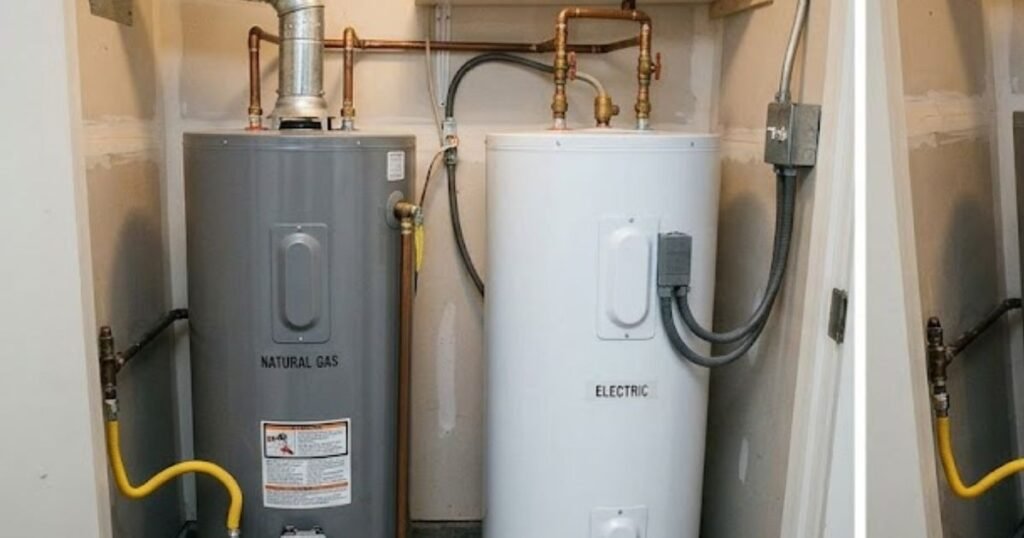
Gas vs Electric Water Heater Running Costs
| Feature | Gas Water Heater | Electric Water Heater |
| Average Monthly Running Cost | $15–$45 | $30–$70 |
| Average Annual Cost | $200–$450 | $400–$840 |
| Efficiency (UEF) | 0.60–0.70 standard, up to 0.95 condensing | 0.90–0.95 standard, 3.0–4.0 heat pump |
| Installation Cost | $1,000–$2,700 | $500–$1,200 |
| Maintenance | Slightly higher (venting, burner) | Lower (fewer moving parts) |
| Lifespan | 8–12 years | 10–15 years (heat pump similar) |
| Recovery Speed | Fast | Slower (standard), fast (heat pump varies) |
| Best For | Homes with existing gas lines, larger households | All-electric homes, apartments, mild climates |
On paper, gas usually wins on monthly running costs, since natural gas is typically cheaper per unit of heat than electricity across most of the country. But your actual bill depends entirely on your local rates, so it pays to check both before deciding.
How Water Heater Running Costs Are Calculated
Your monthly bill isn’t random it comes down to a handful of variables that installers and utility companies use to estimate usage:
- Fuel prices: your local cost per therm (gas) or per kWh (electricity)
- Water usage: how many gallons your household uses per day
- Household size: more people means more showers, laundry, and dishes
- Tank size: 30, 40, 50, or 80-gallon tanks all draw different amounts of energy
- Recovery efficiency: how quickly the unit reheats water after use
- Standby heat loss: energy lost keeping stored water hot when it’s not being used
- Climate: colder incoming water temperatures require more energy to heat
- Utility rate structure: flat rates versus time-of-use or tiered pricing
- Daily hot water demand: showers, dishwasher cycles, and laundry loads all add up
Two households with identical water heaters can have very different bills simply because one lives somewhere with cheap electricity and mild winters, and the other doesn’t.
READ MORE: Tankless Water Heater vs. Combi Boiler: Which Is Right for You?
Average Gas Water Heater Running Costs in the U.S.
A typical 40–50 gallon gas water heater with standard efficiency uses somewhere between 1.5 and 3 therms per day under moderate household use. At the current national average gas price of roughly $1.20–$1.50 per therm, that generally works out to $15–$45 a month, or about $200–$450 a year, for an average household.
Households in colder climates or with heavier hot water demand can push toward the higher end of that range or beyond it, since incoming water is colder and needs more energy to heat.
Factors that push gas bills up or down:
- Local therm pricing (can range from under $0.80 in gas-rich states to over $2.00 in others)
- Tank insulation quality and age
- Standard-efficiency (60–65%) versus condensing high-efficiency (up to 95%) units
- Regional climate and incoming water temperature
Real-world example: A family in Texas with a standard 50-gallon gas tank and cheap winter gas prices might pay closer to $20/month, while a similar household in the Northeast paying premium winter gas rates could see $40–$50/month during peak heating season.
Average Electric Water Heater Running Costs
Standard electric resistance water heaters cost more to run than gas in most parts of the country, mainly because electricity is priced higher per unit of usable heat. A typical 40–50 gallon electric tank uses about 8–15 kWh per day. At the national average residential electricity rate of around $0.17 per kWh, that lands most households between $30 and $70 a month, or roughly $400–$840 a year.
What moves the number:
- kWh consumption: driven by tank size, insulation, and usage habits
- Electricity prices: vary enormously by state — under $0.12/kWh in some regions, over $0.28/kWh in places like Hawaii, California, and parts of the Northeast
- Peak vs. off-peak rates: some utilities charge more during high-demand hours
- Seasonal changes: colder incoming water in winter increases energy use even indoors
A household in a low-rate state like Louisiana might pay close to the low end of that range, while the same exact water heater in Hawaii or coastal California could cost two to three times as much to run.
READ MORE: Heat Pump vs. Furnace vs. Boiler: Cost & Efficiency Comparison
Which Is Cheaper to Run?
In most of the country, gas wins on monthly operating cost. That’s because natural gas has historically delivered heat more cheaply per unit than electricity, even accounting for the lower efficiency of standard gas tanks. Industry estimates generally put gas water heaters at 20–50% cheaper to operate than standard electric resistance models, depending on regional pricing.
That said, the answer flips in certain situations:
- States with unusually cheap electricity and pricier gas may favor electric.
- Homes without a gas hookup face a large cost to install a new gas line, which can erase any running-cost savings for years.
- Urban areas often have more competitive gas pricing than isolated rural areas relying on propane.
- Homes that install a heat pump water heater can beat both standard gas and standard electric on running costs, sometimes by 50–70%, even though electricity itself costs more per kWh.
There’s no single national answer your local gas and electricity rates are what actually decide this for your household.
Energy Efficiency Comparison
Efficiency is measured using the Uniform Energy Factor (UEF), the Department of Energy’s standardized rating for comparing water heaters. A higher UEF means less energy wasted and lower running costs for the same amount of hot water delivered.
- Standard electric resistance water heaters: UEF typically 0.90–0.95
- Standard gas storage water heaters: UEF typically 0.60–0.70, since some heat escapes through the flue
- Condensing gas water heaters: can reach UEF near 0.90–0.95 by capturing exhaust heat that would otherwise be lost
- Heat pump water heaters: UEF of 3.0–4.0, because they move heat from the surrounding air into the tank instead of generating it directly
Here’s the key nuance: electric resistance heaters convert nearly all their energy into heat, but electricity itself is a more expensive form of energy per unit than gas. Gas combustion loses more heat up the flue but starts from a cheaper fuel. Heat pump water heaters break that trade-off entirely they’re electric, but because they transfer heat rather than generate it, they typically use two to three times less energy than a standard electric tank for the same hot water output.
Recent Department of Energy guidance has emphasized this gap, noting that heat pump models are now central to federal efficiency planning, with new conservation standards pushing larger electric storage water heaters toward heat pump technology in the years ahead. For homeowners today, that means a heat pump water heater is worth serious consideration even though it costs more upfront.
READ MORE: Gas Water Heater Replacement Cost — What Homeowners Pay & Why
Factors That Affect Your Monthly Water Heater Bill
Beyond fuel type, these day-to-day factors shift your bill up or down:
- Household size and number of people showering daily
- Tank capacity relative to actual usage
- Shower length and frequency
- Laundry load frequency (hot vs. cold wash settings)
- Dishwasher use, especially older, non-efficient models
- Water temperature setting (120°F is the efficient sweet spot)
- Hot water pipe insulation
- Tank insulation quality and age
- Sediment buildup and lack of maintenance
- Water heater age — older units lose efficiency over time
Did You Know? Every 10°F you lower your water heater’s thermostat can reduce standby energy losses and overall water heating costs by roughly 3–5%, according to Department of Energy guidance with no noticeable difference in comfort for most households.
Running Cost Examples
These are realistic monthly and annual estimates based on national average utility rates. Your actual costs will vary by location.
| Household | Gas Monthly / Annual | Electric Monthly / Annual |
| Single homeowner | $12–$18 / $144–$216 | $20–$30 / $240–$360 |
| Couple | $18–$25 / $216–$300 | $30–$40 / $360–$480 |
| Family of four | $28–$40 / $336–$480 | $45–$70 / $540–$840 |
| Large family (5+) | $35–$50 / $420–$600 | $60–$90 / $720–$1,080 |
Larger households see the gap widen the most, since higher hot water demand amplifies the underlying cost-per-unit difference between gas and electricity.
READ MORE: Best Tankless Water Heater — Top Picks, Costs & Buyer’s Guide
Installation Cost vs. Running Cost
A cheaper unit to buy isn’t always cheaper to own. Here’s how the full cost picture compares:
| Cost Category | Gas Water Heater | Electric Water Heater |
| Unit Purchase Price | $600–$1,600 | $400–$1,400 |
| Installation Labor | $400–$1,000 | $150–$450 |
| New Gas Line/Venting (if needed) | +$200–$500 | N/A |
| Average Total Installed Cost | $1,000–$2,700 (avg. ~$1,900) | $500–$1,200 |
| Annual Running Cost | $200–$450 | $400–$840 |
| Typical Lifespan | 8–12 years | 10–15 years |
Electric water heaters usually cost less to install, but gas usually costs less to run. Over a typical 10–12 year lifespan, the lower running cost of gas often outweighs the higher upfront installation expense but only if you already have a gas hookup. If you’d need to run a brand-new gas line to your home, that added cost can take years to pay off in running-cost savings.
Gas vs Electric Water Heater Pros and Cons
Gas Advantages
- Lower monthly running costs in most regions
- Faster recovery time, better for large households
- Keeps working during power outages (standard pilot models)
Gas Disadvantages
- Higher installation cost, especially without existing gas lines
- Requires proper venting and occasional professional servicing
- Not available in all-electric or rural homes without gas service
Electric Advantages
- Lower upfront and installation costs
- Simpler, safer installation with no combustion or venting
- Available anywhere with standard electrical service
- Heat pump versions offer the lowest long-term running costs
Electric Disadvantages
- Higher standard running costs than gas in most areas
- Slower recovery on standard resistance tanks
- Stops working during power outages
- Heat pump units have a higher upfront cost and need clearance space
READ MORE: Carrier Heat Pump Reviews — Models, Costs, Pros & Cons
Which Water Heater Is Better for Different Homes?
- Small homes/apartments: Electric, for lower installation cost and simplicity
- Large families: Gas, for faster recovery and lower running costs at high usage
- Rural homes: Depends on gas line access; propane costs should be compared separately
- Homes without natural gas: Electric or heat pump, since installing new gas service is expensive
- Vacation homes: Electric, for simplicity and lower standby maintenance needs
- Eco-conscious homeowners: Heat pump water heaters, for the lowest overall energy use
- Budget-conscious buyers: Electric upfront, but compare 10-year total cost against gas
Ways to Reduce Water Heater Running Costs
- Lower the thermostat to around 120°F
- Flush sediment from the tank annually
- Insulate exposed hot water pipes
- Add an insulating tank blanket if your unit allows it
- Repair hot water leaks promptly
- Install low-flow showerheads and faucet aerators
- Upgrade to an ENERGY STAR certified model
- Consider a heat pump water heater for the biggest long-term savings
- Schedule annual professional maintenance
- Replace aging units before efficiency drops further
Maintenance Checklist: flush the tank yearly, inspect the anode rod every 2–3 years, check pressure relief valve function annually, and inspect visible pipe connections for leaks each season.
Common Mistakes That Increase Water Heating Costs
- Setting the thermostat above 120°F unnecessarily
- Ignoring sediment buildup for years
- Installing an oversized tank for actual household needs
- Installing an undersized heater that runs constantly to keep up
- Leaving small hot water leaks unrepaired
- Running constant hot water recirculation loops without a timer
- Skipping pipe and tank insulation in unheated spaces
Myth vs. Fact: Myth — a hotter thermostat setting gives you more hot water. Fact — it just makes each gallon more expensive and increases scalding risk, without meaningfully increasing usable capacity.
Gas vs Electric Water Heater Cost Comparison Chart
| Category | Gas | Electric |
| Purchase Price | Moderate–High | Low–Moderate |
| Installation | Higher (venting/gas line) | Lower (simpler wiring) |
| Operating Cost | Lower in most regions | Higher, except heat pump models |
| Repairs | Moderate (burner, venting) | Lower (fewer parts) |
| Maintenance | Annual flush + venting check | Annual flush |
| Lifespan | 8–12 years | 10–15 years |
| Energy Efficiency | 0.60–0.95 UEF | 0.90–0.95 standard, 3.0–4.0 heat pump |
| Environmental Impact | Combustion emissions | Depends on grid; lowest with heat pump |
| Reliability | Works in power outages | Depends on grid power |
| Best Applications | Large households, existing gas homes | Apartments, all-electric, eco-focused homes |
Final Verdict
If you already have a gas line and typical usage needs, a gas water heater usually delivers the lowest monthly bills of the standard options. If you’re building new, don’t have gas service, or want the lowest possible long-term running cost regardless of fuel type, a heat pump water heater is worth the higher upfront investment. Department of Energy data consistently shows it using a fraction of the energy of a standard electric tank. A standard electric resistance heater remains the simplest and cheapest to install, making sense for smaller households, rentals, or short-term ownership situations where upfront cost matters most.
Your best move is to check your specific local utility rates for gas and electricity, estimate your household’s daily hot water usage, and weigh that against your expected years of ownership before deciding.
FAQs
Is a gas water heater cheaper to run than an electric water heater?
In most U.S. regions, yes. Gas water heaters typically cost 20–50% less per month to operate than standard electric resistance models, mainly because natural gas is usually priced lower per unit of heat than electricity.
How much does it cost to run a gas water heater each month?
Most households pay between $15 and $45 a month for a standard 40–50 gallon gas water heater, depending on local gas prices, household size, and climate.
How much electricity does a 50-gallon electric water heater use?
A standard 50-gallon electric water heater typically uses 8–15 kWh per day, which comes to roughly $30–$70 a month at national average electricity rates.
Which water heater saves the most money over time?
A heat pump water heater generally saves the most over its lifespan, since it uses two to three times less energy than a standard electric tank, even though it costs more upfront.
Should I switch from a gas water heater to an electric one?
Usually not for cost reasons alone, since standard electric tanks tend to cost more to run. However, switching to an electric heat pump water heater can lower your bills significantly if your electricity rates are reasonable and you have the installation space it requires.
Conclusion
Choosing between gas and electric water heating comes down to your local utility rates, household size, and how long you plan to own your home. Pull up your last few utility bills, check your state’s average gas and electricity prices, and use the examples in this guide to estimate your real costs before you buy. If you’re due for a replacement, it’s worth getting quotes for a heat pump water heater alongside standard options the extra upfront cost often pays for itself faster than expected.