If your sump pump running continuously but no water in pit is a scenario you are currently facing, you are likely feeling a mix of confusion and worry. How can a machine designed to move water keep working when there is absolutely nothing to move? Is it supposed to do that? Is your home at risk of flooding, or is your electric bill about to skyrocket?
First, take a deep breath. This is one of the most common sump pump issues that U.S. homeowners encounter. While it is certainly not normal for a pump to run nonstop without water, it is usually a mechanical or electrical hiccup that you can troubleshoot. This comprehensive guide will walk you through exactly what this issue means, why it happens, the risks involved, and how you can fix it before it turns into an expensive headache. Lets deep dive into “Sump Pump Running Continuously but No Water in the Pit: Cause & Fix”
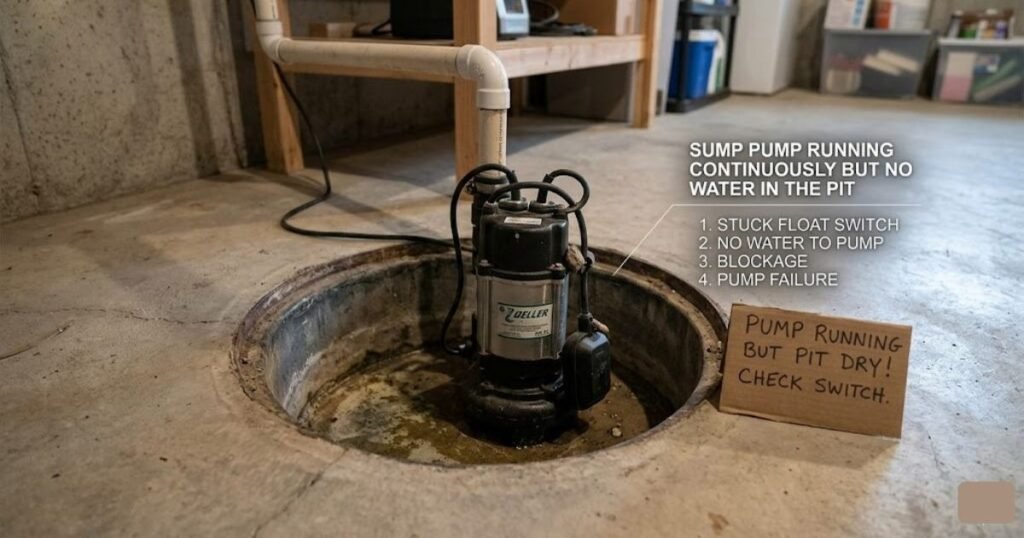
What It Means When a Sump Pump Runs Continuously but No Water Is in the Pit
To understand why your sump pump keeps running no water in pit, it helps to review how these systems are supposed to work under normal conditions.
Your sump pump is your basement’s first line of defense against rising groundwater. It sits inside a specially dug hole in your basement floor called a sump pit (or basin). As rain falls or groundwater rises, water naturally channels into this pit. Inside the pit, the sump pump waits patiently.
Normally, the pump operates on a simple cycle:
- Water Rises: Water enters the basin and reaches a specific height.
- The Switch Activates: A mechanism called a float switch rises with the water level. Once it hits a certain point, it triggers the pump’s motor to turn on.
- Water Discharges: The pump forces the water out of the pit and through a discharge pipe, directing it safely away from your home’s foundation.
- The Pump Shuts Off: As the water level drops, the float switch falls back down, cutting power to the motor until the next time the pit fills up.
When you notice your sump pump running constantly even though the pit is empty, it means this cycle has been broken. The pump has missed its cue to turn off. It is essentially trapped in an infinite “on” loop.
When a pump is sump pump running dry, it is spinning its internal components without any liquid to move or cool the mechanism. Even though the pit looks completely dry to your eyes, the electrical or mechanical brains of the pump still believe it is submerged under feet of water. Let’s look at the specific reasons why this communication breakdown happens.
READ MORE: Grundfos Circulation Pump: Cost, Comparison, Install & Troubleshooting
Common Reasons Your Sump Pump Keeps Running with No Water in the Pit
There are several mechanical, electrical, and installation issues that can cause a sump pump won’t stop running. Understanding these causes will help you figure out if you are dealing with a quick DIY fix or a job for a plumbing professional.
1. Stuck or Faulty Float Switch
The float switch is the most frequent culprit behind a sump pump running but pit is dry. Think of the float switch like the float ball inside your toilet tank; it relies on physical movement to tell the system when to stop and start.
Over time, a float switch can get physically stuck against the side of the plastic basin or pinned behind a stray wire or pipe. If the float cannot physically drop down when the water leaves, the switch stays engaged, and the pump keeps running nonstop. Alternatively, the internal electrical contacts within the switch can wear out or fuse together, meaning that even if the float drops physically, the electrical current never stops flowing to the motor.
- Signs you’ll notice: The pump won’t turn off unless you unplug it, and you might see the float stuck in an upward position.
- Fix type: Often a DIY fix if it’s just physically stuck; a professional repair or replacement if the electrical switch internal to the float has failed.
2. Check Valve Problems
The check valve is a small, one-way valve installed on your discharge pipe just above the sump pit. Its job is to make sure that once water is pumped up and out of your basement, it cannot flow backward into the pit when the pump turns off.
If the check valve breaks, gets stuck open, or is installed incorrectly, the water that was just pumped out will rush right back down into the basin the second the pump pauses. This can cause the pump to cycle so fast that it seems like it’s running continuously. In some rare configurations, a malfunctioning check valve combined with a faulty switch can keep a system trapped in a continuous running loop, running dry once all the backflow water is exhausted.
- Signs you’ll notice: A loud thumping noise when the pump attempts to stop, or water visibly swirling and trickling back down the discharge pipe.
- Fix type: Can be a intermediate DIY project, but many homeowners prefer calling a plumber to ensure a watertight seal.
3. Discharge Line Issues
Your sump pump relies on an open, clear discharge line to push water far away from your home. If this pipe is blocked by debris, dirt, leaves, or even frozen ice during harsh winter months, the pump cannot empty the pit efficiently.
If a blockage happens while your float switch is malfunctioning or if the system experiences an airlock (where a pocket of air gets trapped in the pump, preventing it from moving water), the pump might continue to spin its wheels indefinitely. The motor runs nonstop trying to do its job, but nothing is moving through the plumbing lines.
- Signs you’ll notice: A humming motor, zero water exiting the pipe outside your home, or a pipe that feels hot to the touch near the pump.
- Fix type: DIY if you can locate and clear an outdoor clog or melt a frozen line; professional if the pipe is broken underground.
4. Wiring or Control Failure
Like any appliance, your sump pump relies on an intact electrical circuit. Inside the pump, there are wires, relays, and capacitors that manage the power flow.
Sometimes, an electrical surge, age, or moisture exposure can cause a short circuit. If the internal control relay fails in the “closed” position, power bypasses the float switch entirely. The pump receives a continuous stream of electricity directly from your wall outlet, ignoring whether the pit is full of water or completely dry.
- Signs you’ll notice: Unplugging the float switch cord (if using a piggyback plug) does not turn off the pump, or the pump starts running the exact millisecond it is plugged into the wall.
- Fix type: Professional electrical or plumbing repair, or complete pump replacement.
5. Damaged Pump Components
If a pump has been forced to run dry for an extended period, or if it has sucked up rocks and gravel from the bottom of the basin, its internal parts can suffer severe damage.
The impeller is the spinning fan-like component that creates the suction to push water. If the impeller breaks, cracks, or strips off its drive shaft, the motor will spin freely without creating any actual pumping action. The pump might run constantly because it can never lower the tiny bit of residual water below the sensor level, or because the mechanical friction has warped the internal housing.
- Signs you’ll notice: A grinding, rattling, or unusually loud whining sound coming from the sump pit.
- Fix type: Professional replacement. Internal pump components are rarely worth repairing individually.
6. Clogged Intake Screen or Debris in the System
The bottom of your sump pump features an intake screen or grate where water is drawn into the machine. Because the sump pit sits at the lowest point of your home, it easily collects dirt, dust, pet hair, laundry lint, and small pebbles.
If this intake screen becomes completely choked with debris, the pump cannot pull water in. If the float switch happens to be stuck or if the pump uses a digital sensor that is covered in mud, the system will keep running. It runs dry because it cannot pull anything through its clogged intake.
- Signs you’ll notice: Visible mud, sludge, or debris packed around the base of the pump unit.
- Fix type: Easy DIY check. Unplug the system and clean out the debris.
7. Misreading of Water Level (Electronic Sensors)
While older pumps use mechanical plastic floats that ride up and down on the water, many modern, high-tech sump pumps utilize electronic or digital switches. These sensors detect water through electrical conductivity or pressure.
If these electronic sensors become coated in iron algae, mineral scale, or thick slime, they can get “tricked.” The crust of grime holds onto moisture or creates a bridge that mimics the presence of water. The sensor continuously reports to the control board that the pit is full, causing why is my sump pump running nonstop to become a confusing electronic mystery.
- Signs you’ll notice: The pit is visually empty and clean, but a digital control panel indicates a high water level error.
- Fix type: DIY cleaning of the sensor probes with a soft brush or cloth.
8. Improper Pump Size or Installation Problems
Sometimes, sump pump issues trace back to the day the system was installed. If a pump is too large for the pit, it can evacuate water so violently that it creates a vacuum or vibration that knocks the float switch against the basin wall, pinning it open.
Conversely, if the pump was simply dropped into the pit carelessly, it might be sitting at a weird angle. If the pump is tilted, the float switch can drag against the rough corrugated plastic walls of the sump basin, preventing gravity from pulling it back down when the water level drops.
- Signs you’ll notice: The pump is visibly crooked in the pit, or the float mechanism is wedged tightly against the basin wall.
- Fix type: DIY adjustment to straighten the pump, or professional re-installation.
READ MORE: AO Smith vs. Rheem Water Heaters: 2026 Comparison & Expert Reviews
Is It Dangerous for a Sump Pump to Run Without Water?
When homeowners find their pump running on empty, they often wonder if they can just leave it alone until they have time to deal with it next weekend. The short answer is no. Leaving a sump pump running constantly without water is highly risky for several reasons.
| Risk Factor | What Happens | Long-Term Consequence |
| Overheating | Sump pump motors are designed to be cooled by the cold groundwater surrounding them. Without water, heat builds up rapidly inside the motor housing. | The motor coils will melt, permanently frying the pump. |
| Severe Motor Wear | The mechanical bearings and seals rely on a steady state of operation. Nonstop spinning causes friction wear at an accelerated rate. | The lifespan of a 10-year pump can be reduced to just a few days of continuous running. |
| High Energy Bills | A sump pump draws a significant amount of electricity. Running a 1/2 horsepower motor 24/7 consumes massive amounts of power. | An unexpected, expensive surprise on your next monthly electric utility bill. |
| Flooded Basement Risk | If the pump destroys itself by running dry during dry weather, it will not work when the next heavy rainstorm arrives. | Total pump failure leading to catastrophic basement flooding and property damage. |
Because a dry-running pump can quickly burn out its motor, you should treat a continuously running pump as an urgent maintenance item. If you cannot fix it immediately, it is safer to unplug it temporarily while you are home to monitor it, rather than letting it burn itself out.
READ MORE: Carrier Heat Pump Reviews (2026) — Models, Costs, Pros & Cons
Step-by-Step Troubleshooting Guide
If you are staring down at your basement floor wondering why is my sump pump running nonstop, follow this logical, step-by-step sump pump troubleshooting guide to safely find the root cause.
Step 1: Check the Pit for Hidden Water
Don’t just glance into the pit from across the room. Grab a flashlight and look closely down into the basin. Sometimes, a pump’s intake is raised slightly, leaving an inch or two of water at the very bottom that the pump can’t reach. If the water is there but the pump isn’t lowering it, your pump may have lost its prime or has an airlock.
Step 2: Inspect the Float Switch
Look at the float. Is it a vertical plastic cylinder on a metal rod, or a tethered floating ball? Reach down (wear heavy-duty rubber gloves for hygiene) and gently tap or jiggle the switch mechanism. If the pump suddenly cuts off and goes silent the moment you touch it, you know the float was simply wedged against the wall or caught on something.
Step 3: Test the Power Supply and Plugs
Most sump pumps use a “piggyback” plug configuration. This means the pump motor cable plugs directly into the back of the float switch plug, which then plugs into the wall outlet.
- Unplug the entire unit from the wall.
- Separate the two plugs.
- Plug only the pump motor plug directly into the wall outlet. If it runs, you know the motor works.
- If the pump runs constantly when plugged in normally through the switch plug even when the float is down, the piggyback switch itself is defective and needs to be replaced.
Step 4: Look for a Stuck Check Valve
Locate the plastic arrow or markings on your check valve. Give the discharge pipe near the valve a gentle tap. If you hear water sloshing or if the pump suddenly changes pitch, the valve’s internal flap might be stuck due to mineral build-up or debris.
Step 5: Check the Discharge Pipe Exterior
Walk outside your home to where the sump pump water exits. Ensure the pipe isn’t buried under mulch, blocked by lawn clippings, or frozen shut with ice. A blocked discharge pipe keeps pressure built up in the line, which can confuse certain types of pressure switches.
Step 6: Listen for Unusual Sounds
Stand quietly near the pit. A normal pump makes a steady, low-pitched purr. If you hear loud clicking, harsh grinding, vibrating rattles, or a loud electrical buzz without any spinning motion, your internal bearings or impellers are likely shot.
Step 7: Clean Out Accumulated Debris
If the pit looks muddy or has rocks at the bottom, unplug the pump completely. Reach in and clear out any stones, mud, or debris that might be trapping the float mechanism or choking the water intake screen at the base of the pump housing.
Step 8: Reset the System
Some modern smart sump pumps or units with digital control boxes can benefit from a simple power cycle. Unplug the pump from the electrical outlet, wait a full two to three minutes for the internal capacitors to drain completely, and plug it back in. This can reset a glitched electronic sensor.
READ MORE: Best ecobee Smart Thermostat Review: Essential vs Enhanced vs Premium
How to Tell Whether the Problem Is the Pump, the Float, or the Plumbing
Sometimes the hard part is figuring out which part is actually failing.
Signs it may be the float
- pump runs even with a dry pit
- float is visibly stuck
- moving the float changes the pump behavior
- the pump turns on and off too easily
Signs it may be the pump itself
- motor sounds weak, hot, or noisy
- pump hums but does not shut off normally
- repeated failures even after cleaning
- unit is old or heavily worn
Signs it may be the plumbing
- water backs up in the discharge line
- check valve makes odd noises
- pipe appears blocked or frozen
- pump runs longer than expected after each cycle
Signs the system is misreading water
- pit looks dry but pump still cycles
- sensor models act inconsistently
- cleaning the pit helps only for a short time
- the issue happens after storms or heavy use
READ MORE: 8 Best DREO Smart Tower Fans 2026: Review & Comparison
When You Can Fix It Yourself
Some sump pump issues are safe for a homeowner to handle.
You may be able to fix the problem yourself if it involves:
- cleaning debris from the pit
- repositioning a stuck float
- checking that the pump is plugged in
- resetting a tripped breaker once
- looking over the discharge pipe for obvious blockages
- making sure the pump is not pressed against the side of the pit
Keep it simple and safe. If anything looks burned, cracked, or electrical, stop and call for help.
Safety Warning: Always unplug the sump pump from its electrical power source before reaching into the pit, touching the wires, or attempting to clean out debris. Water and electricity are a deadly combination!
When to Call a Plumber or Sump Pump Professional
While a stuck float is easy to wiggle free, some issues require specialized tools, plumbing knowledge, or diagnostic skills. You should call a certified plumber or waterproofing specialist if you encounter any of the following:
- Hardwired Electrical Issues: If your pump is wired directly into your home’s electrical panel without a standard wall plug, do not attempt to service it yourself.
- Internal Motor Damage: If the pump emits a strong burnt plastic or electrical odor, or if it is hot to the touch and making grinding noises, the motor is failing.
- Failed Built-In Switches: Some pumps have integrated vertical switches built directly inside the motor housing. These cannot be swapped out easily without taking the pump apart, which voids the warranty.
- Cracked or Leaking Discharge Pipes: If the plumbing pipes exiting your sump pit are cracked, loose, or leaking water behind your drywall, a professional plumber needs to rebuild the PVC lines.
- No Clear Cause Found: If you have gone through the troubleshooting steps, verified the float is down, tested the plugs, and the pump still won’t stop running, a professional diagnostic tool is required to trace the short circuit.
READ MORE: Best Small Room 8000 BTU Portable Air Conditioner Units (Comparison & Reviews)
Preventive Maintenance Tips
A little maintenance can prevent a lot of sump pump trouble.
Try these simple habits:
- Test the pump regularly by adding a small amount of water to the pit.
- Keep the pit clean so dirt and gravel do not jam the float.
- Inspect the float switch to make sure it moves freely.
- Check the check valve for proper operation and unusual noise.
- Clean the discharge line when needed to prevent blockages.
- Schedule seasonal maintenance before heavy rain or snowmelt.
- Replace old pumps before failure if the unit is already near the end of its life.
These small steps can help your pump run normally when bad weather arrives.
Signs Your Sump Pump May Need Replacement
Sometimes repair is not the best answer. If the pump is getting old or failing often, replacement may save money and stress later.
Watch for these warning signs:
- frequent nonstop running
- weak pumping power
- loud or unusual noise
- repeated repairs
- rust or visible damage
- age that is well beyond normal service life
- pump still struggles after basic fixes
If your sump pump is already unreliable, replacing it before a major storm can protect your home.
Conclusion
A sump pump running continuously but no water in the pit is not normal, and it should not be ignored. In many cases, the problem comes from a stuck float, a bad check valve, a discharge issue, or a pump that is starting to fail. Sometimes the fix is simple. Other times, the system needs professional attention.
The most important thing is to act early. Basic sump pump troubleshooting can help you catch a small issue before it turns into a flooded basement or a burned-out pump.
If your sump pump keeps running no water in pit, start with the easy checks, listen for warning signs, and call a pro if the problem continues. A dry pit should be a sign that your system is working less, not more.
FAQs
Why does my sump pump keep running when the pit is dry?
The most common reasons are a stuck float switch, a faulty sensor, a check valve issue, a wiring problem, or a pump that is failing internally.
Can a sump pump run continuously without water?
Yes, but it should not. Running dry can overheat the motor, wear out parts faster, and shorten the life of the pump.
What causes a sump pump float switch to get stuck?
Dirt, debris, tangled cords, a cramped pit, or normal wear can keep the float from moving freely.
How do I know if my sump pump check valve is bad?
Signs include backflow noise, repeated cycling, water returning to the pit, or the pump running longer than normal without clearing properly.
Should I replace my sump pump if it keeps running nonstop?
If the pump is old, noisy, weak, or still acts up after basic troubleshooting, replacement may be the safest and most cost-effective choice.

