Most drain clogs start small. A combination of hair, soap scum, cooking grease, and everyday debris slowly builds up inside your pipes over time, gradually restricting water flow. In many cases, a quick response using simple home tools can clear the obstruction and restore normal drainage in a matter of minutes.
However, not every drain problem is a simple DIY fix. Repeated clogs, foul sewage odors, or multiple fixtures backing up simultaneously can point to deeper plumbing issues farther down the drainage line or within your main sewer pipe. Knowing how to fix clogged drains safely and recognizing when a situation calls for a licensed plumbing professional can save you time, money, and costly pipe repairs down the road.
This comprehensive guide covers everything you need to know about troubleshooting household drain issues. You will learn the common causes of drain blockages, safe step-by-step DIY cleaning methods, what products to avoid, realistic professional service costs, key prevention practices, and clear guidance on choosing between a hands-on fix and calling an expert. Lets deep dive into “How to Fix Clogged Drains: DIY vs Professional Repair”
READ MORE: How to Unclog Plumbing Vent: Step by Step DIY Guide
What Causes a Clogged Drain?
To fix a drain effectively, it helps to understand what is causing the blockage in the first place. Residential plumbing relies on gravity and clear pipe paths to move wastewater away from your home. When solid matter, sticky residues, or structural defects interfere with that flow, a clog forms.
The most common causes of drain blockages in American homes include:
- Hair: The leading cause of bathroom sink, shower, and bathtub clogs. Hair strands catch on drain stoppers, crossbars, and rough pipe interiors, forming dense webs that trap soap and debris.
- Soap Scm: Traditional bar soaps contain fats and oils that react with minerals in water to form a sticky film inside pipes. Over time, this film catches other particles, narrowing the pipe diameter.
- Grease, Fats, and Oils: Poured down kitchen sinks as liquids, cooking grease and fats cool and solidify inside drain lines. They coat pipe walls and capture passing food debris, creating heavy obstructions.
- Food Particles and Coffee Grounds: Even with a garbage disposal, fibrous vegetables, eggshells, rice, pasta, and coffee grounds can accumulate in trap bends and lateral pipes.
- Foreign Objects: Small household items, toys, jewelry, feminine hygiene products, wipes, and excessive paper products flushed down toilets or dropped into open drains.
- Mineral Buildup: In areas with hard water, calcium and magnesium deposits slowly coat the inside of plumbing pipes, restricting water flow and making it easier for debris to catch.
- Tree Root Intrusion: Underground sewer lines carry moisture and nutrients that attract nearby tree roots. Tiny roots enter through microscopic cracks or pipe joints, growing into thick mats that block wastewater.
- Pipe Corrosion and Age: Older galvanised iron or cast-iron pipes corrode internally over time, creating rough surfaces, flaking rust, and reduced clearance that trap solids.
- Damaged or Sagging Pipes: Soil movement, settling foundations, or aging materials can cause pipes to crack, collapse, or develop low spots (“belly” in the line) where standing water and debris collect.
- Improper Pipe Slope: Drain lines require a precise downward pitch (typically 1/4 inch per foot) to carry solids along with liquid. Insufficient slope causes water to move too slowly, allowing solids to settle out.
Localized Clogs vs. System-Wide Sewer Line Blockages
It is important to distinguish between a localized fixture clog and a main drain or sewer line blockage.
A localized clog occurs close to a specific plumbing fixture—typically within the drain assembly, the removable trap, or the immediate branch pipe connecting that fixture to the larger drainage system. Clearing a localized clog affects only that single fixture.
A main sewer line or branch drain blockage occurs deeper within the home’s primary drainage pipe or the underground line connecting the house to the municipal sewer or septic tank. Because all household drains eventually feed into this main line, a deep blockage creates backup problems across multiple fixtures simultaneously.
READ MORE: How Much Does a Plumber Cost to Unclog a Drain?
Signs Your Drain Is Clogged
Catching a drain issue early makes it far easier to resolve before wastewater overflows or causes structural damage. Watch for these common signs of drain distress throughout your home:
- Slow Draining Water: Water pools around your feet in the shower or takes significantly longer than usual to empty from a sink or tub basin.
- Standing Water: Water completely stops draining, leaving standing liquid in the fixture basin.
- Gurgling or Bubbling Sounds: Air trapped behind an obstruction escapes back through the water column as drainage occurs, creating distinctive glug-glug or bubbling noises in pipes or toilet bowls.
- Foul Odors: Unpleasant odors resembling decaying food, stagnant water, or raw sewage rise from drain openings.
- Water Backing Up: Running water in one fixture causes water or air to react in a nearby fixture—such as running the bathroom sink causing the toilet water level to rise or ripple.
- Multiple Slow Drains: Two or more fixtures in different rooms or on different floors drain slowly at the same time.
- Frequent, Recurring Clogs: A specific fixture clogs again shortly after being cleared.
- Raw Sewage Backup: Wastewater containing debris or toilet waste backs up into lower-level fixtures, such as basement floor drains, bathtubs, or shower stalls.
Wastewater & Septic System Warning: The U.S. Environmental Protection Agency (EPA) notes that sewage backups, slow-draining fixtures, gurgling pipes, and sewage smells are classic warning signs of broader wastewater and septic system issues. If you observe multiple fixtures failing at once or sewage rising into your home, stop using water immediately to prevent structural contamination.
Before You Start: Identify the Type of Clog
Different fixtures experience different types of clogs based on how they are used and constructed. Taking a moment to assess the specific fixture helps you choose the safest and most effective method to fix it.
1. Kitchen Sink Clog
Kitchen drain blockages are heavily driven by organic matter fats, oils, food scraps, and starches. These substances coat the pipe interior, especially around the P-trap (the curved pipe under the sink). If your sink has a garbage disposal, the blockage may be located within the disposal unit or the baffle tee connecting both sink basins.
2. Bathroom Sink Clog
Bathroom sinks frequently clog right around the mechanical pop-up stopper assembly or within the upper section of the drain tailpiece. Hair, toothpaste, shaving cream, and liquid soap residues bind together around the stopper rod mechanism, trapping incoming debris.
3. Shower or Bathtub Clog
Shower and tub drains catch high volumes of long hair, body oils, and bar soap scum. Most shower clogs form right at the drain strainer grate or within the first 12 to 18 inches of pipe before or inside the P-trap under the floor.
4. Toilet Clog
Toilets clog when excessive toilet paper, non-flushable wipes, facial tissues, or foreign objects lodge in the internal S-shaped trapway built into the porcelain fixture. Because toilet drain lines are larger (typically 3 to 4 inches in diameter), a toilet clog that won’t clear often indicates a blockage further down the main soil pipe.
5. Multiple Drains Clogged at Once
If turning on the washing machine causes the shower to fill with water, or flushing a toilet causes the bathroom sink to gurgle, the problem is not isolated to an individual fixture. This indicates a blockage in a main branch line, the primary sewer stack, or your septic system. Do not attempt standard single-fixture DIY fixes in this scenario.
READ MORE: Fix Clogged Kitchen Sink
How to Fix a Clogged Drain Yourself
For simple, single-fixture clogs caused by hair, soap, or light organic buildup, homeowners can usually resolve the issue using basic hand tools. Follow these practical, safe steps in sequence.
1. Remove and Clean the Drain Stopper
Many slow bathroom sinks and tubs can be fixed without touching a tool or pipe joint simply by removing and cleaning the drain stopper.
- Remove the stopper: For bathroom sinks, reach beneath the sink behind the drain pipe, unscrew the retaining nut holding the horizontal pivot rod, and pull the rod back slightly to lift out the pop-up stopper. For shower grates, remove the center screw or snap off the cover plate with a flathead screwdriver.
- Clear accumulated hair and gunk: Use paper towels or a flexible plastic cleaning tool to strip away tangled hair, soap sludge, and grime clinging to the stopper or upper drain rim.
- Inspect the open pipe: Shine a flashlight into the drain opening. If hair is visible just below the surface, pull it out using needle-nose pliers or a barbed plastic hair-removal tool.
- Reinstall and test: Reinsert the stopper, reconnect the pivot rod, tighten the retaining nut hand-tight, and run warm water to check flow and seal.
2. Try a Plunger
Plunging is one of the quickest, safest, and most effective ways to clear localized blockages in sinks, tubs, and toilets.
- Choose the right plunger: Use a flat-bottomed cup plunger for flat surfaces like sinks, showers, and bathtubs. Use a flange plunger (which has an extended rubber fold-out neck) for toilets to ensure a proper seal inside the curved bowl outlet.
- Block overflow openings: In bathroom sinks and bathtubs, cover the overflow hole with a damp cloth or duct tape. This prevents air pressure from escaping and concentrates the plunging force on the clog.
- Establish a seal: Fill the basin or tub with 1 to 2 inches of standing water enough to submerge the rubber cup of the plunger. Position the plunger cup directly over the drain opening to create a tight seal.
- Plunge with controlled force: Push down gently at first to force air out of the cup, then plunge vigorously up and down vertically for 15 to 20 seconds while maintaining the seal. The suction pull is often more effective at breaking up clogs than the downward push.
- Break the seal and check: Lift the plunger sharply away from the drain. If the water drains rapidly, flush with warm water to clear remaining debris. Repeat two to three times if necessary.
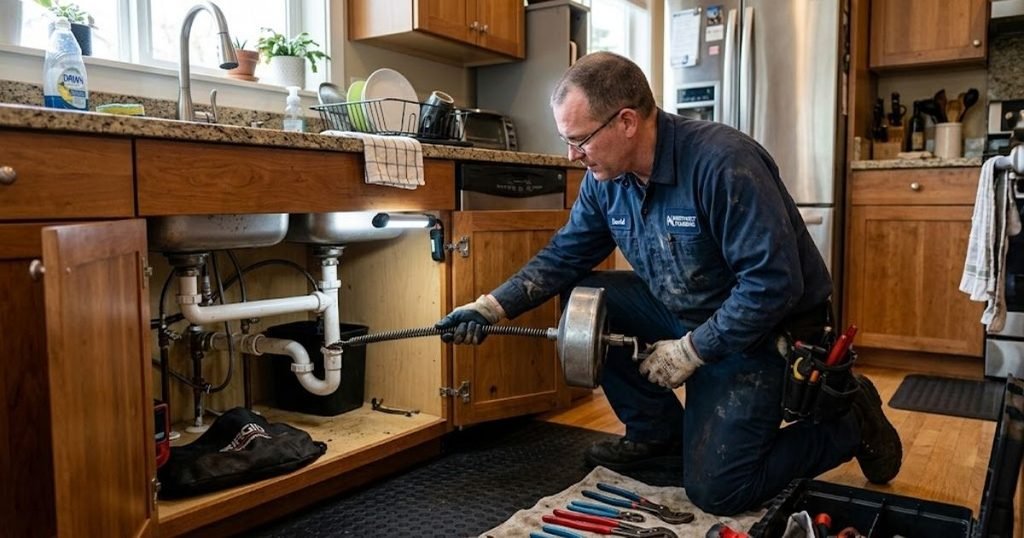
3. Use a Drain Snake or Hand Auger
When a plunger fails to dislodge a clog located past the drain opening, a manual drain snake (hand auger) allows you to reach 5 to 25 feet into the pipe.
EPA Guidance Note: EPA homeowner resources specifically recommend using a mechanical drain snake as a safe, practical alternative to caustic chemical drain openers for clearing household blockages.
- Insert the cable: Gently feed the flexible steel cable down the drain opening or through the cleanout access under the sink.
- Navigate turns: As you feel resistance at pipe bends, rotate the handle clockwise while applying mild forward pressure to help the tip pass through fittings.
- Engage the blockage: When you hit a solid obstruction, lock the thumbscrew on the auger canister and rotate the crank handle clockwise continuously. This allows the corkscrew tip to bite into or break up the blockage.
- Retrieve or push through: Slowly pull the cable back while cranking. If hair or debris is hooked on the end, clean it off into a bucket. If the clog broke apart, feed the cable slightly further to ensure the path is clear.
- Flush the system: Remove the snake and run hot water down the fixture for several minutes to wash away remaining fragments.
Safety Warning: Never force a drain snake aggressively if it hits a hard, unyielding stop. Excessive force can bend the cable, puncture delicate thin-walled pipes, or scratch porcelain fixtures.
4. Flush With Hot Water When Appropriate
Flushing hot water down a drain can help soften and dissolve accumulated body fats, soap residues, or light kitchen grease coating the pipe walls.
- When to use: Hot tap water is excellent for maintenance flushes or minor grease slow-downs in modern metal or schedule 40 PVC piping.
- When to avoid: Never pour boiling water directly down thin plastic PVC pipes or into porcelain toilet bowls. Extreme heat can soften or warp thin PVC joints and thermally shock cold vitreous china, cracking the toilet bowl.
- Safe approach: Run hot water straight from your kitchen or bathroom faucet for 3 to 5 minutes after mechanical clearing to carry away loose debris.
5. Clean the P-Trap
The curved, U-shaped pipe under kitchen and bathroom sinks is designed to trap sewer gases but it also catches heavy debris, dropped rings, and thick gunk. Cleaning the P-trap directly is often the most definitive way to clear a persistent sink clog.
- Prepare your workspace: Clear items from under the sink and place a bucket and old towels directly beneath the U-bend pipe.
- Loosen slip nuts: Unscrew the two plastic slip nuts holding the curved P-trap section to the sink tailpiece and wall pipe by turning them counterclockwise by hand or using channel-lock pliers.
- Remove and empty trap: Carefully pull the U-shaped pipe section down. Drain standing water and accumulated sludge into the bucket.
- Scrub clean: Use an old toothbrush or bottle brush to clean the interior walls of the trap and adjoining tailpiece. Check inside for cracks, corrosion, or deteriorated washers.
- Reassemble and test: Slide the pipe back into place, ensuring rubber washers/gaskets are seated correctly. Tighten slip nuts firm by hand (do not overtighten plastic threads). Run the sink faucet while watching closely underneath for leaks.
READ MORE: PEX vs Copper Piping: Which Is Better for Your Home?
Should You Use Chemical Drain Cleaners?
When faced with a slow or blocked drain, many homeowners reach for liquid chemical drain cleaners sold at grocery and hardware stores. While these products are widely available, they come with substantial risks that every homeowner should understand.
How Chemical Cleaners Work
Most consumer liquid drain cleaners use caustic chemicals (sodium hydroxide or lye), strong acids (sulfuric acid), or oxidizing agents (sodium hypochlorite/bleach). These chemicals generate heat and intense chemical reactions designed to dissolve organic matter like hair, food, and grease inside the pipe.
The Risks of Chemical Cleaners
- Pipe Damage: The exothermic (heat-generating) reaction produced by caustic and acidic chemicals can soften or deform thin PVC plastic pipes and corrode older metal, brass, or cast-iron lines over time.
- Corrosive Hazard to Plumbing Fixtures: Chemical splashes can permanently etch porcelain, dull chrome or nickel drain finishes, and ruin stainless steel surfaces.
- Severe Chemical Exposure & Fumes: Toxic fumes can irritate eyes, lungs, and skin. Splashing liquid can cause severe chemical burns to hands and face during handling or subsequent plunging attempts.
- Standing Water Hazards: If the chemical fails to clear a complete blockage, your sink or tub remains filled with a toxic, corrosive chemical solution. This creates a dangerous environment for anyone attempting to clean the trap or for a plumber who must work on the line later.
- Dangers of Chemical Reaction: Mixing different chemical drain cleaners or mixing bleach with ammonia-based cleaners creates lethal chlorine gas or explosive reactions within sealed pipes.
Septic System Caution: Current consumer plumbing guidance and EPA environmental standards strongly urge caution when using chemical drain openers. Chemical cleaners disrupt the delicate balance of beneficial bacteria needed to break down solids inside a septic tank. For homes on septic systems, chemical openers should be avoided in favor of physical removal methods like plunging or snaking.
DIY Clogged Drain Fixes to Avoid
To protect your home’s plumbing system and your personal safety, avoid these common DIY mistakes:
- Never Mix Chemical Cleaners: Combining different brand-name cleaners or mixing chemicals with household products like bleach or ammonia can generate toxic gases or dangerous chemical bursts.
- Avoid Pouring Harsh Chemicals into Fully Blocked Pipes: Pours of liquid cleaner into a completely stopped line usually fail to reach the clog, creating a basin full of hazardous standing chemical liquid.
- Do Not Force Drain Snakes or Wire Hangers: Aggressively thrusting stiff wire hangers or snake cables into fittings can puncture fragile copper/plastic pipes, disconnect pipe joints behind walls, or permanently scratch porcelain fixtures.
- Avoid Taking Pipes Apart Without a Plan: Do not dismantle complex plumbing beneath sinks or behind walls unless you know how to reseal fittings, replace rubber washers, and leak-test the assembly.
- Do Not Ignore Repeated Clogs: Repeatedly clearing the same fixture week after week without addressing the underlying cause can allow minor leaks or pipe damage to silently worsen behind cabinetry.
- Never Run Water During a Sewage Backup: Continuing to flush toilets or use faucets when wastewater is backing up into tubs or floor drains accelerates internal home flooding and toxic water damage.
- Avoid Using Unrated Power Tools: Attaching an electric drill directly to a basic manual hand auger without proper equipment ratings can cause the cable to whip violently, causing physical injury or pipe damage.
READ MORE: What to Do When a Toilet Overflows: Step-by-Step Fixes
When Should You Call a Professional Plumber?
While basic plunging and snaking work well for routine surface clogs, certain plumbing situations require professional expertise, diagnostic tools, and commercial equipment.
You should contact a licensed professional plumber when:
- DIY Methods Fail: You have plunged, cleaned the trap, and tried a hand auger, but water still will not drain.
- Multiple Fixtures Are Affected: Sinks, toilets, and showers across different rooms or floors are slowing down or backing up simultaneously.
- Sewage Is Backing Up into Your Home: Wastewater, dark water, or raw sewage is rising out of floor drains, tubs, or lower-level toilets.
- You Smell Persistent Sewer Gas: Strong, unpleasant sewer gas odors linger near drains even after flushing water through traps.
- Clogs Return Frequently: A drain clogs repeatedly every few weeks, indicating an unaddressed deeper obstruction, root intrusion, or sagging pipe.
- You Suspect Tree Root Intrusion: Underground sewer lines are near mature trees, and drainage has progressively slowed across the entire property.
- A Chemical Cleaner Is Trapped in a Blocked Pipe: You poured a chemical cleaner into a blocked drain, but it failed to clear, leaving a hazard that requires safety gear to clear.
- Your Home Has Old, Fragile Piping: Older homes with cast iron, galvanized steel, or original clay sewer pipes require delicate care to prevent line collapse during cleaning.
DIY vs Professional Drain Cleaning
Comparing key factors helps you determine which route makes sense for your current drain situation:
| Factor | DIY Drain Cleaning | Professional Drain Cleaning |
| Best For | Simple, localized, single-fixture clogs (hair, light food residue) | Severe, deep, recurring, multi-fixture, or main sewer line blockages |
| Typical Tools | Cup/flange plunger, manual hand auger, barbed hair tool, slip-joint pliers | Motorized commercial auger, hydro-jetter, fiber-optic video inspection camera |
| Estimated Cost | $10 – $50 (one-time purchase of basic tools) | $150 – $350 (standard household); $350 – $800+ (main line / hydro-jetting) |
| Time Required | 15 minutes to 1 hour | 1 to 3 hours (includes diagnosis and testing) |
| Skill Level Needed | Beginner / Basic home maintenance skills | Licensed professional plumber / Advanced diagnostic training |
| Risk of Pipe Damage | Low to moderate (higher if chemical cleaners or forced tools are used) | Very low (plumbers match tool pressure and method to pipe material) |
| Recurring Clogs | May only clear a temporary path without fully scrubbing pipe walls | Clears entire pipe diameter; identifies root causes via camera |
| Multiple Clogged Drains | Not recommended (cannot reach main branch lines safely) | Highly recommended (safely targets central drainage stack or main line) |
| Sewer-Line Problems | Unsafe / Ineffective | Required (requires specialized commercial line equipment) |
| Camera Inspection | Not available | Available (pinpoints exact pipe condition and defect location) |
| Best Situation | Bathroom sink slow from hair; minor toilet clog cleared by plunger | Sewage backup; multiple slow drains; tree root intrusion; aged cast iron pipes |
How Much Does Professional Drain Cleaning Cost?
Understanding expected price ranges helps you budget accurately when hiring a professional service.
Note: Actual plumbing costs vary based on your geographic location, time of service (standard business hours vs. emergency after-hours), accessibility of the drain, blockage severity, and necessary equipment.
According to current U.S. home-service industry cost benchmarks:
- Standard Household Drain Cleaning: Cleaning a single localized fixture drain (such as a kitchen sink, bathroom sink, or shower drain) typically costs between $150 and $350.
- Main Sewer Line Cleaning: Clearing a main sewer line blockage using a commercial motorized auger generally ranges from $200 to $500.
- Sewer Camera Inspection: Standalone fiber-optic camera line inspections usually run between $125 and $400 (often discounted or bundled when paired with drain cleaning services).
- Hydro-Jetting Service: Heavy-duty high-pressure hydro-jetting to remove grease buildup or extensive tree roots typically costs between $350 and $800+, depending on pipe length and line access.
- After-Hours or Emergency Service: Emergency calls on nights, weekends, or holidays often incur an additional trip fee or elevated hourly labor rate (typically adding $100 to $250+ to the total invoice).
Cost Summary Disclaimer: Actual costs vary by location, plumbing system, severity of the blockage, and contractor. Always request an upfront estimate before work begins.
How Plumbers Diagnose a Stubborn Clogged Drain
When a professional plumber arrives at your home, they follow a systematic diagnostic process to resolve the issue permanently rather than applying a short-term patch:
- Symptom Review: The plumber asks when the problem began, which fixtures are affected, whether gurgling or backup occurs, and if chemicals were recently poured down the line.
- Visual Inspection: They check accessible pipe cleanouts, under-sink P-traps, and fixture basin drains to determine whether the issue is isolated or widespread.
- Sewer Video Camera Inspection: If the clog is deep, recurring, or affecting multiple fixtures, the plumber inserts a waterproof camera into the main cleanout port. This identifies the exact cause whether it’s accumulated grease, collapsed clay pipe, or tree root penetration.
- Targeted Mechanical Clearing or Hydro-Jetting: Based on camera findings and pipe material, the technician selects the appropriate cutter head, auger cable size, or hydro-jetting pressure to clear the blockage safely.
- Flow Testing & Verification: The plumber flushes fixtures with volume water and re-inspects with the camera to verify that full diameter flow capacity has been restored.
Clogged Drain vs. Sewer Line Problem
Differentiating between a simple, single-fixture clog and a deeper sewer line issue helps you take the correct action immediately.
Characteristics of a Localized Drain Clog
- Affects only one specific fixture (e.g., only the master bathroom shower drains slowly).
- Other fixtures in the same room and throughout the house function normally.
- Plunging or cleaning the local P-trap resolves the problem immediately.
- No wastewater backs up into secondary fixtures when water is run.
- No strong sewage smells are detected outside or in basement areas.
Characteristics of a Main Sewer Line Problem
- Multiple fixtures fail simultaneously (e.g., flushing the hall toilet causes water to gurgle up into the bathtub drain).
- Running a water-heavy appliance (like a clothes washer) causes wastewater to spill into low-lying floor drains or shower stalls.
- Sewer odors linger around indoor drains, yard cleanouts, or the basement foundation.
- Fixtures gurgle continuously across multiple rooms when water empties anywhere in the house.
- Unusually lush, soggy, or sunken grass patches appear over underground sewer pipe paths in your yard.
Primary causes of main sewer line failure include tree root penetration through pipe joints, structural pipe cracking from soil settling, belly sags in horizontal runs, and accumulations of non-flushable materials like wet wipes and paper towels.
What If You Have a Septic System?
If your home relies on an on-site septic tank and drain field rather than a municipal sewer system, drain management requires extra attention.
Why Septic Systems Require Specialized Care
A septic system relies on natural biological bacterial action to digest organic waste inside the septic tank before liquid effluent flows out to the drain field. Pouring harsh chemicals down household drains can kill off these beneficial bacteria, causing untreated solids to exit the tank and permanently clog the soil in your drain field.
Essential Septic Safety Guidelines
- Avoid Caustic Drain Cleaners: Never use acid- or lye-based liquid chemical drain openers. Use plungers, hand augers, or enzymatic drain treatments instead.
- Keep Solids and Grease Out: Never dispose of cooking oils, coffee grounds, wet wipes, paper towels, cat litter, or personal hygiene products through sinks or toilets.
- Monitor Slow Drainage Carefully: If all household drains slow down at once, the issue may be a full septic tank, a blocked inlet baffle, or a saturated drain field rather than a pipe clog.
- Follow Recommended Inspection and Pumping Schedules:
EPA Septic Standard: The U.S. EPA recommends that residential septic systems be professionally inspected at least once every three years. Septic tanks are generally pumped every three to five years, depending on household size, total wastewater volume, and tank capacity.
If you suspect your septic tank is full or experiencing drain field failure, contact a licensed septic service professional immediately.
How to Prevent Clogged Drains
Preventative maintenance is the most effective way to avoid unexpected plumbing bills and messy backups. Incorporate these simple habits into your household routine:
- Install Mesh Drain Strainers: Place removable mesh strainers over all shower, bathtub, and bathroom sink drains to catch hair and debris before it enters the pipe. Clean them weekly.
- Never Pour Fats, Oils, or Grease Down Sinks: Collect used cooking grease in an empty can or jar, let it cool, and discard it in the trash. Wipe greasy pans with a paper towel before washing.
- Dispose of Coffee Grounds in the Garbage or Compost: Coffee grounds accumulate in trap bends and act like sand, capturing other solids to form dense clogs.
- Flush Only Human Waste and Toilet Paper: Treat toilets strictly for human waste and reasonable amounts of toilet paper. Never flush wipes (even those labeled “flushable”), facial tissues, cotton swabs, dental floss, or feminine products.
- Run Cold Water with Garbage Disposals: Always run cold tap water while operating your garbage disposal and keep it running for 15 seconds after turning the unit off to flush food particles entirely out of the sink branch line.
- Avoid Overloading Garbage Disposals: Feed small amounts of food waste into the disposal at a time. Avoid feeding large volumes of fibrous materials (celery, corn husks), starchy foods (potato peels, pasta, rice), or hard items (bones, fruit pits).
- Perform Regular Warm-Water Flushes: Once a month, flush kitchen and bathroom sink drains with hot tap water to carry away minor oily films before they build up.
- Address Slow Drains Promptly: Treat minor slow-draining symptoms early using a plunger or hand snake before they turn into complete blockages.
How to Decide Between DIY and a Professional
Use this simple decision guide to choose the safest path forward when a drain problem arises:
Try DIY First When:
- Only one fixture (e.g., a single sink or shower) is draining slowly or blocked.
- The obstruction appears close to the drain opening (visible hair, soap sludge).
- There is no sewage backing up into other plumbing fixtures.
- You can safely access the P-trap or drain stopper without damaging fixtures.
- You have basic tools available (cup/flange plunger, manual hand auger, bar tool).
Call a Plumber When:
- Multiple fixtures across your home are backing up or gurgling together.
- Raw sewage or foul-smelling dark water is backing up into lower-level tubs or floor drains.
- You suspect tree roots have invaded underground sewer pipes.
- Standard plunging and manual snaking attempts have failed.
- You previously poured chemical drain cleaners into a blocked pipe that remains stopped up.
- Your home features delicate, old, or severely corroded cast-iron or galvanized metal pipes.
- You feel uncomfortable using plumbing tools or handling wastewater.
Frequently Asked Questions
How do you unclog a drain fast?
The fastest way to clear a routine localized clog is with a dedicated plunger or barbed plastic hair tool. Ensure a tight seal over the drain, submerge the plunger cup in 1 to 2 inches of water, cover any overflow openings, and plunge vertically for 15 to 20 seconds. For hair clogs near the surface, inserting a plastic barbed drain tool quickly hooks and extracts hair masses without disconnecting pipes.
What is the best way to unclog a drain without chemicals?
The best chemical-free methods include manual plunging, using a flexible plastic hair retriever, running a hand auger (drain snake) into the pipe, or removing and clearing the P-trap under the sink. These physical methods remove the actual physical obstruction safely without heat or chemical risks to your pipes, plumbing fixtures, or septic system.
When should I call a plumber for a clogged drain?
Call a plumber if a clog will not clear after basic plunging or snaking, if the same drain repeatedly clogs, if multiple fixtures slow down at once, or if raw sewage backs up into shower stalls or floor drains. These symptoms indicate deeper main line obstructions, pipe structural issues, or root intrusions that require professional equipment to resolve safely.
How much does it cost to have a plumber unclog a drain?
Standard residential drain cleaning for a single fixture generally ranges between $150 and $350. Clearing a main sewer line using a commercial motorized auger or hydro-jetter typically ranges from $200 to $800+, depending on blockage severity, equipment needed, line access, and whether after-hours emergency rates apply.
Why do my drains keep getting clogged?
Recurring clogs usually point to unresolved buildup farther down the line (such as solidified grease or heavy soap scale), structural pipe defects (like a sagging pipe or misaligned joint), tree root intrusion into main sewer lines, or inappropriate disposal habits like flushing wipes or pouring fats down kitchen sinks. A professional sewer camera inspection can pinpoint the exact cause.
Conclusion
A clogged drain can range from a minor daily inconvenience to a serious household emergency. Fortunately, most routine, isolated blockages such as hair caught in a bathroom pop-up stopper or soap scum in a shower trap can be safely, quickly, and affordably cleared using basic DIY tools like plungers, barbed hair tools, and manual hand augers.
However, recognizing your DIY limits is essential. When dealing with persistent blockages, chemical hazards, multiple affected fixtures, or sewage backups, stepping back and calling a licensed professional plumber is the safest choice. Professional diagnostics, video camera inspections, and motorized line cleaning equipment ensure that deep clogs and pipe defects are cleared without risking expensive damage to your home’s plumbing infrastructure.

