As an HVAC professional who has spent years walking through basements, attics, and mechanical rooms across America, I know that choosing a new system can quickly feel overwhelming. Equipment brochures are filled with technical acronyms like SEER2, HSPF2, variable-speed compressors, and dual-fuel configurations.
This guide breaks down everything you need to know about an American Standard heat pump in plain, simple language. Whether you are a senior homeowner looking for quiet, reliable comfort, a caregiver helping family update an older home, or simply someone who wants clear answers on cost, efficiency, and reliability, this article will walk you through the options step by step.
American Standard is a well-established brand with a strong reputation in the United States HVAC market. However, no single brand is automatically the best fit for every home. How well a system works depends on your local weather, home insulation, ductwork condition, budget, and the skill of the contractor installing it. Lets deep dive into “American Standard Heat Pump: Models, Costs & Buying Guide”
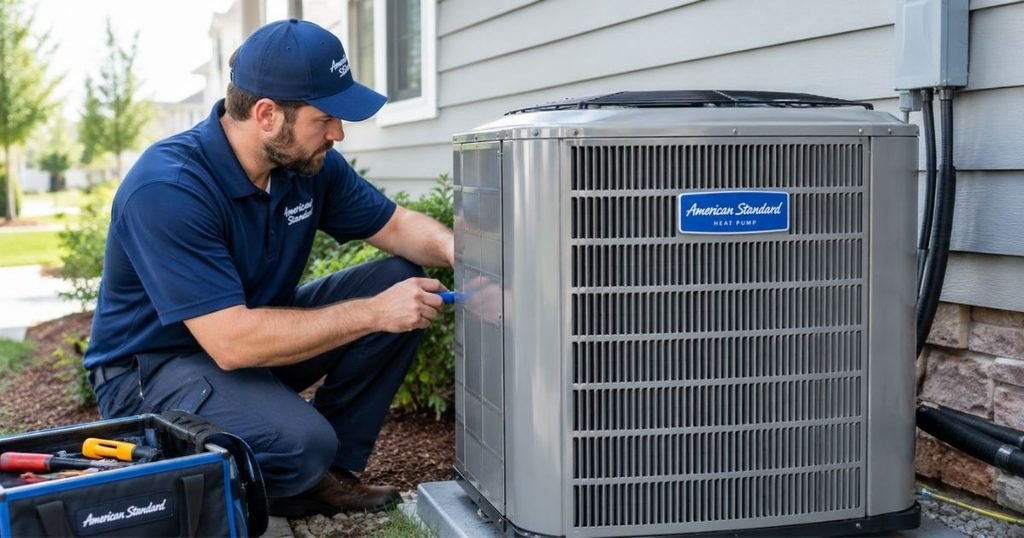
What Is an American Standard Heat Pump?
American Standard Heating & Air Conditioning is a top-tier U.S. residential HVAC brand owned by Trane Technologies. Known for durable engineering and sturdy cabinet designs, American Standard manufactures a wide range of heating and cooling equipment.
An American Standard heat pump is an electric-powered home comfort system that moves heat from one place to another using liquid and gaseous refrigerant.
How It Keeps You Comfortable
- In the Summer (Cooling): The heat pump absorbs warmth from inside your living spaces and pumps it outside, leaving cool air inside your home exactly like a central air conditioner.
- In the Winter (Heating): The system automatically reverses its cycle. It extracts ambient thermal heat from outdoor air (even in cold weather) and pumps that heat indoors to warm your living space.
Because a heat pump moves heat rather than creating it by burning fuel (like natural gas, oil, or propane), it is often significantly more energy-efficient than traditional electric resistance heaters.
Heat Pump vs. Traditional Air Conditioner
A standard central air conditioner can only cool your home; it requires a separate furnace or electric heating kit for winter warmth. A heat pump uses a special internal component called a reversing valve that allows the same outdoor unit to provide both cooling in July and heating in January.
Can a Heat Pump Replace Your Furnace?
In many mild-to-moderate climates across the USA, a heat pump can completely replace both your old air conditioner and gas/oil furnace. However, if you live in a region with long stretches of sub-zero winter temperatures, your installation may include supplemental heat backup (electric heat strips inside the indoor air handler) or operate as a dual-fuel (hybrid) system. A dual-fuel setup pairs an electric heat pump with a high-efficiency gas furnace. The heat pump handles mild winter days efficiently, and the gas furnace automatically turns on when outdoor temperatures drop extremely low.
READ MORE: Carrier Heat Pump Reviews — Models, Costs, Pros & Cons
How Does an American Standard Heat Pump Work?
To understand how a heat pump works, imagine your kitchen refrigerator. A refrigerator pulls heat from inside the food compartment and ejects it into your kitchen. A heat pump does the same thing, just on a whole-house scale.
Here is the step-by-step process of how an American Standard heat pump operates in heating mode:
- Heat Absorption: The outdoor unit circulates cold liquid refrigerant through an outdoor copper coil. Even when cold outside, outdoor air contains heat energy. The refrigerant absorbs this heat energy from the air.
- Compression: The refrigerant vapor passes through the outdoor compressor. The compressor squeezes the gas, raising its temperature and pressure significantly.
- Heat Transfer Indoors: The hot, pressurized refrigerant gas travels through insulated copper lines into your home’s indoor unit (the air handler). A blower fan pushes indoor air over the warm indoor coil, heating the air before circulating it through your ductwork into your rooms.
- Refrigerant Recirculation: The refrigerant cools down, transforms back into a liquid, passes through an expansion valve, and returns to the outdoor coil to repeat the process.
- Reversing for Summer: When summer arrives, the system’s reversing valve changes the direction of refrigerant flow, instantly transforming the unit into a high-performance central air conditioner.
Operating in Cold Weather
Older heat pumps struggled when temperatures fell below freezing. Modern American Standard systems use advanced scroll and variable-speed compressors, updated electronic expansion valves, and sophisticated controls that allow them to extract warmth from outdoor air even when ambient temperatures fall well below 32°F. Specialized cold-climate heat pump models are specifically engineered to maintain strong heating capacity in extreme winter conditions.
READ MORE: Goodman Heat Pump Review | Efficiency, Cost, Pros & Cons
American Standard Heat Pump Series and Models
American Standard categorizes its heat pumps into three primary product tiers: Silver, Gold, and Platinum. Equipment choices range from single-speed budget options to highly sophisticated variable-speed units.
Below is an overview of the primary series and models available:
| Series / Model | Compressor Operation | Approx. Efficiency (Up to) | Notable Comfort Features | Best Suited For |
| Silver Series (e.g., Silver 15, Silver 16) | Single-stage or Modulating Low-Profile options | Up to 16.0 SEER2 / 8.5–10.0 HSPF2 | Durable construction, classic operation, compact footprint options | Budget-conscious homeowners, replacement in moderate climates |
| Gold Series (e.g., Gold 16, Gold 17) | Two-stage (Dual-stage) / Multi-speed | Up to 17.2 SEER2 / 9.6–11.0 HSPF2 | Better humidity control, quieter operation, dual-stage temperature balance | Mid-range budgets wanting strong comfort and efficiency without premium costs |
| AccuComfort Platinum 18 | Variable-speed (Inverter) | Up to 18.0 SEER2 / 8.8 HSPF2 | AccuComfort™ precise speed adjustments, lower sound levels, automated comfort tuning | Homeowners seeking consistent humidity control and quiet operation |
| AccuComfort Platinum 20 | Variable-speed (Inverter) | Up to 22.4 SEER2 / 10.5 HSPF2 | Top-tier variable-speed operation, whisper-quiet sound profile, system communication | Hot or cold climates, maximum comfort, high energy conservation |
| Platinum 20 Cold Climate Heat Pump | Advanced Variable-speed Cold Climate | High SEER2 / Cold Climate Optimized | Manufacturer-reported high heating capacity retention at 5°F and sub-zero operation | Northern regions with severe winters seeking whole-home heat pump coverage |
Note: Efficiency ratings and equipment availability vary depending on system capacity (tonnage), matched indoor equipment, and regional distributor inventories.
Understanding Compressor Types
- Single-Stage (Silver Series): The compressor turns on at 100% full speed when heating or cooling is needed and shuts off when the set temperature is reached. It is simple and dependable, but can lead to slight temperature swings.
- Two-Stage / Multi-Speed (Gold Series): Operates on low speed (around 60–70% capacity) most of the time for quiet efficiency, automatically shifting to high speed on extremely hot or cold days.
- Variable-Speed / AccuComfort™ (Platinum Series): Continuously adjusts its speed in tiny increments (often 1% steps) to match your home’s exact heating or cooling loss. This delivers consistent indoor temperatures, superior moisture removal in summer, and low operating sound.
READ MORE: Air to Water Heat Pump (costs, brands, pros & cons)
American Standard Heat Pump Efficiency: SEER2 and HSPF2 Explained
Understanding efficiency ratings helps you evaluate equipment costs versus monthly energy savings. In recent years, testing standards updated to SEER2 and HSPF2 to better reflect real-world ductwork air resistance.
What Is SEER2?
SEER2 stands for Seasonal Energy Efficiency Ratio 2. It measures how efficiently a heat pump cools your home during the cooling season.
- A higher SEER2 number indicates a more efficient cooling system.
- Federal minimum standards generally require 14.3 to 15.2 SEER2 depending on your region. Entry-level units sit near 15 SEER2, while high-efficiency systems like the AccuComfort Platinum 20 reach up to 22.4 SEER2.
What Is HSPF2?
HSPF2 stands for Heating Seasonal Performance Factor 2. It measures heating efficiency over a typical winter season.
- Higher HSPF2 ratings mean the heat pump uses less electricity to generate heat.
- Standard systems typically range from 7.5 to 8.5 HSPF2, while high-performing models reach 9.5 to 11.0 HSPF2.
Why Efficiency Ratings Matter (And Their Limits)
Selecting a high-efficiency system can lower energy usage, but advertised efficiency ratings represent maximum potential ratings under ideal lab testing. Your actual utility bills depend on several real-world conditions:
- Local electricity rates and outdoor climate severity
- Home insulation quality, air sealing, and attic insulation
- Ductwork leakage, size, and design
- Proper equipment sizing (load calculation)
- Quality of installation and regular maintenance
A 20 SEER2 unit installed on leaky, uninsulated ductwork will not deliver its full rated efficiency. Proper installation is critical to achieving expected energy performance.
How Much Does an American Standard Heat Pump Cost?
Installing an American Standard heat pump involves purchasing both equipment and professional installation labor. Total installed costs typically range from $6,800 to $17,500+ depending on system tier, capacity, and home requirements.
The table below outlines typical estimated price ranges for complete installed systems:
| American Standard Series | Typical Installed Cost Range (Estimated) | Factors Influencing Your Price |
| Silver Series | $6,800 – $11,000 | System tonnage, electrical requirements, basic indoor air handler |
| Gold Series | $8,500 – $13,000 | Two-stage technology, thermostat upgrades, ductwork minor adjustments |
| Platinum Series | $9,800 – $17,500+ | Variable-speed inverter compressor, communicating thermostat, complex installation |
Disclaimer: These figures are general estimates based on current national market data. Actual pricing varies based on region, installation complexity, dealer markups, and required accessories. Always get itemized written quotes from licensed contractors.
What Is Included in the Installed Cost?
When you receive an HVAC quote, the total price usually covers multiple items beyond the outdoor box:
- The outdoor heat pump unit
- The indoor air handler (or matched indoor coil and furnace)
- New copper refrigerant line set or line flushing
- System thermostat (communicating smart thermostat for Platinum systems)
- Electric heat strip backup kit inside the air handler
- Electrical wiring, outdoor disconnect switch, and safety pad
- Municipal permits and local code inspections
- Labor for installation, system vacuum evacuation, charging, and testing
- Safe removal and disposal of your old HVAC equipment
READ MORE: AO Smith vs. Rheem Water Heaters: Comparison & Expert Reviews
What Affects American Standard Heat Pump Installation Cost?
Two neighboring homes can buy the exact same model heat pump and receive vastly different final installation quotes. Key factors driving price variations include:
- Home Size and Sizing (Tonnage): A larger home requires a higher-capacity unit (e.g., 4 or 5 tons vs. 2 tons) to maintain indoor comfort, increasing equipment cost.
- Ductwork Modifications: If your ductwork is undersized, leaking, or damaged, repairs or alterations will add to labor costs.
- Electrical Infrastructure: Upgrading an older electrical panel to accommodate the heat pump and backup heating elements adds to total expenses.
- Thermostat Requirements: Premium variable-speed systems often require proprietary communicating thermostats to access full functionality.
- Accessibility: Installations located in tight crawlspaces or difficult attic spaces require more labor hours.
- Local Labor Rates & Permits: Regional labor costs and local permitting requirements directly affect the final invoice.
Choosing an installation contractor based strictly on the lowest bid can be risky. Improper sizing or poor refrigerant line installation can lower system efficiency, shorten equipment life, and lead to ongoing service issues.
American Standard Heat Pump Pros and Cons
Like any home comfort equipment, American Standard heat pumps offer distinct strengths along with potential drawbacks.
Summary of Pros and Cons
| Potential Advantages | Potential Drawbacks |
| All-in-One Comfort: Provides year-round heating and cooling through a single outdoor system. | Higher Upfront Cost: Premium variable-speed systems require a larger initial investment. |
| High Efficiency Options: Variable-speed models deliver up to 22.4 SEER2 for lower electricity consumption. | Installation Dependency: System performance and longevity depend heavily on installation quality. |
| Proven Build Quality: Heavy-duty cabinets, durable coils, and reliable scroll compressors. | Electricity Rate Sensitivity: Operating costs depend on local electric utility rates. |
| Quiet Operation: Platinum variable-speed models operate at very low sound levels. | Proprietary Controls: High-end models often require brand-specific communicating thermostats. |
| Cold Climate Performance: Modern low-profile and cold-climate offerings maintain heat at lower outdoor temperatures. | Regional Price Differences: Dealer pricing and parts availability can vary by location. |
READ MORE: Weil‑McLain Boiler Reviews — Models, Costs, Pros & Cons
American Standard Heat Pump for Cold Climates
A common concern among northern homeowners is whether a heat pump can handle winter weather. Traditional heat pumps lose heating output as outdoor temperatures drop, requiring electric heat strips or a gas furnace backup to maintain indoor warmth.
Advanced Cold-Climate Capabilities
Modern low-profile and cold-climate models such as the AccuComfort Variable Speed Platinum 20 Cold Climate Heat Pump use inverter-driven variable-speed compressors engineered to retain strong heating output in sub-freezing weather.
- Manufacturer Specifications: Manufacturer test data indicates that select cold-climate configurations can deliver 100% or more of their rated heating capacity at outdoor temperatures as low as 5°F, continuing to operate down to -20°F.
- Automatic Defrost: In freezing weather, outdoor coils can accumulate frost. American Standard systems use demand defrost cycles to clear ice automatically while maintaining indoor warmth.
- Backup Heating: In extreme freeze zones, systems are paired with supplemental electric heating elements or configured as a dual-fuel setup with a furnace for peace of mind.
American Standard Heat Pump Warranty
Understanding warranty coverage helps protect your investment over the long term.
Standard Manufacturer Warranty Coverage
- Base Warranty: American Standard systems typically include a 5-year base limited warranty on functional parts if un-registered.
- Registered Limited Warranty: If registered online within 60 days of installation, warranty coverage typically extends to:
- 10 Years on internal functional parts
- 10 to 12 Years on the compressor (depending on the specific series/model)
- Labor Exclusions: The manufacturer’s warranty covers replacement parts, but does not cover contractor labor costs for diagnosing or installing those parts. Many HVAC contractors offer separate 1- to 10-year labor warranties.
Important Step: Always verify that your installer registers the equipment promptly after installation to secure full 10-year warranty benefits. Keep a file with your installation invoice, model/serial numbers, and registration confirmation.
American Standard Heat Pump Maintenance
Regular maintenance keeps your heat pump running efficiently and helps prevent unexpected breakdowns.
Safe for most homeowners:
- Check and replace filters on your manual’s schedule
- Keep the outdoor unit clear of leaves, snow, and plants
- Look at the condensate drain for clogs or leaks
- Test the thermostat and replace batteries
Best left to a professional:
- Coil inspection and cleaning
- Refrigerant system checks
- Electrical component inspection
- Ductwork inspection
- Annual professional maintenance
Common American Standard Heat Pump Problems
If your system is not operating as expected, here are common issues, potential causes, and safe troubleshooting steps:
1. System Running but Not Heating or Cooling Sufficiently
- Possible Cause: Dirty air filter, blocked outdoor coil, or incorrect thermostat setting.
- Safe Check: Replace the air filter and check that the outdoor unit is free of leaves or debris. Confirm the thermostat is set to “Heat” or “Cool” with the fan on “Auto.”
- When to Call a Pro: If air remains warm in summer or cool in winter, call a technician to check refrigerant levels or valve operation.
2. Ice Buildup on the Outdoor Unit
- Possible Cause: Normal frost during cold weather, or a faulty defrost control, fan motor, or low refrigerant.
- Safe Check: Monitor the unit briefly. It should automatically enter a defrost cycle to melt light frost.
- When to Call a Pro: If the outdoor unit becomes encased in thick ice, turn the system off and call for professional service to prevent compressor damage.
3. Frequent On-and-Off Cycling (Short Cycling)
- Possible Cause: Clogged air filter, oversized equipment, or a failing thermostat sensor.
- Safe Check: Change the air filter.
- When to Call a Pro: If short cycling continues, have an HVAC professional check system controls, sensors, and refrigerant pressure.
🚨 Critical Safety Warning
Never open high-voltage electrical panels, attempt to service refrigerant lines, or perform internal mechanical repairs yourself. High voltage and pressurized refrigerants pose serious injury risks and require licensed HVAC professionals.
American Standard Heat Pump vs. Traditional HVAC Systems
Comparing options side by side helps clarify how a heat pump differs from standard heating and cooling setups:
| Feature | Heat Pump System | Central AC + Gas Furnace |
| Heating Source | Electricity (Heat transfer) | Natural Gas, Propane, or Fuel Oil |
| Cooling Source | Electricity (Refrigerant cycle) | Electricity (Refrigerant cycle) |
| System Footprint | Single outdoor unit handles both seasons | Outdoor AC unit + Indoor furnace |
| Extreme Cold Performance | Model-dependent; backup heat required in sub-zero climates | Strong heat output regardless of outdoor freezing temps |
| On-Site Emissions | Zero direct fossil fuel emissions | Produces combustion exhaust (requires proper venting) |
| Maintenance Need | Bi-annual (Spring cooling check / Fall heating check) | Bi-annual (Spring AC check / Fall furnace check) |
American Standard Heat Pump vs. Trane
Many homeowners wonder how American Standard compares to Trane.
- Shared Parent Company: Both brands are owned by Trane Technologies and manufactured in the same facilities.
- Identical Engineering: Corresponding models share internal components, including compressors, heat exchangers, and spine-fin outdoor coils.
- Main Differences: Differences are primarily cosmetic (cabinet badging and grill design), along with independent dealer distribution networks.
- Pricing & Availability: Pricing is generally comparable, though quotes depend on local dealer competition.
Neither brand is inherently better; choosing between them often comes down to which brand has the most reputable, well-reviewed local dealer in your community.
American Standard Heat Pump vs. Carrier
Carrier is another top-tier U.S. manufacturer widely evaluated alongside American Standard.
- Model Lineup: Both brands offer three main tiers (Carrier’s Comfort, Performance, and Infinity series vs. American Standard’s Silver, Gold, and Platinum series).
- Efficiency Ratings: Both offer variable-speed models reaching over 20 SEER2.
- Technology: Carrier uses its Infinity System Control, while American Standard utilizes AccuLink™ communicating technology on high-end models.
- Key Takeaway: Both manufacture durable equipment. The installing contractor’s skill in sizing and fitting the equipment to your home is often more important than the logo on the outdoor cabinet.
How to Choose the Right American Standard Heat Pump
Use this simple checklist to guide your decision-making process:
- Evaluate Your Climate Zone: In mild or moderate southern climates, a Silver or Gold series heat pump may fulfill all your needs. In cold northern regions, look at cold-climate models or dual-fuel options.
- Determine Efficiency Goals: Balance equipment cost against expected energy savings. Higher SEER2/HSPF2 ratings pay off faster in areas with high electric rates or extreme weather.
- Assess Ductwork: Have a technician evaluate whether your ductwork is sealed, insulated, and sized correctly for a modern heat pump.
- Prioritize Indoor Noise and Comfort: If your outdoor unit is placed near a bedroom window or patio, variable-speed Platinum models offer quieter operation.
- Research Incentives: Check the Federal Inflation Reduction Act (Energy Efficient Home Improvement Credit Section 25C) and local utility rebates. High-efficiency heat pumps may qualify for federal tax credits up to $2,000, as well as local utility incentives. Eligibility depends on specific model numbers, regional efficiency thresholds, and installation dates.
Questions to Ask an HVAC Contractor Before Buying
When gathering estimates, ask prospective contractors these key questions:
- “Will you perform a detailed Manual J load calculation to size the heat pump for my home’s exact needs?”
- “What specific SEER2 and HSPF2 ratings will this exact outdoor/indoor equipment combination achieve?”
- “Does my existing ductwork require repairs, sealing, or modifications?”
- “What backup heating source is included for freezing winter days?”
- “What is included in the written quote (permits, old equipment removal, electrical upgrades, thermostat)?”
- “Will you handle the warranty registration, and what labor warranty do you provide?”
- “Which model numbers qualify for federal tax credits or local electric utility rebates?”
Frequently Asked Questions
How much does an American Standard heat pump cost?
A complete, professionally installed American Standard heat pump system generally costs between $6,800 and $17,500+. Entry-level Silver models sit at the lower end of the range, Gold mid-tier models sit in the middle, and premium Platinum variable-speed systems occupy the upper range. Final pricing depends on system size, ductwork modifications, and local labor rates.
Are American Standard heat pumps good?
Yes, American Standard heat pumps are widely considered dependable options in the HVAC industry. They are known for sturdy build quality, low noise levels on variable-speed models, and solid manufacturer warranties. However, overall satisfaction depends on proper contractor sizing and installation.
How long does an American Standard heat pump last?
A well-maintained American Standard heat pump typically lasts 12 to 15+ years. Systems in mild climates that undergo regular bi-annual maintenance often last longer than systems in harsh coastal environments or regions with extreme heating and cooling demands.
Is an American Standard heat pump good for cold weather?
Modern American Standard heat pumps, especially variable-speed models and dedicated cold-climate heat pumps are engineered to operate effectively in low freezing temperatures. For homes in extremely cold northern climates, contractors often install supplemental electric heat strips or pair the heat pump with a gas furnace in a dual-fuel configuration for emergency warmth.
What is the most efficient American Standard heat pump?
The most efficient model in American Standard’s lineup is the AccuComfort Platinum 20, which reaches up to 22.4 SEER2 cooling efficiency and up to 10.5 HSPF2 heating efficiency. While highly efficient, the best choice for your home depends on your local energy rates, climate, and overall budget.
Final Thoughts
An American Standard heat pump provides a versatile, highly efficient option for year-round home comfort. With options ranging from entry-level Silver series units to top-tier Platinum AccuComfort variable-speed models, American Standard offers equipment tailored to diverse home sizes and budgets.
For senior homeowners and retirees, selecting an HVAC system is about securing reliable comfort, predictable operating costs, simple controls, and steady temperatures.
To make the best decision for your home:
- Schedule evaluations with at least two or three licensed local HVAC contractors.
- Require a formal Manual J load calculation to ensure proper equipment sizing.
- Compare detailed written estimates that break down equipment models, warranty coverage, labor inclusions, and potential tax credits or local utility rebates.
Taking the time to match the right system to your home’s layout, local climate, and personal comfort preferences ensures reliable performance and peace of mind for years to come.