It is a familiar scenario in many American households: you are in the middle of preparing dinner using the microwave and air fryer, or perhaps working in your home office while a space heater hums under your desk, and suddenly, the lights go out. The television cuts off, the computer screen goes dark, and a quiet stillness falls over the room. You head down to the basement, utility room, or garage, open the electrical panel, and find that a breaker switch has flipped to the “off” position (or settled awkwardly in the middle). You push it back to “on,” head back upstairs, and resume your routine only for the breaker to trip again a few minutes later.
If this sounds familiar, you are not alone. When a circuit breaker keeps tripping, it can be frustrating, inconvenient, and occasionally concerning. Simply put, a circuit breaker trips to interrupt the flow of electricity when it detects an overload, a short circuit, or another potentially unsafe condition that could otherwise cause overheating, equipment damage, or an electrical fire.
Far from being an inconvenient switch, your circuit breaker is an essential safety device designed to protect your home and family. Repeated tripping is a clear signal that something within the electrical system or plugged-in equipment requires attention and should be investigated rather than ignored. Lets deep dive into “Why Does My Circuit Breaker Keep Tripping? Causes & Safe Fixes”
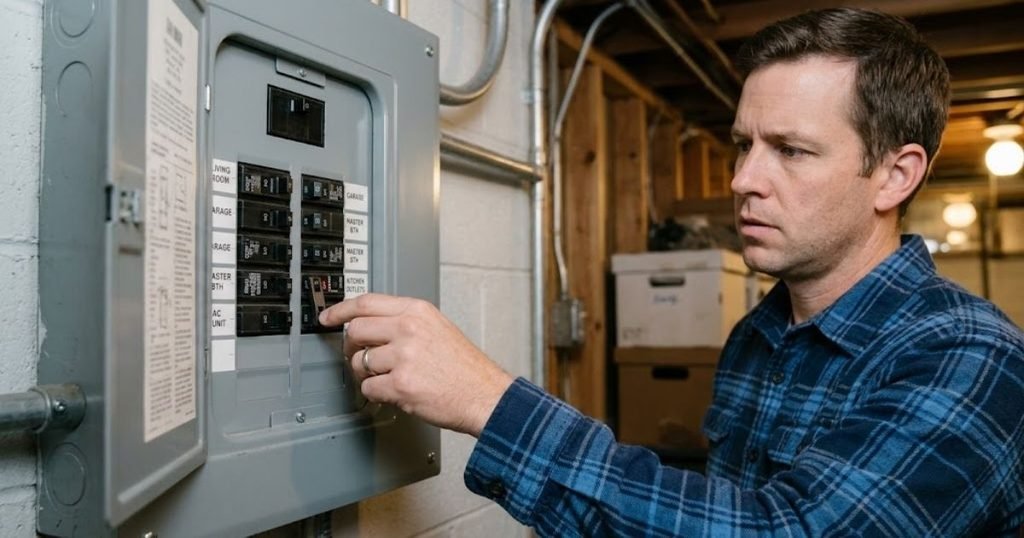
Why Does a Circuit Breaker Keep Tripping?
To understand why your circuit breaker keeps tripping, it helps to understand what a circuit breaker actually does. In a modern residential electrical system, electricity flows from your utility provider through your service panel, distributing power across various circuits throughout your house. Each circuit is designed to handle a maximum amount of electrical current, measured in amperes (amps), such as 15 amps or 20 amps.
A circuit breaker monitors the electrical current passing through it. When the electrical demand or electrical path exceeds safe operating parameters, internal mechanisms either thermal (bimetallic strips that bend when heated by excessive current) or magnetic (electromagnets that react instantly to severe surges) trip the breaker, cutting off power to that specific circuit.
While an occasional trip might happen if too many high-draw appliances are turned on simultaneously on the same circuit, persistent or repeated tripping points to a deeper underlying issue. The main categories of causes include:
- An overloaded circuit, where too many devices draw power simultaneously.
- A short circuit, caused by hot wires touching neutral wires.
- A ground fault, where electricity leaks outside its intended path, often involving moisture.
- An arc fault, detected by specialized AFCI breakers when electrical arcing occurs.
- A malfunctioning appliance or damaged power cord, introducing internal electrical faults.
- Damaged wiring, loose connections, or moisture, compromising the integrity of the circuit.
- A worn or defective circuit breaker, which may trip prematurely due to internal component fatigue.
These represent possible causes rather than a definitive diagnosis. The specific timing, location, and circumstances surrounding each trip provide vital clues, but only careful inspection and testing can establish the exact root cause.
READ MORE: Electrical Fuse Box vs. Circuit Breaker: Safety & Cost
7 Common Reasons Your Circuit Breaker Keeps Tripping
1. Overloaded Electrical Circuit
An overloaded electrical circuit occurs when the total electrical current drawn by appliances and lights exceeds the safe capacity rating of the circuit breaker and wiring. Residential branch circuits are typically rated for 15 amps (using 14-gauge wire) or 20 amps (using 12-gauge wire).
Modern homes feature many high-demand portable appliances, such as space heaters, hair dryers, toasters, microwaves, coffee makers, and window air conditioning units. When several of these devices operate simultaneously on the same circuit, the combined electrical load surpasses the circuit’s limit.
Unlike a sudden short circuit, an overloaded circuit often causes the breaker to trip after several minutes rather than instantly, as the internal bimetallic strip takes time to heat up and bend. Reducing simultaneous electrical demand may temporarily stop the trips, but persistent overloading indicates that your home’s circuit layout may need professional evaluation or the addition of dedicated circuits.
2. Short Circuit
A short circuit is a more serious electrical fault that happens when an energized (hot) wire accidentally comes into direct contact with a neutral wire or grounded metal component. This unintended path has very little electrical resistance, allowing a massive surge of current to rush through the circuit instantaneously.
When a short circuit occurs, the breaker trips immediately often accompanied by a loud pop, sparks, a burning odor, or visible scorch marks around an outlet or switch. Short circuits can originate inside faulty appliances, damaged power cords, or behind walls where wiring insulation has deteriorated or been pierced by nails or screws. If you suspect a short circuit, never remove outlet covers, switch plates, or electrical equipment panels to investigate live wiring.
3. Ground Fault
A ground fault is a specific type of short circuit where electrical current escapes its intended insulated pathway and travels directly to ground often through a grounded metal box, a water pipe, or a person. Ground faults frequently occur when moisture, water, or dust enters electrical devices, outdoor outlets, bathrooms, kitchens, or garages.
Ground-fault protection is designed to sense tiny imbalances in current between the hot and neutral wires and shut off power within milliseconds to prevent severe shock. Standard circuit breakers detect overloads and major short circuits, but Ground Fault Circuit Interrupters (GFCIs) installed as specialized breakers or GFCI receptacles specifically guard against ground faults in wet or damp locations.
4. Arc Fault or AFCI Breaker Trip
An electrical arc occurs when electricity jumps across a loose connection, frayed wire, or damaged insulation, generating intense heat that can ignite nearby building materials. An Arc-Fault Circuit Interrupter (AFCI) breaker is engineered to detect the distinctive waveform patterns of dangerous electrical arcing that standard breakers might miss.
If your breaker is an AFCI type (often identifiable by a test button and a label on the breaker itself), a trip may be triggered by damaged lamp cords, pinched wires behind furniture, deteriorated insulation, or loose terminal screws inside an outlet box. An AFCI trip indicates that dangerous arcing may be present; it does not automatically mean the breaker itself is defective.
5. Faulty Appliance or Damaged Cord
Sometimes the issue is not with your home’s permanent wiring, but with a plugged-in appliance. Internal electrical shorts, worn-out motors, failing heating elements, or frayed power cords can cause a breaker to trip the exact moment an appliance is switched on or during its operation cycle.
Common culprits include refrigerators, washing machines, dishwashers, air conditioners, sump pumps, and power tools. Homeowners can often narrow down this possibility by noting whether trips coincide with using a specific device. However, you must never repeatedly plug in or operate equipment that consistently causes a circuit breaker to trip.
6. Damaged Wiring, Loose Connections, or Moisture
As homes age, the materials within their electrical systems undergo normal wear and tear. Aging wire insulation can become brittle and crack. Improper DIY electrical work, past rodent damage, or structural settling can loosen wire connections inside junction boxes or behind outlet receptacles.
Additionally, moisture intrusion from roof leaks, plumbing issues, or high humidity in basements and crawl spaces can corrode electrical connections and compromise wire integrity. Warning signs often accompany these issues, including flickering lights, unusual buzzing sounds, warm or discolored outlet cover plates, faint burning odors, and unexplained tripping. These symptoms require prompt professional evaluation.
7. Worn or Defective Circuit Breaker
While circuit breakers are built to last for decades, they can eventually wear out, become damaged from repeated heavy surges, or suffer from internal mechanical fatigue. When this happens, a breaker may trip prematurely even when the electrical load is well within safe limits.
However, repeated tripping should never be automatically blamed on a defective breaker. A worn breaker is relatively rare compared to actual overloads, short circuits, or appliance faults. Breaker testing and replacement must always be handled by a qualified, licensed electrician.
Furthermore, you should never install a higher-amperage breaker (such as replacing a 15-amp breaker with a 20-amp breaker) simply to stop nuisance tripping, as the existing home wiring may only be rated for the lower amperage, creating a severe fire hazard.
READ MORE: Electrical Breaker Box Installation: Costs & Permits
How to Identify What May Be Causing the Problem
Pinpointing why a circuit breaker keeps tripping involves observing the exact symptoms and circumstances surrounding the event. The troubleshooting reference table below outlines common homeowner observations, their potential causes, and recommended safe next steps.
| What the Homeowner Notices | Possible Cause | Safe Next Step |
| The breaker trips when several appliances run together (e.g., microwave and toaster). | Overloaded electrical circuit due to excessive simultaneous power demand. | Unplug or relocate appliances to separate circuits; reduce simultaneous usage. |
| The breaker trips immediately after being reset. | Severe short circuit, hardwired fault, or severe ground fault. | Leave the breaker off; do not attempt to reset again; contact an electrician. |
| The breaker trips whenever one specific appliance starts (e.g., space heater or hair dryer). | Faulty appliance internal short, damaged power cord, or excessive startup draw. | Unplug the appliance immediately and inspect the cord for visible damage. Do not reuse it. |
| The breaker trips even when ordinary plug-in devices are disconnected. | Issue with hardwired lighting, hidden wiring damage, or a defective breaker. | Leave the circuit switched off and arrange for a professional electrical inspection. |
| The breaker trips during rain or after moisture exposure. | Ground fault caused by water intrusion in outdoor outlets, fixtures, or garage circuits. | Keep away from wet areas; ensure GFCI protection is present; call an electrician if it persists. |
| Lights flicker or outlets become warm or discolored. | Loose wire connections, arcing, or overloaded circuit wiring. | Stop using affected outlets immediately; turn off the circuit if safe; call an electrician. |
| The breaker trips when the central air conditioner starts. | Compressor motor issue, startup surge exceeding capacity, or failing run capacitor. | Turn off the AC at the thermostat and breaker; contact an HVAC technician or electrician. |
Note: The causes listed above represent possibilities rather than confirmed diagnoses. For urgent warning signs such as burning smells or sparks, prioritize stopping equipment use and seeking professional help over further testing.
What Do When Your Circuit Breaker Trips
When you discover that a circuit breaker has tripped, maintaining calm and following a safe, methodical sequence protects both you and your home:
- Turn off or unplug accessible appliances connected to that specific circuit if it is safe to do so. This relieves any potential overload before you attempt to reset the breaker.
- Keep away from damaged, wet, sparking, smoking, or unusually hot electrical equipment, outlets, or switch plates.
- Check for obvious external warning signs around the room or panel without removing panel covers, switch plates, or opening electrical devices.
- If there are no warning signs and you can safely access the normal breaker handle, follow the electrical panel manufacturer’s instructions to reset the breaker. Depending on the panel design, you may need to push the breaker firmly past the center “tripped” position into the full OFF position before returning it to the ON position.
- If the breaker trips again immediately or shortly after resetting, stop trying to reset it. Leave the circuit in the OFF position and contact a licensed electrician.
- If the problem involves smoke, active flames, visible sparking, or a strong burning odor, stay away immediately, evacuate the area if necessary, and call emergency services (911).
Never force a breaker to stay on against repeated trips, and never attempt to tamper with the internal components of an electrical service panel.
READ MORE: Home Battery Backup Without Solar: Best Options for U.S. Homeowners
Why Does My Circuit Breaker Keep Tripping When Nothing Is Plugged In?
One of the most perplexing scenarios for homeowners is discovering that a circuit breaker keeps tripping even when every portable lamp, appliance, and electronic device on that circuit is unplugged.
When no portable devices are connected, a tripping breaker indicates that the fault lies within the fixed infrastructure of your home. Potential culprits include:
- Hardwired equipment and appliances, such as built-in dishwashers, garbage disposals, smoke detectors, bathroom exhaust fans, hardwired lighting fixtures, or recessed ceiling cans.
- Hidden wiring faults, such as wire insulation that has degraded over time, been chewed by rodents, or suffered physical damage inside wall cavities.
- Moisture accumulation inside junction boxes, outdoor receptacles, or crawlspace wiring runs.
- A defective circuit breaker that has worn out internally and trips under normal baseline conditions.
If a circuit trips repeatedly with nothing plugged in, leave the circuit switched off at the panel and arrange for a qualified electrician to perform diagnostic testing. Do not attempt to remove wall outlets, open junction boxes, or perform live electrical tests yourself.
Why Does My Breaker Trip When I Turn On an Appliance?
If your circuit breaker trips the moment you switch on a particular appliance, it is usually pointing to one of a few common electrical phenomena:
- High Startup (Inrush) Current: Electric motors found in refrigerators, sump pumps, air conditioners, and table saws require a momentary surge of electricity to start up that is significantly higher than their normal running current. If the circuit is already carrying other loads, this startup surge can push the total demand past the breaker’s limit.
- Internal Appliance Faults: A short circuit or grounded component inside the appliance’s motor, heating coils, or wiring harness will cause an instantaneous trip when powered on.
- Circuit-Specific Requirements: Certain heavy-duty appliances require dedicated circuits (circuits reserved exclusively for one appliance) under applicable electrical codes and manufacturer instructions to handle their high electrical draw safely.
While not every household appliance requires its own dedicated circuit, major appliances like electric ranges, dryers, water heaters, and central air conditioners invariably do. If a standard kitchen appliance (like a microwave) repeatedly trips a general-purpose countertop circuit, it may be overloading a shared line or experiencing an internal malfunction.
When Is a Tripping Circuit Breaker Dangerous?
While an occasional breaker trip caused by accidentally overloading a single circuit with too many holiday lights or kitchen appliances is generally a nuisance rather than an emergency, certain signs elevate a tripping breaker into a serious safety hazard. You should treat the following warning signs with urgency:
- Burning, melting, or acrid odors coming from outlets, switches, or the electrical panel.
- Visible smoke, sparks, or electrical arcing around switches, receptacles, or fixtures.
- Hot, scorched, or discolored outlet cover plates or switch housings.
- Unusual buzzing, humming, or sizzling sounds behind walls or near the breaker box.
- Electric shocks or tingling sensations when touching an appliance, faucet, switch, or metal casing.
- Water entering electrical equipment, outlet boxes, or the main breaker panel.
- A breaker that trips immediately upon reset or refuses to stay engaged.
If you encounter any of these dangerous conditions, do not touch or attempt to open wet or damaged equipment. Keep family members and pets away from the area and seek professional assistance or emergency services immediately.
READ MORE: 400 Amp Service Panel: What U.S. Homeowners Need to Know
Can You Fix a Circuit Breaker That Keeps Tripping Yourself?
It is important to clearly distinguish between low-risk homeowner observations and hazardous electrical repair work.
Reasonable homeowner actions (when safe):
- Reducing the simultaneous use of high-power appliances on the same circuit.
- Observing and noting whether a particular appliance consistently triggers the trip.
- Inspecting appliance power cords visually for external wear, fraying, or cracking—without touching any exposed conductors.
- Reading and verifying the circuit breaker directory labels inside your electrical panel.
- Recording the exact time, weather conditions, and circumstances when trips occur to share with a professional.
Tasks that must always be left to a qualified, licensed electrician:
- Removing the deadfront cover of an electrical panel.
- Testing live electrical circuits with multimeters or circuit analyzers.
- Tightening loose electrical connections inside outlet boxes, switches, or breaker panels.
- Replacing faulty circuit breakers.
- Repairing, splicing, or replacing concealed wiring behind walls or ceilings.
- Changing breaker amperage ratings or modifying the electrical service panel.
Attempting DIY electrical repairs carries significant risks of severe electric shock, arc flash explosions, and structural fire hazards.
How Much Does It Cost to Fix a Circuit Breaker That Keeps Tripping?
Because a tripping circuit breaker can stem from a wide variety of underlying causes ranging from a $30 worn breaker replacement to major rewiring or appliance replacement repair costs vary significantly across the United States.
Factors influencing overall expenses include:
- Electrician service-call or diagnostic fees: Most licensed contractors charge an initial dispatch or diagnostic fee to assess the issue.
- Timing of service: Emergency, after-hours, or weekend callouts typically carry premium labor rates.
- The underlying cause: Repairing a faulty toaster is far less expensive than replacing damaged home wiring or upgrading an overloaded electrical panel.
- Breaker replacement: Replacing a standard single-pole circuit breaker is a straightforward service, whereas installing specialized AFCI or GFCI breakers involves higher material costs.
- New dedicated circuit installation: Running new conduit and wiring from the panel to a specific appliance location requires labor-intensive installation.
Estimated U.S. Electrical Repair Cost Ranges
| Service / Repair Type | Approximate Cost Range (Labor & Materials) |
| Electrician Diagnostic / Service Call Fee | $100 – $250 |
| Standard Circuit Breaker Replacement | $150 – $350 |
| GFCI or AFCI Breaker Replacement | $200 – $450 |
| Outlet or Switch Repair / Replacement | $120 – $250 per location |
| Installing a New Dedicated 120V Circuit | $300 – $800+ |
| Installing a New Dedicated 240V Circuit | $500 – $1,200+ |
Disclaimer: The pricing figures above are approximate estimates reflecting general U.S. market averages and vary based on geographic location, local labor rates, contractor overhead, and the specific condition of your home’s electrical system.
READ MORE: Whole House Surge Protector Cost in the USA
How to Prevent Circuit Breakers From Tripping Repeatedly
While you cannot prevent every single electrical trip especially those designed to guard against unexpected faults you can significantly reduce nuisance trips and minimize electrical risks with proactive habits:
- Distribute high-demand appliances: Avoid operating multiple high-wattage devices (such as space heaters, hair dryers, and microwaves) on the same 15-amp or 20-amp branch circuit simultaneously.
- Plug major appliances directly into wall outlets: Never rely on light-duty extension cords or daisy-chained power strips to power high-draw appliances permanently.
- Avoid overloading power strips: Use surge protectors and power strips only for low-draw electronics like computers, lamps, and phone chargers.
- Arrange professional electrical evaluations: If your home is older and struggles to keep up with modern electrical demands, have a licensed electrician inspect your system capacity before adding major new appliances.
- Maintain GFCI and AFCI protection: Ensure moisture-prone areas have proper ground-fault protection and test your GFCI and AFCI devices periodically according to manufacturer recommendations.
- Address warning signs promptly: Never ignore flickering lights, warm switch plates, or occasional unexplained trips; catching minor issues early prevents costly emergency repairs.
Remember that preventive measures cannot eliminate every trip, as some trips serve as vital warnings of an actual electrical fault that requires repair.
When Should You Call a Licensed Electrician?
Knowing when to step back and call a professional is a critical part of home ownership. You should contact a licensed electrician when:
- A circuit breaker trips repeatedly or refuses to stay reset.
- A breaker trips with little or no electrical load connected to the circuit.
- You notice any signs of electrical burning, scorch marks, warm outlets, flickering lights, or buzzing sounds.
- You suspect moisture intrusion or damaged wiring within your walls or panel.
- You are planning to install major new appliances that require dedicated circuits or panel capacity upgrades.
Always ensure that any electrical work performed in your home complies with local licensing, permitting, and National Electrical Code (NEC) requirements.
Frequently Asked Questions
Why does my circuit breaker keep tripping for no reason?
A circuit breaker never trips for “no reason”—it always reacts to an electrical trigger. If no portable devices are plugged in, the cause is likely a hardwired appliance, hidden wiring damage, moisture intrusion inside a junction box, or a worn circuit breaker. Leave the circuit off and call an electrician.
Should I reset a circuit breaker that keeps tripping?
You can attempt a single reset after unplugging appliances to relieve potential overloads. However, if the breaker trips again immediately or repeatedly, stop resetting it. Repeatedly forcing a tripping breaker closed bypasses vital safety mechanisms and creates an escalating fire hazard.
Why does my breaker trip immediately after I reset it?
An immediate trip typically points to a severe short circuit, a direct ground fault, or damaged wiring where energized conductors are touching. Because the electrical fault is continuous, the breaker trips the second current flows through the circuit. Do not attempt further resets.
Can a bad appliance cause a circuit breaker to trip?
Yes. Internal electrical shorts, failing motors, worn heating elements, or frayed power cords within an appliance can cause a circuit breaker to trip when the device is turned on or operating. Unplug the suspect appliance and check its cord for visible damage.
How do I know if my circuit breaker needs to be replaced?
A circuit breaker may need replacement if it trips prematurely under normal loads, feels excessively hot to the touch, shows physical cracking or scorching, or fails to hold position when switched to the “on” position. Breaker testing and replacement must always be performed by a licensed professional.
Final Thoughts
A tripping circuit breaker is not simply an annoying household disruption; it is your home’s built-in defense system working to prevent electrical fires, equipment damage, and electrical shock. While reducing an obvious overload by unplugging a space heater or toaster may resolve an occasional trip, repeated or unexplained tripping is a clear signal that demands attention.
By prioritizing home safety, recognizing warning signs, and knowing when to call a qualified, licensed electrician, you can keep your home’s electrical system running safely and efficiently. If your circuit breaker continues to trip, arrange for a professional inspection rather than repeatedly forcing the switch back on.
Source list:
- Electrical Safety Foundation International (ESFI) – Circuit Breaker Safety & Electrical Safety Guidelines
- U.S. Consumer Product Safety Commission (CPSC) – Home Electrical Safety Publications
- National Fire Protection Association (NFPA) – National Electrical Code (NEC) Standards
- U.S. Department of Energy – Residential Electrical Efficiency and Safety Best Practices
Electrical safety disclaimer: This article is provided for general informational and educational purposes only and does not constitute professional electrical engineering or licensed contractor advice. Electrical work carries inherent risks of severe shock, injury, and fire. Always consult a qualified, licensed electrician in your area before attempting any electrical inspection, troubleshooting, or repair.