A portable solar power generators kit is one of the easiest ways to carry clean, quiet backup power with you. In plain English, it is a battery-powered system that charges from the sun and then lets you run everyday devices when you need electricity away from the grid or during an outage.
The best portable solar power generators kit for you depends on what you want to power. Some buyers need a compact setup for phones, lights, and weekend camping. Others want a stronger home backup solar generator for routers, TVs, CPAP machines, or even a small fridge during outages. If you travel in an RV or spend time off-grid, a solar generator kit for emergencies or a portable power station with solar panel can make life much easier. The key is matching the kit to your real-world needs instead of chasing the biggest number on the box. Lets deep dive into “Best Portable Solar Power Generators Kit: Review, Comparison & Buying Guide”
What Is a Portable Solar Power Generator Kit?
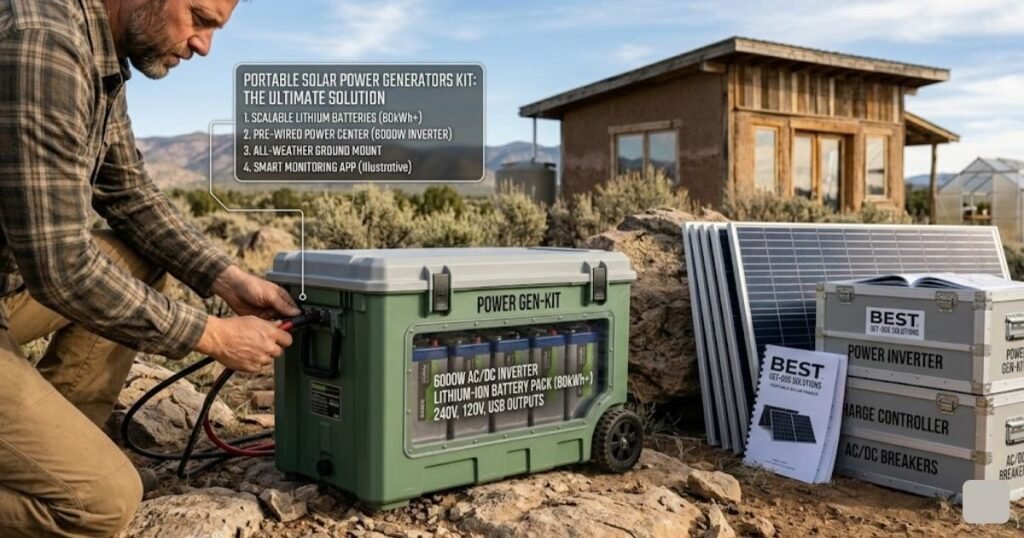
At its core, a portable solar generator kit is a complete, self-contained miniature power plant. Unlike permanent rooftop solar installations, these systems are designed to move with you. When you buy a complete “kit,” you are getting all the coordinated pieces required to capture, store, and use electricity.
An all-in-one bundle typically includes:
- A Portable Power Station: The central hub housing the battery pack, advanced computer monitoring systems, and various plug outlets.
- One or More Solar Panels: Foldable, weather-resistant panels designed to convert ambient sunlight into electrical energy.
- Charging Cables: The specific heavy-duty wires needed to connect your panels to the power station, plus traditional wall and car charging cables.
- Built-in Inverter & Battery Management System (BMS): Internal components that make the electricity safe for your household tech and protect the battery from overheating or overcharging.
These kits bridge the gap between heavy, industrial backup equipment and small, pocket-sized phone chargers. They are uniquely optimized for everyday American homeowners facing emergency blackouts, van-lifers building out a solar power generator for RV setups, and outdoor enthusiasts looking for the best solar generator for camping.
READ MORE: Home Battery Backup Without Solar: Best Options for U.S. Homeowners
How Portable Solar Generator Kits Work
The magic of a portable power station with solar panel bundle lies in how seamlessly it converts raw daylight into the exact type of power your appliances need. The entire process happens silently in four distinct steps:
[ Sunlight ] —> ( 1. Solar Panels ) —> ( 2. Charge Controller ) —> ( 3. Battery Storage ) —> ( 4. Inverter ) —> [ Your Devices ]
Step 1: Solar Panels Collect Sunlight
When you unfold your solar panels and face them toward the sun, the photovoltaic cells absorb solar energy. This creates a flow of direct current (DC) electricity.
Step 2: The Charge Controller Manages the Input
The raw electricity flows through a cable into the power station’s built-in Maximum Power Point Tracking (MPPT) charge controller. Think of this as an automated traffic cop. It constantly measures the erratic electrical voltage coming from the panels (which drops when a cloud passes by) and stabilizes it so it can safely enter the battery without causing damage.
Step 3: The Battery Stores the Energy
The stabilized DC electricity is fed directly into the internal battery cells. Most modern premium units use Lithium Iron Phosphate (LiFePO4 or LFP) chemistry. This serves as your reservoir of stored energy, waiting until you need it.
Step 4: The Inverter Powers Your Electronic Devices
The battery stores DC power, but your home electronics like a coffee maker, TV, or refrigerator require alternating current (AC) power from a standard wall outlet. The built-in Pure Sine Wave Inverter changes that stored DC energy into smooth, clean AC power, allowing you to safely plug your gadgets right into the station’s outlets.
READ MORE: Best Off-Grid Solar Kits in the USA: Complete Buyer’s Guide
What to Look for Before Buying: A Smart Buyer’s Guide
Before choosing the best solar generator for camping or home use, look at the details that matter in real life:
- Battery capacity (Wh): This tells you how much energy the unit can store. Bigger numbers usually mean longer runtime, but also more weight and higher cost.
- AC output wattage: This tells you what size appliances the unit can run. A higher output helps with coffee makers, small fridges, tools, and other tougher loads.
- Solar input speed: If you plan to recharge from the sun often, check how many watts the unit accepts from panels. A higher solar input can mean faster top-ups in good weather.
- Portability and weight: If you will carry it to campsites, RV hookups, or a backyard, lighter is better. For home backup, a heavier unit may be fine if the power is worth it.
- Battery chemistry: Many modern kits use LiFePO4 batteries, which are popular for durability and long life.
- Charging methods: Check whether the unit can recharge from AC wall power, solar, car charging, or multiple sources at once. More options make the kit easier to live with.
- Safety features: Look for battery management, temperature control, and inverter protection. These features help the unit operate more reliably.
- Expansion options: Some units let you add extra batteries later. That matters if you want a system that grows with your needs.
- Warranty and support: A strong warranty can matter as much as raw specs, especially if you plan to depend on the kit for emergencies.
READ MORE: Solar Powered Heat Pump Cost: USA Homeowner Guide to Savings
Best Portable Solar Power Generators Kit: Top Product Reviews
To help you cut through the marketing noise, let’s take a close look at five of the top-performing solar generator bundles available, ranging from compact travel companions to heavy-duty powerhouses.
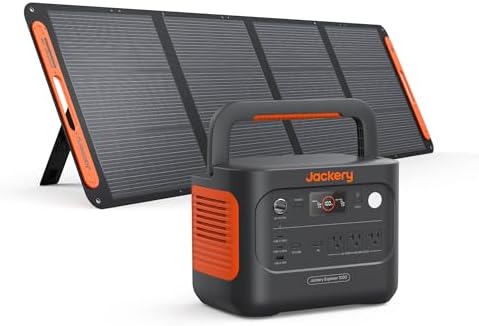
1: Jackery Solar Generator 1000 v2 with 200W Solar Panel
The Jackery Explorer 1000 series has long been the baseline benchmark for outdoor power, and the v2 edition modernizes that legacy perfectly. It fixes the biggest flaw of older generations by upgrading to ultra-durable Lithium Iron Phosphate (LiFePO4) cells. If you want a zero-guesswork, rugged kit from a brand that basically pioneered this space, this hits the absolute sweet spot for mid-sized power needs.
Core Metrics:
- Battery Capacity: 1,070Wh
- Continuous Output: 1,500W (3,000W Surge)
- Solar Input Max: 400W (200W panel included)
Key Features
- Next-Gen Battery Chemistry: Upgraded to LiFePO4 cells rated for 4,000 charge cycles before dropping to 80% capacity (roughly 10 years of regular use).
- ChargeShield 2.0 Fast Charging: Replenishes from 0% to 100% via a wall outlet in 95 minutes normally, or a blistering 59 minutes using the emergency app override.
- Whisper-Quiet Operation: Runs at a near-silent 22dB in its quietest charging mode—perfect for inside a tent or van.
- SolarSaga 200W Panel: Includes a highly efficient, folding monocrystalline panel that is remarkably easy to angle toward the sun.
Pros & Cons
- Pros: Ergonomic folding handle saves packing space; elite-tier thermal safety management; incredibly quiet cooling fans.
- Cons: Unlike some modern rivals, it does not support daisy-chaining external expansion batteries.
Verdict
The ultimate “plug-and-play” powerhouse for campers and road-trippers who want premium reliability without a steep learning curve.
2: EF ECOFLOW Solar Generator DELTA 3 Classic with 220W Solar Panel
If you hate waiting around for batteries to charge, the EcoFlow DELTA 3 Classic is your holy grail. It is engineered like a sports car—prioritizing raw charging velocity, cutting-edge app integration, and massive output capability. It is a tech-forward power solution designed to seamlessly bridge the gap between weekend camping and home emergency defense.
Core Metrics:
- Battery Capacity: 1,024Wh
- Continuous Output: 1,800W (3,600W Surge / 2,600W X-Boost)
- Solar Input Max: 500W (220W Bifacial panel included)
Key Features
- Blazing Wall Recharging: Hits an 80% charge from a standard wall outlet in just 45 minutes flat—the fastest in its class.
- 220W NextGen Bifacial Solar Panel: The included panel features glass on both sides, capturing ambient sunlight from the front and reflected light from the ground on the back.
- X-Boost Technology: While rated at 1,800W continuous, it can drive heating appliances (like coffee makers or hot plates) up to 2,600W by smartly regulating voltage.
- True UPS Backup: Features a sub-10ms auto-switchover time, meaning it can act as an uninterrupted power supply for sensitive desktop computers during a blackout.
Pros & Cons
- Pros: Phenomenal mobile app control; bifacial panel boosts solar generation on snow, sand, or concrete; class-leading charge speeds.
- Cons: The double-sided bifacial solar panel is slightly stiffer and heavier to fold than single-sided options.
Verdict
The best choice for tech-savvy buyers, remote workers, and emergency preppers who demand speed, smart features, and raw performance.

3: OUPES 2000W Solar Generator with Panels Included (Mega 1)
The OUPES Mega 1 is built for situations where you need raw, uncompromising muscle without paying a premium. While its baseline capacity is identical to its peers, it punches far above its weight class by stuffing a massive 2,000W continuous inverter into the chassis. It is built like a utility tool, prioritizing heavy appliance support and long-term modular expandability.
Core Metrics:
- Battery Capacity: 1,024Wh (Expandable up to 5,120Wh)
- Continuous Output: 2,000W (4,500W Surge)
- Solar Input Max: 800W (240W panel included)
Key Features
- Heavy-Duty Inverter: Pumps out 2,000W of continuous AC power with a massive 4,500W surge threshold to kickstart heavy motorized tools, sump pumps, or full-sized microwaves.
- Modular Expandability: Features dedicated ports to chain up to two external B2 expansion batteries, allowing you to scale your total system capacity up to a massive 5,120Wh.
- Massive 800W Solar Input: The internal charge controller can handle up to 800W of total solar panels, allowing for rapid off-grid replenishment if you buy extra panels later.
- RV-Ready Outlets: Includes high-amperage outlets designed to play nicely with standard RV and van power cords.
Pros & Cons
- Pros: Massive power-per-dollar ratio; can handle heavy-draw appliances that trip other 1kWh generators; excellent modular upgrade path.
- Cons: The base power station is visibly bulkier and heavier than its 1,000Wh competitors.
Verdict
The top budget-friendly pick for RV owners and homeowners looking for a heavy-duty, expandable emergency backup system.
4: BLUETTI Elite 100 V2 Solar Generator with 200W Solar Panel
If space is at a premium in your trunk or van build, the BLUETTI Elite 100 V2 is a masterclass in space-saving engineering. BLUETTI managed to shrink the physical footprint of a full 1kWh power station by roughly 35%, creating a sleek, automotive-grade unit that you can easily lift with a single hand.
Core Metrics:
- Battery Capacity: 1,024Wh
- Continuous Output: 1,800W (2,700W Powerlifting Mode)
- Solar Input Max: 500W (200W panel included)
Key Features
- Ultra-Compact Form Factor: Weighs just 25.3 pounds and features a flat-top design with a hidden, integrated carry handle for easy stacking.
- High-Efficiency Inverter: Utilizes a native 51.2V electrical architecture that boasts a 93% inverter efficiency rate, meaning minimal energy is wasted as heat during power conversion.
- Automotive-Grade LiFePO4: Uses ultra-premium battery cells designed to last through a staggering 6,000 charge cycles to 80% capacity.
- Premium 200W Solar Panel: Includes a rugged, ETFE-coated folding solar panel with fantastic scratch resistance and an IP65 waterproof rating.
Pros & Cons
- Pros: Highest power-to-weight ratio in its class; runs incredibly cool and quiet; unbeatably long battery life cycle rating (6,000+ cycles).
- Cons: The front AC outlets lack built-in rubber dust covers to protect them from dirt and debris when outdoors.
Verdict
The definitive premium choice for digital nomads, minimalist travelers, and anyone who values space and weight savings above all else.

5: Anker Solar Generator SOLIX C300 with 60W Solar Panel
Let’s be realistic: not everyone needs to run a refrigerator or a power saw off-grid. If your power needs are limited to keeping your personal electronics alive during a weekend getaway or a brief storm, the Anker SOLIX C300 is an incredibly smart, lightweight alternative. Shaped like a compact lunchbox and equipped with a shoulder strap, it redefines grab-and-go power.
Battery Capacity: 288Wh
Continuous Output: 300W (600W Surge)
Solar Input Max: 100W (60W panel included)
Key Features
- Featherlight Portability: Weighs less than 10 pounds and is compact enough to sit comfortably on a small camp table or car floorboard.
- 140W Dual USB-C Charging: Features high-speed Power Delivery (PD) USB-C ports capable of fast-charging premium laptops, drones, and smartphones without needing an AC wall adapter.
- Built-in Pop-Up LED Light: Features an integrated, multi-level ambient light strip on top that can illuminate an entire tent or small room during a blackout.
- 60W Portable Solar Panel: Bundled with a lightweight, highly flexible solar panel that slips easily into a backpack sleeve.
Pros & Cons
- Pros: Highly affordable entry point; incredibly easy to transport; highly optimized for modern USB-C devices.
- Cons: Limited to a 300W maximum AC output, meaning it cannot run appliances with motors or heating elements (like blenders, hair dryers, or mini-fridges).
Verdict
The ultimate compact companion for minimalist campers, remote students, and emergency go-bags.

READ MORE: Solar Water Heater
Which One Is Best for Different Needs?
Choosing a generator comes down to how you plan to use it. Here is a direct look at which kit excels in specific real-world scenarios:
- Best Overall: EcoFlow DELTA 3 Classic Kit. Its combination of blazing-fast 45-minute wall charging, a unique 220W bifacial solar panel, an 1,800W output, and a smart mobile app makes it the most well-rounded and versatile unit for most buyers.
- Best for Camping: Jackery Solar Generator 1000 v2. It operates at a near-silent 22dB, features an ergonomic folding handle, and sports an exceptionally rugged, shock-resistant outer shell designed for life outdoors.
- Best for RV Travel: OUPES 2000W Kit. With its high continuous wattage capacity and heavy-duty 20A outlets, it easily handles the initial power surges required by RV water pumps and appliances.
- Best for Home Backup: OUPES 2000W Kit (Expanded). Because you can attach extra battery packs to expand its capacity up to 5,120Wh, it functions as a modular home backup solution that grows with your family’s emergency preparedness needs.
- Best for Budget-Conscious Buyers: Anker SOLIX C300 Kit. This bundle offers premium, ultra-durable LiFePO4 cell technology at a fraction of the cost of larger systems, perfectly serving users with basic power needs.
- Best for Lightweight Portability: BLUETTI Elite 100 V2. Shaving off substantial bulk and weight while maintaining a full 1,024Wh battery and an 1,800W inverter, it offers the highest power-to-weight ratio in its class.
Portable Solar Power Generator Comparison Table
| Product Name | Battery Capacity | Output Power | Solar Panel Included | Best Use Case | Key Strength | Main Limitation |
| Jackery 1000 v2 | 1,070Wh | 1,500W (3,000W Surge) | 200W SolarSaga | Camping & Road Trips | Whisper quiet (22dB), rugged build | Cannot connect expansion batteries |
| EcoFlow DELTA 3 Classic | 1,024Wh | 1,800W (3,600W Surge) | 220W NextGen Bifacial | Versatile Home & Outdoor | Fastest AC wall charging (45 min) | Bifacial panel is slightly stiffer to set up |
| OUPES 2000W Mega 1 | 1,024Wh | 2,000W (4,500W Surge) | 240W OUPES Panel | RVs & Heavy Backup | High 2,000W output, expandable to 5.1kWh | Base unit is bulkier than competitors |
| BLUETTI Elite 100 V2 | 1,024Wh | 1,800W (2,700W Powerlifting) | 200W BLUETTI Panel | Mobile Work & Travel | 35% smaller size, 93% inverter efficiency | AC outlets lack protective rubber covers |
| Anker SOLIX C300 | 288Wh | 300W (600W Surge) | 60W Anker Panel | Light Travel & Tech | Extremely light, highly affordable | Cannot run high-wattage appliances |
READ MORE: 8 Best DREO Smart Tower Fans 2026: Review & Comparison
Pros and Cons of Solar Generator Kits
To give you a balanced look, let’s examine the real-world advantages and trade-offs of using portable solar power generator kits compared to traditional power sources.
The Advantages (Pros)
- Completely Silent Operation: Unlike gas generators that hum loudly at 60-70 decibels, solar kits operate silently between 20-30 decibels (roughly the sound of a soft cooling fan).
- Safe for Indoor Use: They emit zero carbon monoxide or exhaust fumes, meaning you can safely run them right next to your bed or inside an enclosed tent.
- Free, Infinite Fuel: Once you purchase the kit, your ongoing fuel cost is zero dollars. As long as the sun rises, you have access to power.
- Minimal Maintenance: There are no spark plugs to change, no oil to check, and no gummed-up carburetors to clean out after months of storage.
The Trade-offs (Cons)
- Higher Upfront Cost: Buying a high-quality battery and solar panel setup requires a larger initial investment than buying a budget gas generator.
- Weather Dependent: If you encounter three straight days of heavy rain or dense snow, your solar recharging speeds will drop significantly.
- Slower Recharge Times: Even the fastest solar panels take several hours to charge a battery, whereas a gas generator can be instantly refueled by pouring in more fuel.
How Long Can a Portable Solar Generator Run Common Devices?
To set realistic expectations, let’s look at what a standard 1,000Wh premium solar generator kit (like the Jackery, EcoFlow, OUPES, or BLUETTI models reviewed above) can run in the real world.
Note: Inverter conversion processes consume about 10-15% of the battery’s capacity as operational overhead, so these estimates are calculated at a highly realistic 85% operational efficiency rate.
- Smartphone (11W): Can be fully recharged roughly 75 to 80 times.
- Laptop (60W): Can run continuously for about 14 hours, or provide roughly 12 full recharges.
- Wi-Fi Router (15W): Keeps your home internet active for over 55 hours.
- LED Camp Lights (10W): Provides continuous illumination for 85 hours.
- Energy-Star Portable Fridge (60W): Runs for 14 to 18 hours (since fridge compressors click on and off, it draws less power over time than a continuous load).
- CPAP Medical Machine (40W): Runs smoothly for 21 hours, safely covering 2 to 3 full nights of sleep.
- 50-Inch LED TV (100W): Keeps the screen running for 8.5 hours.
READ MORE: Best Small Room 8000 BTU Portable Air Conditioner Units (Comparison & Reviews)
Cost and Value Overview: What Drives the Price Tag?
When shopping for a portable solar generator kit in the United States, you will generally see price tags ranging from $250 for small, entry-level models to over $1,500 for heavy-duty systems. Understanding what drives these costs will help ensure you get great value for your money:
[ Battery Capacity & Chemistry ] –> [ Pure Sine Wave Inverter ] –> [ Solar Panel Wattage ] = Total System Cost
- The Battery Cells: The battery is the most expensive part of the unit. Kits that use advanced LiFePO4 cells cost slightly more upfront, but because they last four times longer than cheap lithium-ion cells, their long-term cost per watt-hour is significantly lower.
- Inverter Build Quality: High-output pure sine wave inverters cost more to manufacture than modified inverters, but they are essential for safely running sensitive microelectronics (like laptops and medical devices) without causing damage.
- Solar Panel Engineering: Included panels that feature high-grade monocrystalline silicon and durable ETFE or tempered-glass coatings cost more than basic plastic-backed panels, but they perform far better in low-light and high-heat conditions.
Common Mistakes to Avoid When Shopping
- Buying a battery that is too small for the devices you actually want to run.
- Ignoring solar input limits and expecting tiny panels to refill a large battery quickly.
- Forgetting to check output wattage before plugging in appliances.
- Overlooking weight if you plan to carry the kit often.
- Choosing only by price and not by real use case.
Frequently Asked Questions (FAQs)
What is the best portable solar power generators kit for home backup?
The best kit for home backup is one that features a high output wattage and an expandable design, such as the OUPES 2000W Mega 1 or the EcoFlow DELTA 3 Classic.
How long does a portable solar generator take to charge?
Charging times depend entirely on your power source. When plugged into a standard home AC wall outlet, modern premium kits can charge from 0% to 80% in an incredibly fast 45 to 70 minutes. When charging off-grid using a 200W solar panel under clear, direct sunlight, a standard 1,000Wh battery will typically take between 5 to 7 hours to fully replenish.
Can a portable solar generator power a refrigerator?
Yes, provided the generator’s inverter has a continuous output rating of at least 1,000W and a strong surge rating (ideally 2,000W or higher) to handle the refrigerator compressor’s initial start-up spike.
What size solar generator do I need for camping?
For casual weekend camping trips where you only need to charge phones, tablets, cameras, run camp lights, and power a small portable fan, a compact unit between 250Wh and 500Wh (like the Anker SOLIX C300) is perfect. If you plan to run higher-draw appliances like a portable freezer, electric grill, or coffee maker, you will want a mid-sized 1,000Wh unit.
Is a solar generator better than a gas generator for emergencies?
A solar generator is ideal for clean, completely silent operation, safe indoor usage during storms, and zero ongoing fuel costs. However, standard gas generators can provide continuous, high-wattage power as long as you have liquid fuel on hand.
Conclusion:
There is no single “perfect” solar generator kit that fits every single person; the right choice depends entirely on your specific power needs, your budget, and how mobile you need to be.
If you want an incredibly fast-charging, highly advanced option with an innovative double-sided solar panel, the EcoFlow DELTA 3 Classic is a phenomenal investment. If peace, quiet, and rugged outdoor durability matter most around your campsite, the Jackery Solar Generator 1000 v2 will serve you beautifully. For those looking to run high-wattage equipment or build a large home backup system over time, the expandable OUPES 2000W is a smart choice, while the BLUETTI Elite 100 V2 offers incredible power in a beautifully compact, lightweight frame. Finally, for those who simply want a light, affordable travel companion for basic devices, the Anker SOLIX C300 is an excellent entry-level option.