There are few things more frustrating than stepping into the shower and getting hit with a stream of cold water only to realize your water heater has been quietly giving up on you. If your gas water heater pilot light is not staying lit, you’re not alone. This is one of the most common water heater problems homeowners and renters deal with across the country, and the good news is that it’s often fixable without a lot of fuss.
The causes can range from something as simple as a draft blowing through the room to something more serious like a failing gas control valve. Some fixes are quick, safe, and easy for most homeowners to handle. Others are better left to a licensed professional.
This guide will walk you through everything you need to know about a gas water heater pilot light that won’t stay lit the common causes, straightforward troubleshooting steps, and a clear explanation of when it’s time to put down the wrench and make a phone call. Lets deep dive into “Why Is My Gas Water Heater Pilot Light Not Staying Lit? Causes & Fixes”
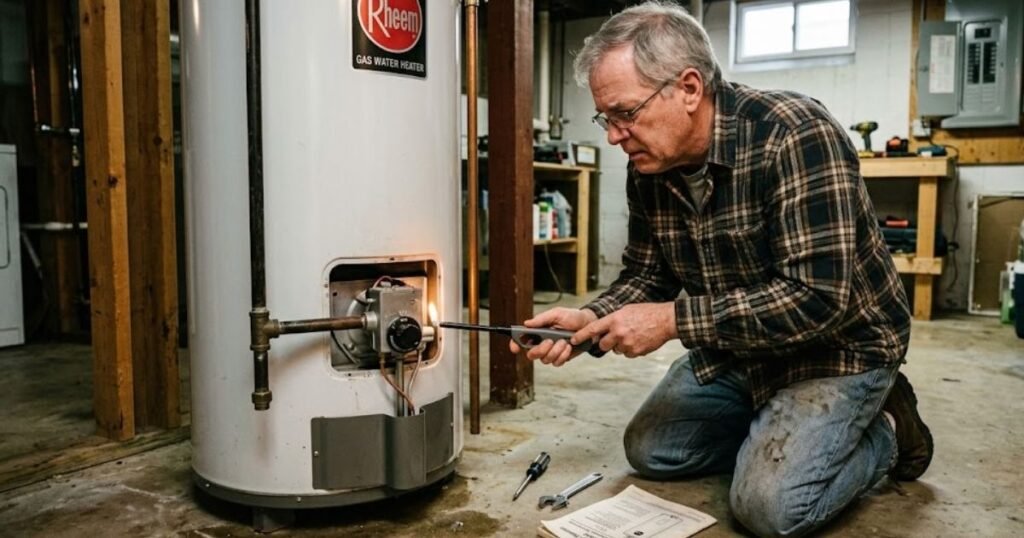
⚠️ SAFETY FIRST: READ BEFORE YOU TROUBLESHOOT
- If you smell gas near your water heater, do not try to relight the pilot.
- Turn off the gas supply valve immediately.
- Leave the area and ventilate the space.
- Call your gas utility company or a licensed professional right away.
- Never ignore a gas odor — it is a serious safety hazard.
READ MORE: Why Is My Gas Water Heater Pilot Light Yellow? Causes & Fixes
What Does a Pilot Light Do in a Gas Water Heater?
Before diving into what goes wrong, it helps to understand what the pilot light is actually doing in the first place.
The pilot light is a small, continuously burning flame located near the base of your gas water heater. Its job is to ignite the main burner when your thermostat calls for heat. Think of it as the spark that gets the whole process going. When the water in your tank drops below the temperature you’ve set, the gas valve opens, and the pilot light ignites the burner, which heats the water back up.
When your pilot light keeps going out, none of that can happen. The main burner can’t fire, your water doesn’t heat up, and you’re stuck with cold showers until the problem gets fixed.
Older gas water heaters rely on a standing pilot light a small flame that stays on all the time. Newer models may use electronic ignition instead, but millions of U.S. homes still have traditional standing pilot systems. Understanding how yours works is the first step toward figuring out why it keeps going out.
READ MORE: How to Relight Pilot Light on Water Heater
Common Reasons a Gas Water Heater Pilot Light Won’t Stay Lit
There’s rarely just one reason a pilot light keeps going out. Here are the most common culprits, explained in plain terms.
1. Faulty Thermocouple
The thermocouple is a small safety device that senses heat from the pilot flame. When it detects the flame is burning, it signals the gas valve to stay open. If the thermocouple is worn, bent out of position, or failing, it may not detect the flame properly and the gas valve closes, putting out the pilot. This is the most common reason a pilot light goes out and won’t stay lit.
2. Dirty or Clogged Pilot Tube
The pilot tube is a small tube that delivers gas to the pilot light. Over time, dust, dirt, and debris can build up and partially block it. When that happens, the gas flow becomes too weak to maintain a steady flame, and the pilot flickers out.
3. Bad Thermopile
Some water heaters use a thermopile instead of or in addition to a thermocouple. The thermopile generates electricity to power the gas valve. If it’s worn out, the valve won’t stay open, and the pilot won’t stay lit.
4. Weak or Interrupted Gas Supply
If gas isn’t reaching the heater at the right pressure, the flame will be weak and unstable. This could be due to a partially closed shutoff valve, a problem further up the gas line, or even a temporary service interruption from the utility company.
5. Drafts Blowing Out the Flame
An open window, a nearby HVAC vent, or a door frequently swinging open in the same room can send just enough airflow to knock out a small pilot flame. This is especially common in older homes where water heaters are installed in garages, basements, or utility closets with poor sealing.
6. Faulty Gas Control Valve
The gas control valve manages gas flow to both the pilot and the main burner. If it’s failing, it may cut off gas to the pilot light even when everything else is fine. A bad gas control valve usually requires professional replacement.
7. Debris or Rust Near the Burner
Rust flakes, mineral scale, or general debris can accumulate near the burner or pilot assembly and interfere with the flame. This is more common in older units or in areas with hard water.
8. Improper Pilot Flame Size
The pilot flame should be a steady blue flame that surrounds the tip of the thermocouple. If it’s too small or yellowish, it may not be generating enough heat to keep the thermocouple engaged. This could be a gas pressure issue or a dirty pilot tube.
9. Moisture or Condensation
In high-humidity environments or during certain seasons, moisture can accumulate inside the heater. Condensation can drip onto the pilot flame and extinguish it. This is more of a temporary issue but worth checking if the problem is seasonal.
10. Aging or Failing Components
Water heaters have a typical lifespan of 8 to 12 years. As the unit ages, multiple small components begin to wear out at the same time. If your heater is older and the pilot light keeps going out, age itself may be a contributing factor.
READ MORE: Gas Heater for Home Not Working? Causes, Fixes & Pro Tips
Signs Your Pilot Light Problem May Be More Than a Simple Fix
Not every pilot light issue is a quick fix. Here are some warning signs that suggest something more serious may be going on:
- The pilot light goes out repeatedly, even after relighting it multiple times
- The main burner won’t ignite even when the pilot appears lit
- The flame is yellow or orange instead of a clean blue this can signal incomplete combustion
- You notice a gas smell near the water heater (this is a safety emergency see the safety note below)
- Visible rust or corrosion around the base of the heater or along the connections
- The water heater makes clicking sounds but the pilot never actually lights
- You’re running out of hot water much faster than usual
- The unit is more than 10 years old and has had multiple recent issues
If any of these apply to your situation, it’s a good idea to contact a licensed plumber or HVAC technician rather than trying to troubleshoot further on your own.
Step-by-Step Troubleshooting Guide
If you don’t smell gas and you’re ready to do some basic troubleshooting, here’s a simple process to work through. Always follow your water heater’s manufacturer instructions, which are usually printed on a label on the unit itself.
[Start Troubleshooting]
│
▼
1. Smell Gas? ───(Yes)───► [EVACUATE HOME & CALL 911]
│
(No)
▼
2. Check Gas Supply Valve (Is it fully open?) ───(No)───► [Open Valve Fully]
│
(Yes)
▼
3. Clear Drafts / Block Wind Around Unit
│
▼
4. Follow Manufacturer Instructions to Relight Pilot
│
▼
5. Does Pilot Stay Lit when button is released?
├───(Yes)───► [Monitor Flame Color: Must be Blue]
│
└───(No)────► 6. Inspect Thermocouple (Is it clean, straight, and in the flame?)
├───(No)───► [Clean with Emery Cloth / Adjust Position]
│
└───(Yes)──► [Replace Thermocouple or Call a Professional]
Step 1: Confirm the Pilot Light Is Actually Out
Look through the small viewing window near the bottom of the heater. If you don’t see a small flame burning, the pilot is out.
Step 2: Check for Drafts in the Room
Walk around the area and check for open windows, vents blowing nearby, or any source of strong airflow. Even a small draft can knock out a pilot flame. Close any windows or doors and see if the problem improves after relighting.
Step 3: Make Sure the Gas Valve Is Fully Open
Check the gas shutoff valve near the bottom of the water heater. It should be parallel to the gas line (open position). If it’s turned partially or fully closed, open it slowly and completely.
Step 4: Check Other Gas Appliances
Turn on a gas stove burner or check another gas appliance. If nothing works, the issue may be with your gas supply rather than the water heater. Call your gas utility company.
Step 5: Inspect the Pilot Flame Color and Size
If the pilot is lit but weak or yellow, the flame isn’t healthy. A good pilot flame is steady and blue. A yellow or flickering flame suggests a dirty pilot tube or low gas pressure.
Step 6: Try Relighting the Pilot Light
Follow the instructions on your water heater’s label. Most units require you to:
- Turn the dial to the “Pilot” setting
- Press and hold the pilot button or control knob
- Press the igniter button (or use a lighter) until the pilot lights
- Continue holding the knob for 30 to 60 seconds before slowly releasing
- Turn the knob to your desired temperature setting
If the pilot lights but goes out when you release the button, the thermocouple is likely the problem.
Step 7: Look for Dirt Around the Pilot Assembly
If you’re comfortable doing so, visually inspect the pilot tube and assembly for dust, cobwebs, or soot buildup. Light debris can sometimes be cleared with a can of compressed air. Do not use any liquid cleaners near the gas assembly.
Step 8: Reset the Unit
Some modern water heaters have a reset button. Check your manual to see if your model does, and follow the instructions to reset it properly.
READ MORE: Best 5 Natural Gas Heater for Home: Review, Comparison & Buying Guide
When the Thermocouple Is the Problem
Of all the causes of a gas water heater pilot light not staying lit, a faulty thermocouple is the most common and often the most straightforward to fix.
The thermocouple is a small copper rod that sits in the pilot flame. When the flame heats it, the thermocouple generates a tiny electrical signal that tells the gas valve it’s safe to stay open. The moment the flame goes out, that signal stops, and the gas valve closes automatically a built-in safety feature designed to prevent gas from flowing into an unlit space.
The problem is that thermocouples wear out over time. They can also get bumped out of position, coated in soot, or simply fail after years of use. When a thermocouple stops working properly, it may not generate enough signal to keep the gas valve open even when the pilot flame is burning correctly.
The telltale sign: the pilot lights and burns fine while you’re holding the control button, but as soon as you release it, the flame dies. That’s the thermocouple failing to hold the gas valve open on its own.
The good news is that thermocouples are inexpensive parts typically $10 to $30 and they’re one of the more beginner-friendly repairs on a gas water heater. However, if you’re not comfortable working near gas lines, it’s always better to have a professional handle it.
Could the Gas Supply Be the Issue?
Sometimes the water heater itself isn’t the problem at all. The gas supply feeding it could be causing the issue.
If the gas pressure coming into the heater is too low, the pilot flame will be weak and prone to going out. This can happen due to:
- A partially closed shutoff valve on the gas line leading to the heater
- A problem with your home’s main gas line or meter
- A temporary utility service interruption in your area
- A pressure regulator that’s failing or set incorrectly
- Demand spikes if multiple gas appliances are running at the same time
One quick way to check: try other gas appliances in your home, like the stove, furnace, or dryer. If those aren’t working properly either, the issue is almost certainly with your gas supply, not the heater. Call your gas utility company they can check pressure and service status.
If you suspect any kind of gas supply issue, don’t try to investigate the lines yourself. Gas supply problems should always be handled by a licensed professional or your utility company.
READ MORE: What Are the Signs of a Failing Water Heater: Is It Time to Replace?
How Drafts and Venting Problems Can Blow Out the Pilot
Airflow is one of the sneakiest causes of a pilot light that keeps going out and one that homeowners often overlook.
Gas water heaters need proper venting to exhaust combustion gases safely out of the home. But the same airflow that carries exhaust out can also carry air in. If the venting system is set up poorly, or if there’s a strong air current in the room, the pilot flame can be disrupted.
Common airflow-related causes include:
- An open window or exterior door near the water heater
- An HVAC return vent or supply duct blowing air toward the unit
- A powerful exhaust fan in a nearby bathroom or kitchen pulling air through the room
- Improper installation in a tight closet without adequate combustion air
- A blocked or damaged flue pipe that creates back-drafting
Back-drafting is particularly important to address. This happens when venting is blocked or improperly sized, causing exhaust gases to flow back into the space instead of being expelled outside. This can not only blow out the pilot but also create a carbon monoxide risk.
If you suspect a venting problem, do not ignore it. Have a licensed HVAC technician or plumber inspect the installation and vent connections.
When to Clean the Pilot Assembly
Like most mechanical components, the pilot assembly can accumulate gunk over time especially in homes where the water heater sits in a dusty garage, unfinished basement, or utility closet.
Dust, lint, soot, and airborne debris can gradually coat the pilot tube and the tip of the thermocouple. Even a thin buildup can:
- Reduce gas flow through the pilot tube, weakening the flame
- Insulate the thermocouple tip, reducing its ability to generate heat
- Cause the pilot to burn irregularly or produce a weak, yellow flame
If the pilot tube appears clogged, a gentle cleaning with compressed air is often enough to clear it. If you see heavy soot or corrosion on the thermocouple or surrounding components, a deeper cleaning or part replacement is usually the better option.
Regular maintenance ideally once a year can prevent this kind of buildup from becoming a problem in the first place.
READ MORE: AO Smith vs. Rheem Water Heaters: Comparison & Expert Reviews
When to Call a Professional
Some water heater issues are well within the reach of a capable homeowner. Others are better handled by someone with the right training and tools. Here’s when you should stop troubleshooting and make the call:
- You smell gas at any point during your investigation
- The pilot light repeatedly goes out after relighting, cleaning, or replacing the thermocouple
- You suspect the gas control valve is failing
- There are signs of venting problems, back-drafting, or blocked exhaust
- You notice significant rust, corrosion, or leaking around the unit
- The water heater is 10 or more years old and showing multiple issues
- You simply don’t feel comfortable working near gas lines or internal components
How to Prevent Pilot Light Problems in the Future
A little regular attention goes a long way toward keeping your water heater running reliably. Here are some simple prevention habits:
- Schedule annual maintenance with a licensed technician to inspect the pilot assembly, thermocouple, gas valve, and venting system
- Keep the area around the water heater clean and free of dust, cobwebs, and stored items
- Check for drafts near the unit, especially if you open windows or run strong fans seasonally
- Watch for early warning signs a yellowish flame, occasional pilot outages, or unusual smells and address them before they become bigger problems
- Replace aging parts like the thermocouple proactively rather than waiting for a failure
- Flush the water heater annually to remove sediment, which can affect overall performance
- Make sure air intake and exhaust venting are clear and unobstructed
Taking care of these things regularly keeps your water heater running efficiently and extends its lifespan.
READ MORE: Is a Google Nest Thermostat Worth It? Review, Comparison & Buyer Guide
Should You Repair or Replace the Water Heater?
If your pilot light keeps going out and you’ve dealt with multiple repairs in the past year or two, it’s worth having an honest conversation about whether repair or replacement makes more sense.
When repair makes sense:
- The unit is less than 8 years old
- Only one component is failing (thermocouple, pilot tube, etc.)
- The repair cost is well below half the price of a new unit
- The overall condition of the heater is still good
When replacement may be the better option:
- The unit is 10 to 12 years old or older
- You’ve had repeated pilot light or burner problems in a short period
- Repairs are becoming expensive and more frequent
- You’re noticing reduced efficiency or faster hot water depletion
- There is corrosion, rust, or leaking at the tank
A new water heater is a significant investment, but modern units are considerably more energy efficient than older models — which can translate to real savings on your utility bills over time. A licensed plumber can help you compare the cost of ongoing repairs against the cost and benefits of replacement.
Frequently Asked Questions
Why does my gas water heater pilot light keep going out?
The most common reasons include a faulty or worn thermocouple, a dirty or clogged pilot tube, weak gas supply, drafts near the unit, or a failing gas control valve.
Can I relight my water heater pilot light myself?
Yes, in many cases you can safely relight the pilot by following the instructions printed on the label of your water heater.
How do I know if the thermocouple is bad?
The most telling sign is this: the pilot lights while you hold down the control knob, but goes out as soon as you let go. This means the thermocouple isn’t holding the gas valve open on its own, which is exactly what a failing thermocouple does.
Is it dangerous if my water heater pilot light keeps going out?
It can be. If the pilot keeps going out because of a venting problem or a gas supply issue, there could be a carbon monoxide or gas leak risk involved. A persistent pilot outage accompanied by a gas smell is a clear safety emergency. Even without those signs, repeated outages should be investigated promptly to rule out anything serious.
When should I replace my gas water heater?
Consider replacement when the unit is 10 to 12 years old, when repair costs are piling up, when you’re experiencing frequent breakdowns, or when the heater is no longer providing consistent hot water. Newer units are more energy efficient, which can offset the upfront cost over several years of operation.
Conclusion
Dealing with a gas water heater pilot light not staying lit is undoubtedly an annoying disruption to your daily home life. However, armed with a basic understanding of how these systems operate, you can confidently approach the problem with a logical plan of action.
In many situations, your fix will be incredibly simple such as adjusting a drafty door, vacuuming away accumulated dust from the burner screen, or spending a few minutes cleaning away carbon soot deposits from the tip of your thermocouple sensor. In other instances, a worn safety device simply means it is time to head to the hardware store for a simple part swap.
If the pilot light keeps going out after basic troubleshooting, contact a licensed plumber or gas technician for a proper diagnosis.


Pingback: Gas Water Heater Not Working: Causes, Fixes & When to Call a Pro - Plumbing Guider