If you’ve ever struggled to keep a room comfortable year-round without tearing apart your walls for ductwork, a through the wall air conditioner with heat might be exactly what you’ve been looking for. These units have been quietly solving comfort problems for American homeowners for decades and for good reason.
In a single compact unit, you get reliable cooling in summer and warming capability in winter. Whether you’re dealing with a bedroom that gets stuffy, a basement that turns into a freezer, or a garage conversion that has no HVAC connection, this type of unit offers a practical, space-saving solution that doesn’t compromise on comfort. In this guide, we’ll walk through everything you need to know from how these units work to how to size, buy, and maintain one correctly. Lets deep dive into “Through the Wall Air Conditioner with Heat”
READ MORE: Carrier Heat Pump Reviews — Models, Costs, Pros & Cons
What Is a Through the Wall Air Conditioner with Heat?
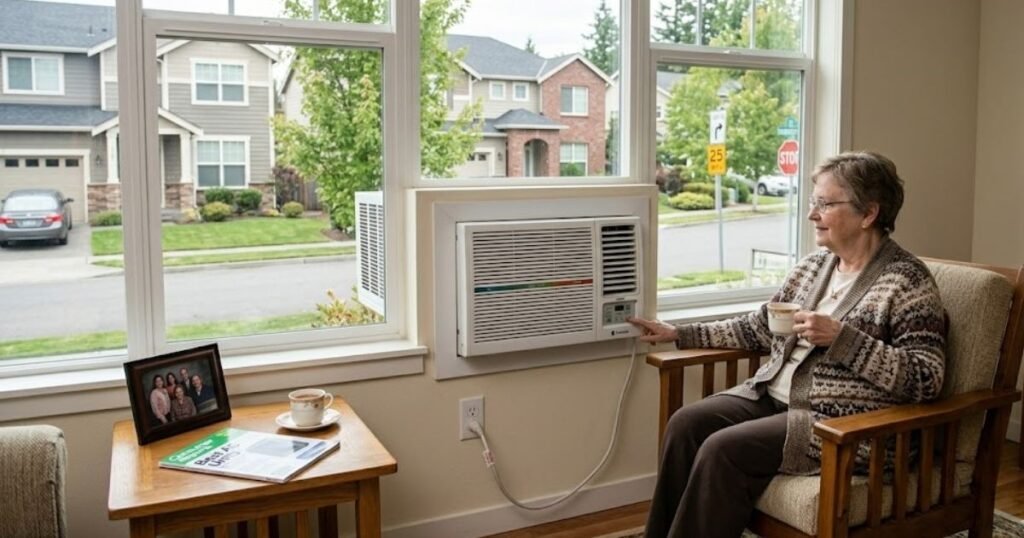
At its most basic, a through the wall air conditioner with heat is a self-contained HVAC unit that mounts directly into an opening cut into an exterior wall. Unlike a window unit, it doesn’t sit in a window frame it slides into a permanent wall sleeve and stays there year-round.
The “with heat” part means the unit can do more than just cool. Depending on the model, it either uses electric resistance heating coils or a reverse-cycle heat pump to warm the room during colder months.
How Is It Different from Other Options?
| Unit Type | Installation | Heating | Appearance | Best For |
| Through-the-Wall AC with Heat | Wall sleeve, permanent | Yes (electric or heat pump) | Clean, flush look | Bedrooms, additions, studios |
| Window AC Unit | Window frame | Rarely | Blocks window | Temporary or rental use |
| Portable AC | No installation | Some models | Sits on floor | Renters, temporary use |
| Mini Split System | Wall-mounted + outdoor unit | Yes | Very sleek | Multi-room coverage |
| Central HVAC | Full duct system | Yes | Hidden | Whole-home comfort |
The through-the-wall heating and cooling unit hits a sweet spot between permanent comfort and manageable installation cost something central HVAC can’t offer for a single room, and something window units simply aren’t designed to do year-round.
READ MRE: Best Ductless Mini Split Air Conditioner: Review, Comparison, Cost & Buying Guide
Through the Wall Air Conditioner with Heat How Does It Work?
Understanding the mechanics helps you make a smarter buying decision. Here’s a simplified breakdown.
Cooling Mode
The unit pulls warm indoor air across a refrigerant-filled evaporator coil, which absorbs heat from the air. The cooled air is blown back into the room, while the absorbed heat is pushed outside through the condenser. This is the same refrigerant cycle used in every modern AC just in a compact wall-mounted format.
Heating Mode
This is where models differ. There are two main heating methods:
- Electric resistance heat: Similar to a space heater built into the unit. It’s simple and reliable but costs more to run.
- Heat pump mode: The refrigerant cycle runs in reverse pulling heat from outside air and moving it indoors. This is far more energy-efficient, especially in mild to moderate climates.
Wall Sleeve Installation
The unit slides into a metal wall sleeve that gets installed in the wall opening. This sleeve provides structural support and seals the gap between the unit and the wall, preventing drafts and moisture from sneaking in.
Thermostat Control
Most modern wall AC heater combos come with a built-in thermostat, remote control, and increasingly, Wi-Fi smart controls. You set your desired temperature and the unit cycles on and off automatically to maintain it.
Benefits of a Through the Wall Air Conditioner with Heat
There’s a reason these units are popular with homeowners, landlords, and contractors across the country. Here’s what makes them appealing:
- Year-round comfort in one unit — Cool in summer, heat in winter, no seasonal swapping needed.
- Permanent and stable installation — Unlike window units, these don’t rattle, shift, or fall out.
- Cleaner appearance — A flush wall sleeve looks far more intentional than a window unit hanging out of a frame.
- No ductwork required — Perfect for rooms or additions that aren’t connected to your central HVAC system.
- Better security — Your windows stay fully closed and locked.
- Precise zone control — Heat or cool only the room you’re using, rather than the whole house.
- Frees up window space — Natural light and ventilation aren’t blocked.
- Ideal for long-term use — These units are built for permanent installation, not temporary fixes.
READ MORE: Small Room Window Air Conditioner: Best Picks, Comparison, & Buying Guide
Drawbacks of Through the Wall Air Conditioner with Heat
Being honest here matters. A wall sleeve air conditioner with heat isn’t perfect for every situation.
- Wall cutting is required — If you don’t already have a sleeve in place, installation means cutting a hole through your exterior wall, which is not a minor task.
- Professional installation is often needed — Unless you’re experienced with home improvement, this isn’t a weekend DIY project.
- Limited to one room or zone — It won’t heat or cool your entire home on its own.
- Higher upfront cost than window units — Between the unit price and installation, the initial investment adds up.
- Electrical upgrades may be needed — Larger units require a dedicated 240V circuit.
- Sleeve dimensions matter — If replacing an existing unit, the new unit’s sleeve must be compatible with the existing wall opening.
Best Places to Use One
Where a Wall Mounted AC with Heat Truly Shines
These units aren’t one-size-fits-all, but they’re an excellent fit for several common situations:
- Bedrooms — Quiet, consistent temperature control without disturbing sleep.
- Living rooms — Powerful enough to handle larger open spaces when sized correctly.
- Basements — Basements are often too far from central HVAC returns; a wall unit solves this cleanly.
- Garages and workshops — Detached or attached garages with converted living space benefit enormously.
- Home offices — Maintain productivity without depending on the whole-home system.
- Guest rooms — Keep guests comfortable without running the central system for one room.
- Sunrooms and home additions — These spaces are almost never connected to existing ductwork.
- Studio apartments and efficiency units — One unit can handle the whole space.
READ MORE: Best Small Room 8000 BTU Portable Air Conditioner Units (Comparison & Reviews)
Key Features to Look For Before Buying
When shopping for the best through the wall air conditioner with heat, don’t just grab the cheapest listing. Here’s what actually matters:
1. BTU Rating
This determines how much space the unit can effectively heat or cool. Too small and it runs constantly without reaching your target temperature. Too large and it short-cycles, creating humidity problems.
2. Heating Type
- Electric resistance heat is simpler and more affordable upfront but less efficient to run.
- Heat pump costs more upfront but can save significantly on monthly bills, especially in climates that don’t see extreme cold.
3. Energy Efficiency
Look for the EER (Energy Efficiency Ratio) for cooling and COP (Coefficient of Performance) for heating. The higher the numbers, the less you’ll spend on electricity. ENERGY STAR-certified models offer the best efficiency.
4. Thermostat and Controls
A programmable thermostat lets you set schedules. Wi-Fi-enabled models let you control the unit from your phone a genuinely useful feature for managing energy use.
5. Quiet Operation
Check decibel ratings. Bedroom units should ideally operate below 50 dB to avoid disrupting sleep.
6. Washable Filters
Reusable, washable filters save money over time and make maintenance much easier.
7. Sleeve Compatibility
If you’re replacing a unit, measure your existing sleeve carefully. Not all units are interchangeable.
8. Heating Capacity in Cold Weather
Heat pump efficiency drops in very cold climates. If you’re in a northern state where winter temperatures regularly dip below 20°F, look for a unit with supplemental electric heat or strong low-temperature heating specs.
How to Choose the Right Size of AC
Sizing is probably the most important buying decision you’ll make. Here’s a simple BTU guide for typical room sizes:
| Room Size (Sq. Ft.) | Required Cooling Capacity (BTU) | Typical Heating Capacity Needed |
| 150 to 250 sq. ft. (Small bedroom, office) | 6,000 – 7,000 BTUs | 5,000 – 6,000 BTUs |
| 250 to 400 sq. ft. (Medium bedroom, dining room) | 8,000 – 10,000 BTUs | 7,000 – 9,000 BTUs |
| 400 to 550 sq. ft. (Living room, small studio) | 12,000 BTUs | 10,000 – 11,000 BTUs |
| 550 to 700 sq. ft. (Large open floor plan, garage) | 14,000 – 15,000 BTUs | 12,000 – 13,000 BTUs |
Adjustments to consider:
- Add ~10% capacity if the room gets heavy afternoon sunlight.
- Add ~10% if you regularly have several people in the space.
- Subtract ~10% if the room is heavily shaded.
- High ceilings (above 8 ft) need more BTUs than the square footage suggests.
Buying too big is actually a common mistake. An oversized unit cools the room too quickly, shuts off before removing enough humidity, and leaves the space feeling cold and damp.
READ MORE: 8 Best DREO Smart Tower Fans 2026: Review & Comparison
Through the Wall Air Conditioner with Heat Installation
What You Need to Know Before You Start
Installing a through wall AC involves more steps than plugging in a window unit. Here’s what to expect:
1. Wall Opening The wall needs a correctly sized cutout based on the unit’s sleeve dimensions. Most sleeves are around 16–24 inches high and 24–28 inches wide, but this varies by manufacturer and BTU size.
2. Sleeve Installation The metal wall sleeve is inserted into the opening, secured to the wall framing, and sealed to prevent air infiltration. This step must be done correctly a poorly sealed sleeve leads to drafts, moisture damage, and energy loss.
3. Electrical Requirements Most through-the-wall units require a dedicated 115V or 240V circuit depending on their size. Larger units (above 14,000 BTU) almost always need 240V, which may require running a new circuit from your panel.
4. Support and Structural Integrity Larger units are heavy. Make sure the wall framing can support the unit’s weight and that the sleeve is properly anchored.
5. Professional vs. DIY If you’re experienced with carpentry and electrical work, a basic installation is manageable. However, most homeowners benefit from hiring a licensed HVAC technician or contractor especially for the electrical work. Improper wiring is a safety hazard.
6. Permits and Codes Some municipalities require a permit for wall penetrations or electrical work. Check with your local building department before starting.
Energy Use and Operating Cost
An energy efficient wall air conditioner with heat won’t blow up your electric bill if you buy wisely and use it smartly. Your monthly cost depends on:
- Unit size — Larger units draw more power.
- Heating type — Heat pump models cost significantly less to heat with than electric resistance.
- Insulation quality — A poorly insulated room makes any unit work harder.
- Your local climate — Extreme heat or cold means longer run times.
- Usage habits — Running the unit 24/7 vs. using a programmable schedule makes a big difference.
- Thermostat settings — Every degree you drop in winter or raise in summer saves roughly 2–3% on energy costs.
As a rough estimate, a 12,000 BTU unit running 8 hours a day at the national average electric rate costs around $30–$50 per month. A heat pump model heating the same space in mild weather could cost significantly less.
READ MORE: Best Solar Air Conditioner for Home: The Ultimate USA Homeowner Guide
Through the Wall Air Conditioner with Heat Maintenance Tips
Simple Maintenance Checklist
Keeping your unit running efficiently requires a little regular attention. Here’s what to do:
- ☐ Clean or replace filters every 4–6 weeks during heavy use seasons
- ☐ Wipe down the evaporator and condenser coils annually to remove dust buildup
- ☐ Keep air vents clear of furniture, curtains, and debris
- ☐ Inspect the wall sleeve annually for gaps, rust, or moisture intrusion
- ☐ Check drainage to ensure condensate is draining properly
- ☐ Test heating mode before winter arrives so you’re not caught off guard
- ☐ Schedule a professional checkup every 2–3 years for refrigerant levels and mechanical health
Neglecting maintenance is the fastest way to shorten a unit’s lifespan and inflate your electric bill.
Through the Wall AC with Heat vs. Other Options
Which Heating and Cooling Solution Is Right for You?
| Feature | Through-Wall AC with Heat | Window AC with Heat | Mini Split | Portable AC with Heat | Central HVAC |
| Installation complexity | Moderate | Low | High | None | Very High |
| Appearance | Clean, permanent | Blocks window | Sleek | Freestanding | Hidden |
| Heating efficiency | Good to excellent | Fair | Excellent | Fair | Excellent |
| Whole-home coverage | No | No | Multi-room possible | No | Yes |
| Upfront cost | $400–$1,200 | $250–$700 | $1,500–$4,000+ | $300–$800 | $5,000–$15,000+ |
| Best for | Single rooms, additions | Renters, temporary | Whole-home zone control | Temporary, renters | Full home comfort |
If your budget allows and you need comfort in more than two or three rooms, a mini split system may offer better value. But for single-room comfort in a permanent installation without the cost of a full mini split the through wall AC heater combo is hard to beat.
Is It Worth It for Homeowners?
For the right home and the right room, absolutely. Here’s a quick breakdown to help you decide:
It’s a smart buy if:
- You have a room without ductwork that needs year-round comfort.
- You want a permanent, clean-looking installation.
- You’re in a moderate climate where heat pump efficiency is high.
- You’re outfitting a home addition, basement, or detached space.
You might want to reconsider if:
- You need to heat or cool your entire home central HVAC or a multi-zone mini split makes more sense.
- You’re in a very cold climate and the unit lacks sufficient heating capacity at low temperatures.
- Your wall construction makes cutting an opening impractical or extremely expensive.
- Your budget is very tight a window unit with heat may serve as a short-term alternative.
Buying Tips for USA Homeowners
Simple Buying Checklist
Before placing an order, run through this list:
- ☐ Measure the room’s square footage accurately
- ☐ Decide between electric heat and heat pump based on your climate
- ☐ Check the unit’s EER and ENERGY STAR rating
- ☐ Confirm the sleeve dimensions match your wall or existing opening
- ☐ Read reviews specifically about noise levels if it’s for a bedroom
- ☐ Check the warranty — look for at least 1 year on parts, 5 years on the compressor
- ☐ Confirm your electrical panel can support the circuit needed
- ☐ Compare at least 3 brands before buying
- ☐ Factor installation costs into your total budget
Trusted Brands Worth Considering
Several brands have built strong reputations in the through-the-wall category in the U.S. market. Friedrich, LG, Amana, and Frigidaire are consistently well-reviewed for reliability, efficiency, and customer support. That said, always read recent customer reviews product lines change.
Best For: Quick Reference
| Use Case | Recommended? |
| Bedroom comfort | ✅ Excellent choice |
| Home addition without ductwork | ✅ Excellent choice |
| Basement temperature control | ✅ Excellent choice |
| Studio apartment | ✅ Great fit |
| Whole-home heating/cooling | ❌ Not suitable |
| Renting (can’t modify walls) | ❌ Not suitable |
| Extreme cold climates (below -10°F regularly) | ⚠️ Check specs carefully |
| Sunrooms and three-season rooms | ✅ Very practical |
Frequently Asked Questions
What is a through the wall air conditioner with heat?
A through the wall air conditioner with heat is a self-contained unit that installs permanently into a hole cut in an exterior wall. It provides both air conditioning in summer and heating in winter.
Is a through the wall air conditioner with heat worth it?
For rooms without existing ductwork like additions, basements, garages, or studios yes, it’s often very worth it.
How do you install a through the wall air conditioner with heat?
Installation involves cutting a correctly sized opening in an exterior wall, inserting and securing a metal wall sleeve, running or verifying the appropriate electrical circuit, and sliding the unit into the sleeve.
What size through the wall air conditioner with heat do I need?
A good general rule: 6,000–8,000 BTU for rooms up to 250 sq ft, 9,000–12,000 BTU for rooms up to 400 sq ft, and 14,000–18,000 BTU for spaces up to 700 sq ft. Adjust upward for sunny rooms or high ceilings, and always consult a sizing chart specific to the brand you’re considering.
Are through the wall air conditioners with heat energy efficient?
It depends on the model. Heat pump models are considerably more efficient than electric resistance heating sometimes 2–3x more efficient per dollar of electricity spent. Look for ENERGY STAR certification and a high EER rating.
Conclusion
A through the wall air conditioner with heat is one of the most practical and underappreciated home comfort solutions available to American homeowners today. It combines cooling and heating in a single, permanently installed unit that looks clean, performs reliably, and solves the specific problem of single-room comfort without ductwork.
Yes, installation takes some planning and upfront investment. But for the right application a bedroom, basement, home addition, home office, or studio it’s hard to find a more complete solution at a comparable price point. Choose the right BTU size, pick a model with heat pump technology if your climate allows, and make sure installation is done properly, and you’ll have a unit that serves you well for a decade or more.