Hey there, folks! If you’re anything like me, living in the USA means dealing with those brutal winters that sneak up faster than a Black Friday sale. Whether you’re in the snowy Midwest, the chilly Northeast, or even those occasional cold snaps down South, staying warm is non-negotiable. That’s where propane heaters come in reliable, efficient, and a total game-changer for heating your home, garage, patio, or even during camping trips.
In this comprehensive guide, we’ll dive deep into everything you need to know about propane heaters for the USA market in 2025. From types and benefits to safety tips, a handy buying guide, and even a comparison of top models, I’ve got you covered. Plus, we’ll tackle some real FAQs straight from Google searches to address those burning questions (pun intended). Let’s deep dive into “Best Propane Heaters for Indoor & Outdoor Use”

What Exactly Is a Propane Heater?
At its core, a propane heater is a device that burns propane gas to generate heat. Propane, also known as liquefied petroleum gas (LPG), is stored in tanks and released to fuel the heater’s burner. These heaters convert the chemical energy in propane into thermal energy, warming up your space quickly and effectively. Unlike electric heaters that rely on the grid, propane models offer independence perfect for off-grid living or power outages, which are all too common in storm-prone areas like the Gulf Coast or the Rockies.
Propane heaters have been around for decades, but modern versions are sleeker, safer, and more efficient. They’re popular across the USA because propane is widely available at gas stations, hardware stores like Home Depot, and suppliers like AmeriGas. Whether you’re heating a small room or a large garage, these heaters pack a punch with their high BTU (British Thermal Unit) outputs, measuring how much heat they can produce per hour.
READ MORE: Best 7 Propane Shop Heater: Picks for Garages & Workshops
Types of Propane Heaters:
Not all propane heaters are created equal they come in various styles tailored to different uses. Understanding the types will help you pick one that matches your lifestyle. Based on venting, heating method, and setup, here’s a breakdown:
- Portable Propane Heaters: These are the go-to for versatility. Think models like the Mr. Heater Buddy series – lightweight, easy to carry, and ideal for camping, ice fishing, or emergency home use. They connect to small 1-lb cylinders or larger 20-lb tanks and can heat spaces up to 225 square feet.
- Radiant Propane Heaters: These emit infrared heat that warms objects and people directly, rather than the air. Great for garages or workshops, as they provide targeted warmth without wasting energy. Examples include tank-top heaters that screw onto propane cylinders for quick setup.
- Forced-Air Propane Heaters: Also called torpedo or salamander heaters, these blow hot air using a fan. They’re powerful for large areas like construction sites or big garages, with BTUs ranging from 30,000 to over 100,000. Brands like Dyna-Glo excel here, but they’re noisier and best for well-ventilated spaces.
- Convection Propane Heaters: These circulate warm air naturally, without fans, making them quieter. They’re often wall-mounted or freestanding and suit indoor use in homes or cabins. Look for models with blue flame technology for even heating.
- Patio and Outdoor Propane Heaters: Designed for al fresco living, these include freestanding pyramid styles (like the East Oak Torch) or mounted versions. They provide 360-degree heat for decks, patios, or outdoor events, extending your usable space into cooler months.
- Garage and Shop Propane Heaters: Heavy-duty options like those from SunStar or Detroit Radiant, often vented to handle moisture and fumes. They’re built tough for uninsulated spaces, with features like ceramic burners for efficient combustion.
Each type has its place for instance, if you’re in a tiny home in California, a compact radiant model might suffice, while a forced-air beast is better for a spacious Michigan garage.
The Top Benefits of Using Propane Heaters in Your Home or Outdoors
Why choose propane over electric or natural gas? Let’s count the ways with some eye-catchy perks that’ll make you rethink your heating setup:
- Portability on Point: Grab and go! Unlike fixed systems, propane heaters move with you – from the living room to the campsite. No wiring hassles, just hook up a tank and you’re golden.
- Power Outage Proof: When the grid fails during a blizzard (hello, Northeast winters), propane keeps the heat flowing. It’s a lifesaver for rural USA homes where electricity can be spotty.
- Cost-Effective Warmth: Propane burns efficiently, often cheaper than electricity per BTU. Expect lower bills, especially with models boasting 99% efficiency ratings. Plus, tanks last longer than you’d think – a 20-lb one can run for hours.
- Eco-Friendly Edge: Cleaner than coal or oil, propane produces fewer emissions. It’s non-toxic, doesn’t contaminate soil if spilled, and many models qualify as green energy sources. Good for the planet and your conscience!
- Quick Heat Delivery: No waiting around propane heaters warm up fast, often in minutes. Radiant types feel instant, perfect for chilly mornings.
- Versatile Applications: From home heating to grilling (yes, some double as stoves), propane does it all. It’s reliable in extreme colds, unlike some electric heaters that struggle below freezing.
- Low Maintenance Magic: Fewer moving parts mean less upkeep. Just check tanks, clean burners occasionally, and you’re set for years.
Compared to electric heaters, propane often wins on power and portability, though electrics edge out on indoor safety without ventilation needs. These benefits make propane a staple in American households, especially in states like Texas or Pennsylvania where energy independence matters.
READ MORE: Best Portable Propane Hot Water Heater: Reviews, Cost & Comparison
Top Features to Look For in a Propane Heater
Choosing the right propane heater comes down to balancing warmth, safety, and convenience. Whether you are heating a garage, a workshop, a patio, or preparing for an emergency, keep these essential features in mind when shopping:
1. Heating Capacity (BTU Output)
- Match Size to Space: BTUs (British Thermal Units) dictate how much space a heater can effectively warm. A good general rule of thumb is needing roughly 20 to 25 BTUs per square foot of space.
- Adjustable Heat Settings: Look for models with multiple heat levels (low, medium, high). This allows you to dial in your comfort and conserve fuel when full power isn’t necessary.
2. Essential Safety Mechanisms
Safety is paramount when dealing with gas appliances. Prioritize heaters equipped with these built-in protections:
- Oxygen Depletion Sensor (ODS): Automatically shuts off the heater if the oxygen levels in the room drop below safe thresholds. (Crucial for indoor use.)
- Tip-Over Switch: Instantly cuts off the fuel supply if the unit is accidentally knocked or tilted over.
- Thermal Overload Protection: Prevents the unit from overheating by automatically shutting it down if internal temperatures exceed safe limits.
3. Portability and Design
- Build and Weight: If you plan to move the heater between locations—such as a garage, a shed, or a campsite—look for lightweight models with sturdy, cool-touch handles or built-in wheels.
- Indoor vs. Outdoor Rating: Double-check the manufacturer’s certification. Never use a heater rated exclusively for outdoor use inside an enclosed space.
4. Ignition Type
- Piezo Ignition: A reliable, push-button mechanical igniter that generates a spark without requiring batteries or electrical power—perfect for job sites and power outages.
- Electronic Ignition: Battery-operated or plug-in electronic ignition provides quick, effortless startups.
5. Fuel Compatibility and Efficiency
Estimated Run Time: Check the manufacturer’s specs for fuel consumption rates to understand how long a tank will last on your preferred heat setting.
Tank Options: Determine whether the heater works with standard 1 lb camping cylinders, requires a hose adapter for large 20 lb propane tanks, or can accommodate both.
READ MORE: Best Electric Patio Heater: Review, Cost & Comparison
Propane Heaters Detailed Product Reviews
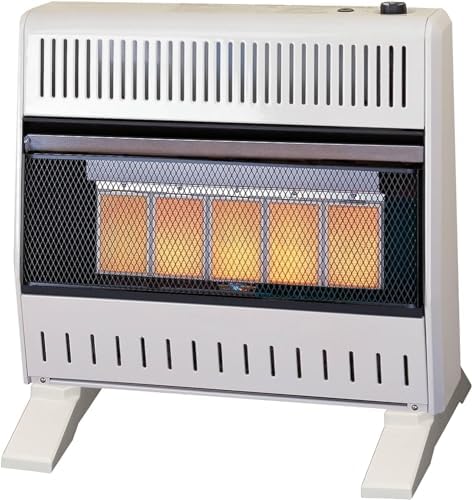
1. ProCom Heating Liquid Propane Ventless Infrared Plaque Heater (ML250TPA-B)
- Heat Output: 25,000 BTU
- Heating Type: Infrared Plaque
- Overview: The ProCom ML250TPA-B is designed as a powerful supplemental indoor heating solution. Using infrared plaque technology, it warms objects and people directly in the room rather than just circulating hot air, making it feel warmer faster. It features built-in thermostat control for automated temperature maintenance and comes with base feet for floor placement, though it can also be wall-mounted.
- Pros:
- Direct infrared heat warms people and surfaces quickly.
- Thermostat control allows for precise temperature regulation.
- Versatile installation (includes base feet and wall-mount capability).
- Cons:
- Ventless design requires strict adherence to room-sizing and ventilation guidelines.
- Minor propane odor can sometimes occur during initial startup.
2. BILT HARD Vent Free Blue Flame Propane Heater
- Heat Output: Up to 30,000 BTU (configurable models available)
- Heating Type: Blue Flame Convection
- Overview: BILT HARD’s blue flame heater heats the air directly, circulating warmth evenly throughout a room like a traditional central heating system. It features an adjustable thermostat, reliable Piezo ignition, and includes both wall-mounting hardware and base support feet. It is ideal for large rooms, basements, or cabins.
- Pros:
- Blue flame technology warms ambient air uniformly across large spaces.
- Highly efficient thermostat control prevents overheating and saves fuel.
- Sturdy construction with dual mounting options.
- Cons:
- Convection heating takes slightly longer to provide immediate personal warmth compared to infrared options.
- Ventless operation means it cannot be used in tightly sealed tiny spaces without proper fresh air provisions.

3. Amazon Basics 46,000 BTU Portable Outdoor Propane Patio Heater (61826)
- Heat Output: 46,000 BTU
- Heating Type: Radiant Outdoor Top-Emitter
- Overview: A staple for outdoor entertainment, the Amazon Basics 61826 delivers robust warmth over a 9-foot radius. Finished in a stylish Havana Bronze powder coat, it features a built-in wheel kit for easy mobility, a base water/sand box for anchoring, and a tilt safety auto-shutoff valve.
- Pros:
- High-powered output quickly cuts through cold evening outdoor air.
- Wheels make repositioning effortless.
- Reliable safety mechanisms, including tip-over auto shut-off.
- Cons:
- Strictly for outdoor use; cannot be used on enclosed porches or indoors.
- Large, tall footprint requires significant overhead and lateral clearance.

4. DUMOS 48,000 BTU Propane Patio Heater
- Heat Output: 48,000 BTU
- Heating Type: Radiant Outdoor Top-Emitter
- Overview: The DUMOS patio heater steps up performance with a massive 48,000 BTU output covering an 18-foot diameter area. It features a double-layer 304 stainless steel burner grid for corrosion resistance, an upgraded sand/water box base for superior wind stability, and a convenient built-in round table tray for drinks or phones.
- Pros:
- Exceptionally wide heating coverage area.
- Built-in utility table adds practical functionality.
- Durable stainless steel burner construction improves longevity.
- Cons:
- Heavy and bulky when the base ballast is fully filled.
- Requires careful assembly of multiple panels and the upper reflector shield.

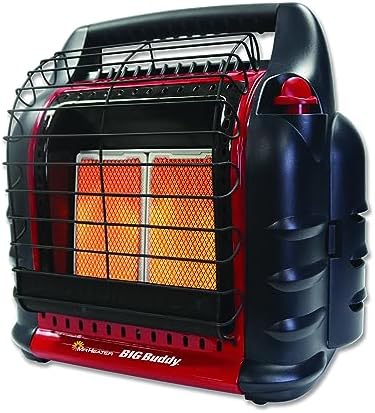
5. Mr. Heater 18,000 BTU Big Buddy PRO Series Heater (MH18B)
- Heat Output: 4,000 to 18,000 BTU (3 settings)
- Heating Type: Radiant / Convection Hybrid
- Overview: Widely considered a gold standard for portable heating, the Big Buddy is approved for both indoor and outdoor use. It heats up to 450 square feet and features an integrated high-powered fan to push heat further into space. It includes an Oxygen Depletion Sensor (ODS) and a tip-over safety switch.
- Pros:
- Certified safe for indoor spaces (garages, cabins, emergency home use).
- Built-in electric fan enhances heat distribution.
- Flexible fuel source (runs on 1 lb disposable cylinders or 20 lb tanks via hose).
- Cons:
- The internal blower fan requires external power (batteries or an AC adapter) to operate.
- Consumes propane relatively quickly on the high setting.
6. Mr. Heater 9,000 BTU Portable Buddy Radiant Propane Heater (MH9BX)
- Heat Output: 4,000 to 9,000 BTU (2 settings)
- Heating Type: Radiant
- Overview: The smaller sibling to the Big Buddy, the Portable Buddy is built for maximum portability during camping, ice fishing, or emergency outages. It warms spaces up to 225 square feet and features an accidental tip-over shutoff and low-oxygen safety shutoff.
- Pros:
- Extremely compact, lightweight, and easy to transport.
- Indoor-safe with reliable safety shutoff sensors.
- Simple, matchless Piezo or electronic ignition.
- Cons:
- Lower BTU output means it is unsuited for very large rooms or open garages.
- Lacks a built-in convection blower fan.

7. Jocoevol Propane Heater Outdoor 18000 BTU Portable Tank Heater Cordless
- Heat Output: Up to 18,000 BTU (adjustable settings)
- Heating Type: Portable Radiant Tank-Top / Cabinet Style
- Overview: This cordless portable unit delivers 18,000 BTUs of targeted radiant warmth, making it ideal for job sites, open workshops, backyards, and well-ventilated garages. Built with safety in mind, it includes an Oxygen Depletion Sensor (ODS), flame-out protection, and a tip-over safety switch.
- Pros:
- High-output cordless heat that operates completely independent of electricity.
- Rugged build optimized for rough outdoor environments and garages.
- Multi-stage adjustable heat settings to conserve fuel.
- Cons:
- Not authorized for normal residential living areas (intended for outdoor or heavy-duty ventilated utility spaces).
- Radiant heat is directional; objects outside its direct line-of-sight will feel less warmth.

READ MORE: Safe Portable Heaters: 6 Reviews & Essential Safety Tips
Propane Heaters Comparison Table
| Product Name | Heat Output (BTU) | Heating Type | Primary Application | Indoor / Outdoor | Fuel Source | Standout Safety Features |
| ProCom ML250TPA-B | 25,000 | Infrared Plaque | Supplemental Room Heating | Indoor | Liquid Propane | ODS, Thermostat Shut-off |
| BILT HARD Blue Flame | Up to 30,000 | Blue Flame Convection | Large Room / Basement | Indoor / Outdoor | Liquid Propane | ODS, Tip-over Switch |
| Amazon Basics (61826) | 46,000 | Radiant Top-Emitter | Patio & Entertaining Spaces | Outdoor Only | 20 lb LP Tank | Tilt Auto-Shutoff, Base Weight Box |
| DUMOS Patio Heater | 48,000 | Radiant Top-Emitter | Commercial / Large Patios | Outdoor Only | 20 lb LP Tank | Anti-Tilt, Flame-Out Protection |
| Mr. Heater Big Buddy | 4,000 – 18,000 | Radiant / Convection | Cabins, Garages, Emergency | Indoor & Outdoor | 1 lb or 20 lb Tank | ODS, Thermal Shut-down, Tip-over Switch |
| Mr. Heater Portable Buddy | 4,000 – 9,000 | Radiant | Camping, Tents, Small Rooms | Indoor & Outdoor | 1 lb (20 lb w/ hose) | ODS, Tip-over Shut-off Switch |
| Jocoevol 18,000 BTU | Up to 18,000 | Radiant Portable | Workshops, Yards, Garages | Outdoor / Ventilated Utility | Liquid Propane Tank | ODS, Tip-Out, Flame-Out Protection |
Essential Safety Tips for Using Propane Heaters
Safety first propane is flammable, so mishandling can lead to risks like carbon monoxide (CO) buildup or fires. But with smart practices, it’s as safe as any appliance. Here are must-know tips tailored for USA users:
- Ventilate Like a Pro: Always use in well-vented areas. For indoor models, crack a window or use exhaust fans to prevent CO accumulation. Outdoor heaters? Keep them away from enclosed patios.
- Install CO Detectors: Mandatory in most states place one near sleeping areas and test monthly. Propane heaters produce CO if not burning properly, so detectors are your silent guardians.
- Keep Clear Zones: Maintain at least 3 feet from flammables like curtains, furniture, or walls. Never place on uneven surfaces to avoid tip-overs.
- Choose Indoor-Safe Models: Look for Oxygen Depletion Sensors (ODS) and tip-over shutoffs. These auto-shut if oxygen drops or the unit falls. Avoid outdoor heaters indoors they’re not designed for it.
- Inspect and Maintain: Check hoses for leaks (use soapy water – bubbles mean trouble). Store tanks upright outdoors, away from heat sources. Shut off valves when not in use.
- Never Leave Unattended: Especially overnight. And kids/pets? Supervise closely to prevent accidents.
- Follow Local Codes: USA regulations vary – check with your state (e.g., California’s strict emission rules) or call pros like Ferrellgas for advice.
Remember, if you smell gas (like rotten eggs), evacuate and call 911. Proper use keeps things toasty without drama.
READ MORE: Air Source Heat Pumps
FAQs About Propane Heaters
Drawing from common “People Also Ask” on Google, here are five genuine questions with straightforward answers:
- Are propane heaters safe to use indoors? Yes, but only models labeled “indoor-safe” with ODS and proper ventilation. Always use CO detectors and follow manufacturer guidelines to avoid risks.
- How long will a 20 lb propane tank last on a heater? It depends on BTU output – for a 18,000 BTU heater on high, about 24 hours. Lower settings extend it to 48+ hours. Factor in efficiency and tank size.
- Can I use a propane heater in a garage? Absolutely, but ensure excellent ventilation to expel fumes. Opt for garage-specific models and never leave unattended to prevent moisture or CO issues.
- What makes a propane heater indoor safe? Features like ODS (shuts off if oxygen is low), tip-over protection, and enclosed flames. Proper placement on stable surfaces and away from combustibles is key.
- How much does it cost to run a propane heater? Roughly $1-3 per hour on high, based on propane prices (around $3/gallon in 2025 USA averages). Efficient models cut costs compared to electric alternatives.
Wrapping It Up:
There you have it a full rundown on propane heaters that’ll keep you warm without breaking the bank or skimping on safety. In a country as diverse as the USA, from Alaska’s deep freezes to Florida’s mild chills, these heaters offer flexibility, efficiency, and peace of mind. Whether you’re prepping for winter storms or just want cozy outdoor evenings, investing in a quality propane heater is a win. Remember to buy from trusted sources, maintain regularly, and enjoy the warmth. Stay toasty out there!


Pingback: Best Portable Heaters for 2026: Top-Tested Space Heaters - Plumbing Guider