It is frustrating when your heat pump sounds like it is working, but the house still feels warm. The fan is on. The system is running. Yet the air never seems to get cool enough.
This problem is common, and it does not always mean your heat pump has failed. Sometimes the issue is simple. A dirty filter, the wrong thermostat setting, or blocked airflow can keep the system from cooling well. Other times, the problem is bigger and needs a trained HVAC technician.
The good news is that many homeowners can check a few basic things before calling for service. In a lot of cases, that saves time and money. This guide will walk you through what the problem means, the most common causes, easy fixes to try first, and the signs that it is time to bring in a pro. Lets deep dive into “Heat Pump Running but Not Cooling: Causes, Fixes & When to Call a Pro”
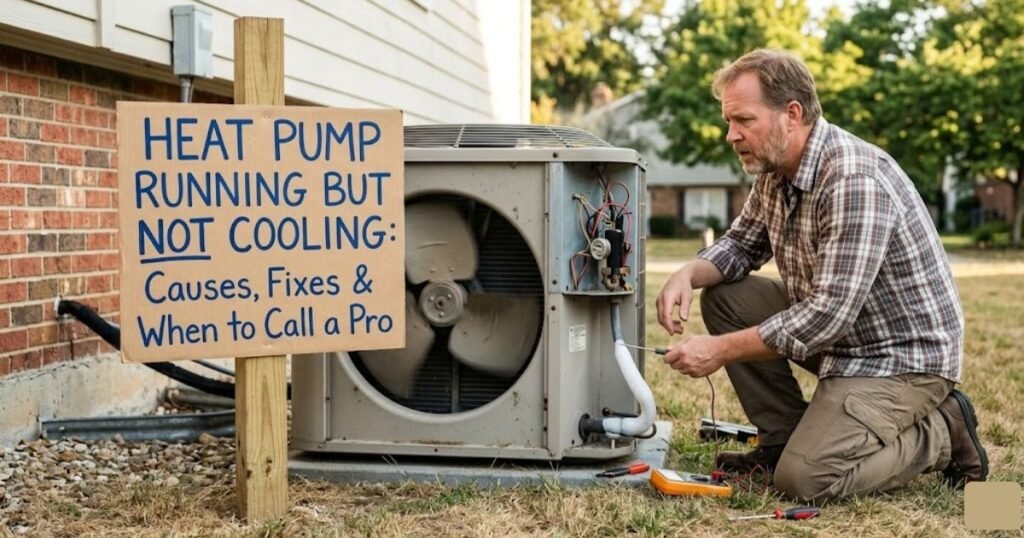
READ MORE: Why Is My Heat Pump Blowing Warm Air? Causes, Fix, and Costs
What It Means When Your Heat Pump Is Running but Not Cooling
First, let’s clear up some confusion. When we say a heat pump is “running,” we usually mean the fans are spinning. You can hear the indoor air handler blowing air through the vents, and you might see the big fan outside spinning around.
However, there is a big difference between moving air and conditioning air.
A heat pump’s job is to move heat from one place to another. In the summer, it grabs the heat from inside your house and dumps it outside. To do this, it needs several parts to work in perfect harmony: the fans, the compressor, the refrigerant, and the coils.
If the fan is running but the air isn’t cold, it means the “transportation” part of the system is working, but the “cooling” part has hit a snag. The air is being pushed through your ducts, but the heat isn’t being removed from that air.
Think of it like a car with a broken engine being pushed down a hill. The wheels are turning, and it’s moving, but the power isn’t coming from where it should.

- Universally Compatible: Measuring 18″ x 20″ x 1″, with an actual size of 17.75″x19.75″ x 0.75″, Simply Filters works wit…
- Cleaner Air Everywhere: Capture dust, mold, pet dander, pollen and auto exhaust in homes, offices, schools, hospitals, a…
- Advanced Pleated Technology: With a higher pleat count than most retail, our meticulously crafted filters offer superior…
Common Reasons a Heat Pump Runs but Does Not Cool
Before you panic about the cost of a repair, let’s look at the most common culprits. Some of these are simple maintenance issues, while others involve the inner workings of the machine.
1. The Dirty Air Filter
This is the “Have you tried turning it off and on again?” of the HVAC world. It sounds too simple, but a clogged air filter is the number one cause of cooling problems.
When a filter is caked with dust, pet hair, and dander, the heat pump has to work twice as hard to pull air through. If the airflow is restricted enough, the cooling coils (the evaporator coils) can’t do their job. In fact, they might get so cold that they actually freeze over, turning into a block of ice that blocks all air from getting through.

- MAKE YOUR HOME YOUR SANCTUARY: 4-pack of 3-month pleated Filtrete 16x25x1 MERV 11 MPR 1000 AC Furnace Air Filter helps c…
- EXCLUSIVE TECHNOLOGY: Designed with Filtrete 3-in-1 technology to pull in and trap unwanted particles, allowing cleaner …
- COUNTLESS MICROPARTICLES: With a 1000 MPR and MERV 11 rating, your Filtrete Filter will help capture many microparticles…
2. Thermostat Issues
Your thermostat is the brain of your HVAC system. If the brain is confused, the body won’t work right. Sometimes the thermostat loses its connection to the unit. Other times, the internal sensors might be dusty or failing.
If you have a smart thermostat, a software glitch or a power blip could have reset your settings without you realizing it. Even a simple low-battery warning can cause a thermostat to act erratically.
READ MORE: Heat Pump Not Cooling? Causes, Fixes & Homeowner Troubleshooting
3. Wrong Thermostat Settings
We have all been there. Maybe someone in the house bumped the switch. If your thermostat is set to “On” instead of “Auto,” the fan will blow 24/7, even when the cooling cycle isn’t running. This results in lukewarm air blowing through the vents between cooling cycles.
Also, make sure it’s actually set to “Cool.” It sounds silly, but in the transition months between spring and summer, it’s easy to leave it in “Heat” or “Off” mode.
4. Low Refrigerant Levels
Refrigerant is the “blood” of your heat pump. It’s a special fluid that absorbs heat from your indoor air and carries it outside. Unlike the gas in your car, refrigerant isn’t “used up.” It stays in a closed loop.
If your refrigerant is low, it means you have a leak. When there isn’t enough refrigerant, the system can’t absorb enough heat to cool your home, leading to long run times and warm air.
5. A Dirty Outdoor Unit
Your outdoor unit (the condenser) needs to breathe. It’s covered in thin metal fins that help release heat into the outside air. If those fins are covered in grass clippings, dirt, cottonwood seeds, or overgrown bushes, the heat has nowhere to go.
If the heat can’t escape the outdoor unit, it stays in the refrigerant loop and ends up back inside your house.

- HVAC PROFESSIONAL FORMULA: Supercharge your coil cleaning with the HVAC Guys Foam Blaster penetrating evaporator and con…
- POWERFUL ACTIVE EXPANDING FOAM ACTION: The Foam Blaster works by using a high pressure spray that penetrates deep into t…
- FOR EVAPORATORS (NO-RINSE) AND CONDENSERS: The Foam Blaster is made for both evaporators (no rinsing required) and conde…
6. Frozen Evaporator Coils
Wait—how can something be frozen when it’s 90 degrees outside? It happens more often than you’d think. If airflow is restricted (due to a dirty filter) or if refrigerant is low, the temperature of the indoor coils can drop below freezing.
Moisture from your home’s air hits those cold coils and turns into ice. Eventually, you have a literal wall of ice inside your unit that prevents any cooling from happening.
7. Blocked Vents or Airflow Problems
If you have closed off vents in “unused” rooms to save money, you might be doing more harm than good. Heat pumps are designed for a specific amount of air pressure. Closing too many vents or having furniture block the return air grilles can throw the whole system out of balance, leading to poor cooling performance.
8. Electrical or Compressor Issues
Inside that outdoor unit is the compressor—the “heart” of the system. If the compressor isn’t turning on, the fan will still spin, but no cooling will happen. This could be caused by a bad capacitor (a small part that helps the motor start) or a tripped circuit breaker.
9. Heat Pump “Mode Confusion” (The Reversing Valve)
Heat pumps have a special part called a reversing valve. This is what allows the unit to switch from cooling in the summer to heating in the winter. If this valve gets stuck or the electrical signal to it fails, your heat pump might be stuck in “heat mode” even when you want AC.
10. Ductwork Leaks
You might have a perfectly healthy heat pump, but if your ducts have holes or have come detached in the attic or crawlspace, that cold air is cooling your insulation instead of your bedroom. This makes it feel like the system is running constantly without making a dent in the indoor temperature.

- Universally Compatible: Measuring 16″ x 25″ x 1″, with an actual size of 15.75″x24.75″ x 0.75″, Simply Filters works wit…
- Cleaner Air Everywhere: Our filters capture dust, mold, pet dander, and pollen in homes, offices, schools, hospitals, an…
- Advanced Pleated Technology: With a higher pleat count than most retail, our meticulously crafted filters offer superior…
READ MORE: Is a Heat Pump Worth It in Summer? A Simple Homeowner’s Guide
Easy Checks You Can Do First
Before you pick up the phone to call a technician, run through this “Homeowner’s DIY Audit.” You might save yourself a $150 service fee just for a five-minute fix.
- Check the Thermostat: Is it set to “Cool”? Is the temperature set lower than the current room temperature? Try switching the fan from “On” to “Auto.” If the display is faint, try putting in fresh batteries.
- Inspect the Air Filter: Pull the filter out and hold it up to a light. If you can’t see light through it, it’s too dirty. Replace it with a fresh one.
- Walk Outside to the Outdoor Unit: Clear away any tall grass, weeds, or debris within two feet of the unit. If the metal fins look caked with dirt, you can gently spray them with a garden hose (don’t use a pressure washer, as it will bend the delicate fins).
- Check Your Breaker Box: Look for a tripped circuit breaker labeled “AC” or “HVAC.” Sometimes a power surge can trip the breaker. Flip it all the way to “Off” and then back to “On.”
- Feel the Vents: Check every room. Are any supply vents closed? Are the big return grilles (the ones that suck air in) blocked by a couch or curtains? Open everything up to let the system breathe.
- Look for Ice: If you see ice on the copper pipes leading into the house or on the indoor unit, turn the system completely off at the thermostat. Let it thaw for a few hours before trying to run it again (and change that filter while you wait!).
When the Problem Is Bigger Than a Simple Fix
Sometimes, no amount of DIY checking will fix the issue. Heat pumps are complex machines that involve high-voltage electricity and pressurized chemicals. Here are the signs that it’s time to call in a professional:
- Weak Airflow: If you can barely feel air coming out of the vents even with a clean filter, your blower motor might be failing.
- Warm Air Blowing Constantly: If you’ve checked the thermostat and the air is still warm, you likely have a refrigerant leak or a reversing valve issue.
- Ice That Keeps Coming Back: If you thawed the unit and it froze right back up, you likely have a refrigerant leak.
- Strange Noises: Grinding, screeching, or loud “clunking” sounds from the outdoor unit usually mean a motor or the compressor is on its last legs.
- Frequent Cycling: If the unit turns on and off every few minutes (short-cycling), it’s struggling and could burn out the motor.
- The “Burning” Smell: If you smell electrical burning or sulfur, turn the system off at the breaker immediately and call a pro. This is a fire hazard.
- Rising Energy Bills: If your power bill doubled but your house is warmer than usual, the system is losing efficiency fast.
READ MORE: Emergency Heat Pump Repair: Signs, Costs & What to Do

- Heavy-duty foam dissolves stains, removes grease & oil, and loosens dirt
- Cleans coils, fan blades, and reusable air filters
- Neutralizes odors from standing water in drain pans
Possible Repair Costs for U.S. Homeowners
It helps to have a “ballpark” idea of what a repair might cost so you aren’t blindsided. Prices vary by region and the specific model of your unit, but here are some general ranges for common heat pump repairs in the U.S.
| Repair Service | Estimated Cost Range |
| Service Call / Diagnostic Fee | $75 – $200 |
| Capacitor Replacement | $150 – $450 |
| Refrigerant Recharge (Pounds + Labor) | $200 – $800 |
| Thermostat Replacement | $150 – $600 |
| Condenser Fan Motor | $300 – $700 |
| Blower Motor Repair | $400 – $900 |
| Evaporator Coil Replacement | $800 – $2,500 |
| Compressor Replacement | $1,500 – $3,500 |
Note: If your system is more than 12–15 years old and needs a major repair like a compressor or coil, your technician might suggest replacing the whole unit instead of sinking money into an old one.
How to Prevent This Problem in the Future
The best way to deal with a heat pump that won’t cool is to make sure it never happens in the first place. A little “TLC” goes a long way with these machines.
Change Your Filters Regularly
In a typical U.S. home with no pets, you should change your filter every 90 days. If you have a dog or cat, make it every 60 days. During the peak of summer when the unit is running constantly, check it every 30 days. It is the cheapest insurance policy you can buy for your HVAC system.
Schedule Annual Tune-Ups
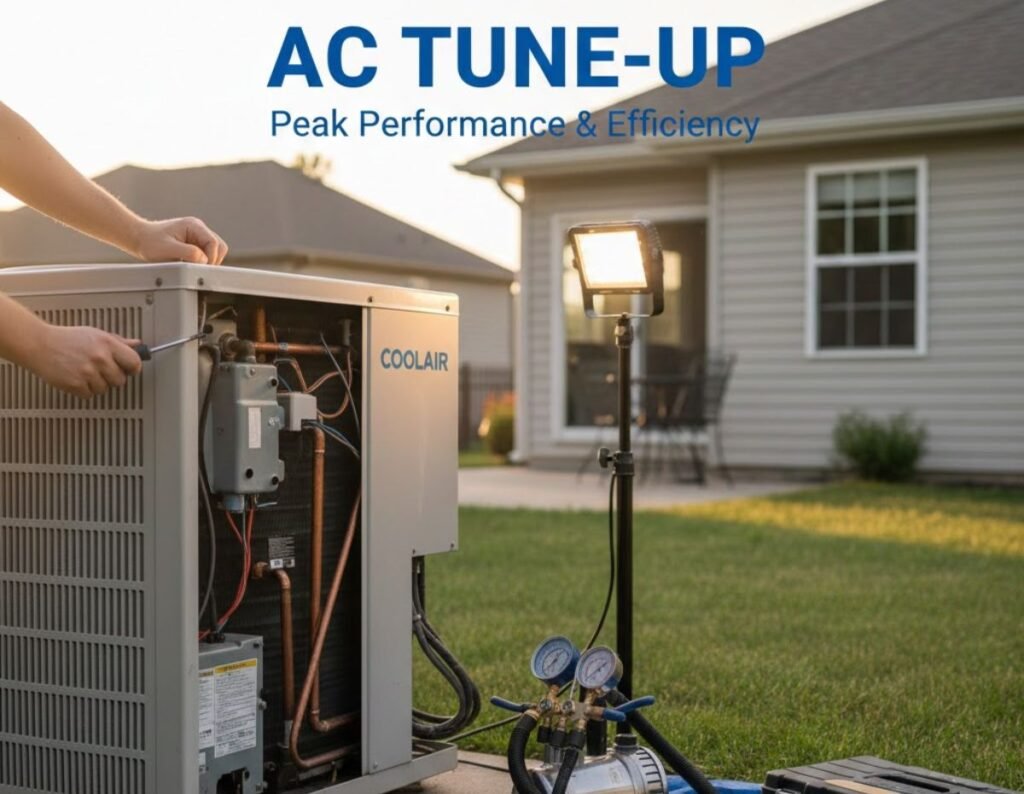
Have a professional come out once in the spring (before the cooling season) and once in the fall (before the heating season). They will check refrigerant levels, tighten electrical connections, and clean the parts you can’t reach. A well-maintained system lasts years longer than a neglected one.
Keep the Outdoor Area Clear
Treat your outdoor unit like a garden feature. Keep the mulch back. Don’t let weeds grow up inside the cage. Don’t stack firewood or storage bins against it. It needs clear air on all sides to work efficiently.
Listen to Your System
Get to know the “normal” sounds of your heat pump. If it starts making a new noise, don’t ignore it. Catching a small problem like a vibrating fan blade today can prevent a catastrophic motor failure next month.
READ MORE: Carrier Heat Pump Reviews (2026) — Models, Costs, Pros & Cons
Final Thoughts
Having a heat pump that runs but doesn’t cool is incredibly frustrating, especially when the humidity starts to climb. But remember: before you assume the worst, check the basics. A simple filter change or a thermostat adjustment solves a surprising number of these “emergencies.”
If the DIY steps don’t work, don’t be afraid to call a local HVAC pro. They have the tools to find leaks and electrical gremlins that the rest of us can’t see. Your comfort and your home’s safety are worth the call.
Stay cool, keep that filter clean, and enjoy your summer!
FAQ
Why is my heat pump running but not cooling?
Most often, this is caused by a lack of airflow (like a dirty filter), a thermostat set to “On” instead of “Auto,” or a dirty outdoor unit that can’t release heat. It could also be a sign of a refrigerant leak or a failing compressor.
Can a dirty air filter stop my heat pump from cooling?
Absolutely. A dirty filter blocks airflow, which prevents the system from removing heat from your home. This often leads to the indoor coils freezing over, which completely stops the cooling process even though the fan is still spinning.
Why is my heat pump blowing warm air in cooling mode?
If the air coming out is actually warm (not just room temperature), your reversing valve might be stuck in “heat” mode, or your refrigerant levels might be so low that the system is simply circulating warm air from your house without cooling it down.
How do I reset a heat pump that is not cooling?
First, turn the system off at the thermostat. Then, find your HVAC circuit breaker in the main electrical panel and flip it to “Off” for about 60 seconds before flipping it back “On.” Finally, set your thermostat back to “Cool” and wait about 5-10 minutes for the compressor to start up.
When should I call an HVAC technician for a heat pump that is not cooling?
You should call a pro if you’ve changed the filter and checked the thermostat but still have no cold air. You definitely need a pro if you hear loud noises, smell burning, see ice on the unit, or notice the outdoor fan isn’t spinning.
Pingback: AC Air Handler Replacement: Cost, Brands, and How to Choose - Plumbing Guider
Pingback: Outdoor Air Conditioner Unit Not Running? Causes, Fixes & When to Call a Pro - Plumbing Guider