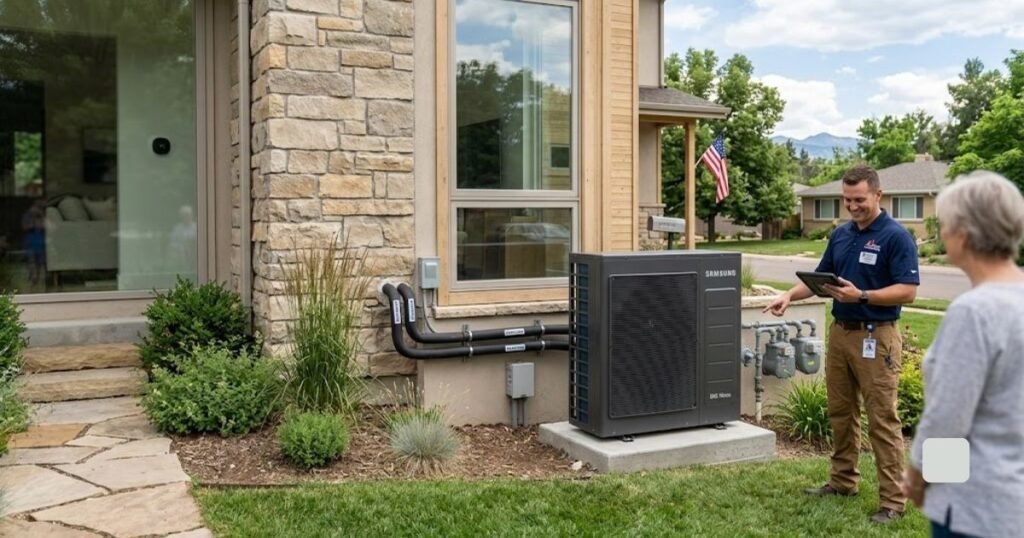
As energy bills continue to climb across the United States, homeowners are rapidly shifting away from old-school fossil fuel furnaces and standard air conditioners. Instead, they are turning to a single, highly sophisticated alternative: the electric air-source heat pump. While legacy HVAC brands have dominated American basements for decades, tech giant Samsung has emerged as one of the most disruptive and premium names in the smart climate space.
Samsung, a name most Americans associate with smartphones and televisions, has quietly built a serious residential HVAC business. Their heat pumps combine the brand’s well-known strengths in electronics and smart-home technology with purpose-built compressor engineering. The result is a lineup that competes directly with premium names like Mitsubishi, Carrier, and Daikin often at a lower entry price.
This guide covers everything you need to know: how Samsung heat pumps work, which models stand out, what you’ll realistically pay for installation, how the brand compares to alternatives, and who should (and shouldn’t) consider a Samsung system. Lets deep dive into “Samsung Heat Pump: Best Models, Reviews, Cost & Comparison”
At a Glance: Samsung Heat Pump Quick Summary
| Feature | Details |
| Best Overall Model | Samsung WindFree™ 3.0 |
| Best for Cold Climates | Samsung WindFree™ Max Heat® |
| Best for Whole-Home Heating | Samsung EHS ClimateHub |
| Best Multi-Zone System | Samsung Free Joint Multi |
| Single-Zone Installed Cost | $2,000–$6,000 |
| Multi-Zone Installed Cost | $6,500–$18,000+ |
| Efficiency Ratings | Up to SEER2 26 / HSPF2 12 |
| Smart Platform | Samsung SmartThings |
| Cold Climate Low | -22°F (Max Heat® model) |
| Federal Tax Credit (2026) | Expired Dec. 31, 2025 — state rebates available |
READ MORE: Carrier Heat Pump Reviews— Models, Costs, Pros & Cons
What Is a Samsung Heat Pump?
A heat pump doesn’t generate heat, it moves it. In winter, it extracts warmth from outside air and transfers it indoors. In summer, it reverses the process, pulling heat out of your home just like a traditional air conditioner. One system handles both jobs, which is a key reason heat pumps are replacing standalone furnaces and AC units across the country.
Samsung’s residential heat pumps are air-source systems, meaning they work with the outdoor air rather than ground loops or water systems. They use inverter compressor technology, which means the compressor speeds up or slows down continuously to match demand like a car’s gas pedal rather than an on/off switch. This modulation dramatically improves comfort and efficiency compared to older single-speed systems.
Samsung offers two main configurations:
1. Ductless mini-split systems
A compact outdoor unit connects to one or more sleek indoor air handlers via refrigerant lines drilled through the wall. No ductwork needed. These are ideal for homes without existing ducts, room additions, or targeted zone control.
2. Ducted (central) and hybrid systems
Samsung also offers systems designed to work with existing ductwork or as part of a hybrid setup alongside traditional heating sources.
Samsung’s distinguishing strength isn’t just hardware, it’s integration. Every residential system connects to the SmartThings ecosystem, Samsung’s smart-home platform, giving homeowners granular control over scheduling, energy use, and diagnostics from any smartphone.
Key Benefits of a Samsung Heat Pump
- Energy efficiency. Heat pumps deliver 2–4 units of heat for every unit of electricity consumed, far outperforming electric resistance heating and competitive with gas in most climates.
- Year-round comfort. A single system cools in summer and heats in winter, simplifying your HVAC setup and reducing maintenance points.
- Lower utility bills. Homeowners switching from electric baseboard heating can cut electricity consumption for heating by roughly 50%, according to the U.S. Department of Energy.
- Quiet operation. Samsung’s inverter systems run far quieter than older equipment, with some indoor units operating at near-whisper sound levels.
- Smart home compatibility. SmartThings integration allows scheduling, remote access, energy monitoring, and voice control via Bixby or compatible platforms.
READ MORE: Ultra Quietest Heat Pump for Your Home: Review, Comparison & Cost

Why Homeowners Choose Samsung Heat Pumps
Selecting an HVAC brand is a long-term commitment that impacts your daily comfort and home operating costs for over a decade. Homeowners routinely choose Samsung over entry-level brands due to several engineering features.
1. Energy Efficiency Standards: SEER2 and HSPF2 Explained
When shopping for a system, you will see two primary efficiency designations: SEER2 (Seasonal Energy Efficiency Ratio) for cooling performance, and HSPF2 (Heating Seasonal Performance Factor) for heating performance.
Samsung systems reach up to 21.0 SEER2 and 10.0 HSPF2. In plain terms, upgrading an old 10-SEER single-stage system to a premium Samsung inverter system can cut your heating and cooling power usage by up to 40% to 50%.
2. WindFree™ Comfort Technology
The single most common complaint about standard mini-splits is the “draft effect”—the feeling of cold air blowing directly onto your neck or back while sitting on the couch. Samsung addressed this by patenting their WindFree™ airflow technology.
When a WindFree™ unit approaches its target temperature, the main louvers close, and the system gently disperses conditioned air through thousands of laser-etched micro-holes across the chassis face. This creates an environment of “still air” that cools the room uniformly without direct, disruptive drafts.
3. SmartThings and AI Control Features
Every Samsung smart heat pump links seamlessly into the SmartThings app. This gives homeowners granular control that goes far beyond basic scheduling:
- Geofencing (Welcome Cooling): The system tracks your smartphone’s location. When you cross a designated boundary on your commute home, the system ramps up automatically so your space is comfortable the moment you walk through the door.
- AI Auto Mode: The onboard processor monitors indoor air conditions, outdoor temperatures, and your historical preferences to select the most efficient operating mode.
- SmartThings Energy: Provides live utility tracking, showing you exactly how many kilowatt-hours your HVAC system has consumed this week, alongside personalized tips to lower your carbon footprint.
4. Cold Climate Reliability
Historically, heat pumps struggled when outdoor temperatures dropped below freezing because there was less ambient heat to extract. Samsung’s specialized Max Heat® lineup overcomes this roadblock by utilizing flash-injection compressor technology. These units maintain 100% of their rated heating capacity down to 5°F and continue providing reliable warmth even when outdoor ambient temperatures plunge to a brutal –22°F.
READ MORE: Goodman Heat Pump Review | Efficiency, Cost, Pros & Cons
The 5 Best Samsung Heat Pumps (Detailed Reviews)
1. Samsung WindFree™ 3.0 — Best Overall
Overview: The WindFree™ 3.0 is Samsung’s flagship residential mini-split, and it’s the model most HVAC contractors will recommend for single-zone applications in moderate-to-mild climates. This is the third generation of Samsung’s signature ductless system, refined with better AI capabilities, a cleaner design, and improved self-cleaning functions.
Best For: Homeowners in mild-to-moderate climates who want the best combination of comfort, efficiency, smart features, and quiet operation.
Key Features:
- WindFree™ draft-free cooling mode
- AI Auto Mode for intelligent temperature management
- Motion Detection Sensor (MDS) — adjusts airflow based on occupancy
- Freeze Wash self-cleaning function (frosts and flushes the heat exchanger)
- Built-in Wi-Fi with SmartThings integration
- Bixby 2.0 voice control
- ENERGY STAR® certified
Pros:
- Best-in-class quiet operation in WindFree mode
- Genuinely useful AI comfort features
- Excellent app control and scheduling
- Self-cleaning reduces maintenance hassle
Cons:
- Not ideal for temperatures regularly below 10°F
- App setup has a short learning curve for non-tech-savvy users
- Requires certified Samsung installer for warranty
Estimated Installed Cost: $3,200–$6,500 for a single zone (12,000–24,000 BTU)
Verdict: If you want Samsung’s best technology without the cold-climate premium, the WindFree™ 3.0 is the model to get. It’s genuinely pleasant to live with.

2. Samsung WindFree™ Max Heat® — Best for Cold Climates
Overview: The Max Heat® is Samsung’s answer to homeowners in northern states who need a heat pump that performs when temperatures drop into the single digits or below zero. It pairs WindFree™ comfort technology with a compressor and refrigerant system engineered for extreme-cold operation.
Cold-Weather Performance: Maintains full heating output at 5°F and continues operating with high heating output at -22°F. A built-in base pan heater prevents ice accumulation, and the system can automatically switch to a secondary heat source during rare extreme-cold events.
Efficiency: Designed to balance maximum low-temperature output with reasonable efficiency it uses more energy in sub-zero conditions than at moderate temperatures, but far less than electric resistance backup heat.
Pros:
- Genuine cold-climate capability backed by specs
- Automatic emergency backup heat source integration
- SmartThings connectivity and AI features
- Works across a wide range of Samsung indoor unit types
Cons:
- Higher equipment cost than standard WindFree™ models
- Efficiency advantage over competitors narrows in extreme cold below -10°F
- Larger outdoor unit footprint
Best Homeowner Type: Homeowners in the Northeast, Midwest, or Mountain West who experience regular temperatures below 15°F and want to reduce or eliminate dependence on fossil fuel heating.
Estimated Installed Cost: $4,500–$8,500 for a single zone
READ MORE: Best Swimming Pool Heat Pump 2026: Review, Comparison, and Buying Tips

3. Samsung EHS ClimateHub — Best for Whole-Home Heating
Overview: The EHS ClimateHub is Samsung’s all-in-one heat pump system that goes beyond space conditioning. It combines a single outdoor unit with an indoor unit to support space heating, space cooling, and domestic hot water production simultaneously through both air and water in one integrated package. Showcased prominently at MCE 2026 in Milan, this system represents Samsung’s push into whole-home electrification.
Smart Controls: Fully integrated with SmartThings, enabling management of multiple functions hot water scheduling, heating zones, and cooling from a single app.
Whole-Home Use: Particularly well-suited for homes undergoing full HVAC replacement, hydronic (radiant floor) heating upgrades, or energy renovations. It can support water-based space heating alongside air conditioning and hot water, operating in multiple simultaneous modes.
Installation Considerations: More complex than a standard mini-split. Requires a qualified installer familiar with hydronic systems and Samsung’s EHS platform. Best for new construction or whole-home renovations.
Pros:
- Handles space heating, cooling, and hot water in one system
- Reduces equipment footprint versus separate systems
- Strong smart-home integration
- Suited for all-electric home conversions
Cons:
- Higher complexity and installation cost
- Limited pool of certified installers in some regions
- Less practical for simple room-by-room upgrades
Estimated Installed Cost: $12,000–$22,000+ depending on home size and system scope
4. Samsung Free Joint Multi (Multi-Zone System) — Best for Multi-Room Comfort
Overview: For homeowners who need heating and cooling in multiple rooms from a single outdoor unit, Samsung’s Free Joint Multi series supports 2–5 indoor units connected to one outdoor compressor. Each indoor zone is controlled independently, so family members can set their own temperatures without affecting the rest of the house.
Multi-Room Flexibility: Compatible with a range of indoor unit types wall-mounted, ceiling cassette, slim duct so different rooms can have different installation styles to suit the architecture.
Zoning Advantages: You only condition the rooms you’re using. Zoning can reduce energy consumption significantly versus a whole-house central system that heats every room equally, regardless of occupancy.
Comfort Benefits: Each zone has its own thermostat, schedule, and SmartThings integration.
Pros:
- Single outdoor unit reduces visual clutter and installation complexity versus multiple standalone systems
- Independent zone control per room
- Flexible indoor unit types
- Scalable from 2 to 5 zones
Cons:
- Total installed cost can be high for 4-5 zone setups
- If the outdoor unit fails, all zones are affected
- Requires careful sizing and load calculation
Estimated Installed Cost: $7,500–$18,000+ depending on zone count and indoor unit types
READ MORE: Best Bosch Heat Pump Air Conditioner: Review, Comparison & Buying Guide
5. Samsung WindFree™ Premium — Newest Generation Model
Overview: The WindFree™ Premium is Samsung’s most advanced current single-zone residential model, building on the WindFree™ 3.0 platform with enhanced Motion Detection Sensor capabilities and tighter SmartThings integration. It represents Samsung’s next-generation residential positioning for efficiency and comfort.
Efficiency Highlights: ENERGY STAR® certified with competitive SEER2 and HSPF2 ratings. The Motion Detection Sensor has two modes: Direct Wind (follows the user around the room for targeted comfort) and Indirect Wind (keeps the user comfortable without blowing air directly on them). When the sensor detects no occupants, the system automatically shifts into energy-saving mode.
Cold-Weather Suitability: Better than a standard mini-split but not rated to the same low-temperature extremes as the Max Heat®. Suitable for homes in climates where temperatures occasionally dip below freezing, but not the primary recommendation for consistently sub-zero winters.
Pros:
- Most sophisticated occupancy and comfort sensing in Samsung’s lineup
- Outstanding quiet operation
- Seamless SmartThings integration
- Genuine energy savings through smart occupancy response
Cons:
- Premium price point
- Cold-climate performance is solid but not class-leading
- Fewer certified installers than older WindFree models
Overall Homeowner Value: Excellent for tech-forward homeowners in moderate climates who want a “set it and forget it” system that actively manages comfort and energy use without manual adjustments.
Estimated Installed Cost: $3,800–$7,500 for a single zone
Samsung Heat Pump Model Comparison Table
| Model | Type | Best For | SEER2 Rating | Noise Level | Smart Features | Est. Installed Cost | Overall Rating |
| WindFree™ 3.0 | Ductless Mini-Split | Overall comfort & efficiency | Up to 26 | Very Quiet | Full SmartThings + AI | $3,200–$6,500 | ⭐⭐⭐⭐⭐ |
| Max Heat® | Cold-Climate Mini-Split | Northern climates | Competitive | Quiet | Full SmartThings | $4,500–$8,500 | ⭐⭐⭐⭐½ |
| EHS ClimateHub | Whole-Home Heat Pump | Full-home electrification | High | Moderate | Full SmartThings | $12,000–$22,000+ | ⭐⭐⭐⭐ |
| Free Joint Multi | Multi-Zone Mini-Split | Multi-room zoning | Varies by indoor unit | Quiet | Full SmartThings | $7,500–$18,000+ | ⭐⭐⭐⭐ |
| WindFree™ Premium | Advanced Mini-Split | Smart home integration | Competitive | Near-Silent | Full SmartThings + MDS | $3,800–$7,500 | ⭐⭐⭐⭐⭐ |
READ MORE: What Size Heat Pump Do I Need? Homeowner Sizing Guide
Samsung Heat Pump Installation Cost (USA)
Understanding the real cost of a Samsung heat pump system means separating equipment cost from labor and understanding what drives prices up or down.
Equipment Cost
A Samsung single-zone mini-split unit (equipment only, no installation) typically runs $1,300–$4,000 depending on BTU capacity and model tier. The Max Heat® and Premium models sit at the higher end. Multi-zone outdoor units cost more, and each additional indoor unit adds $500–$1,500 in equipment cost.
Labor Cost
Professional installation labor typically runs $1,000–$3,500 for a single-zone system, and more for complex multi-zone setups or installations requiring electrical upgrades. Labor includes refrigerant line set installation, wall penetrations, electrical wiring, vacuuming the system, charging refrigerant, and commissioning.
Total Installed Price
Based on national data:
- Single-zone system: $2,000–$6,500 installed
- Three-zone system: $7,500–$13,000 installed
- Five-zone system: $12,000–$18,000+ installed
These ranges reflect Samsung-branded systems at mid-to-upper price points compared to budget brands.
What Impacts Cost
- Home size and layout. Larger homes or unusual layouts require more BTU capacity, longer line sets, and more labor hours.
- Ductwork. Ductless systems avoid ductwork costs entirely. If you’re upgrading a central ducted system, your existing ductwork can often be reused, but modifications may add cost.
- Climate and system type. Cold-climate models like the Max Heat® cost more upfront. Homes in extremely cold regions may also need electrical service upgrades to support the system load.
- Electrical upgrades. If your home’s electrical panel doesn’t have capacity for a new dedicated circuit, a panel upgrade can add $1,000–$3,000 to the total project.
- Permits. Most jurisdictions require permits for mini-split installation. Budget $250–$400 for permit fees, which a qualified installer typically manages.
- Practical Example: A Connecticut homeowner replacing window AC units and electric baseboard heating in a 1,400 sq ft home with a 3-zone Free Joint Multi system might pay $9,500–$13,000 installed before incentives.
READ MORE: Best Cold Climate Heat Pump Review: Top Picks & Buying Guide
Real Homeowner Feedback & Common Complaints
To provide a fully transparent look at long-term ownership, we analyzed reviews, community forums, and HVAC installer feedback.
The Good: What Homeowners Love
- The Disappearance of Drafts: Users routinely praise the WindFree™ setting, particularly in nurseries and master bedrooms, noting they no longer wake up with a stiff neck from direct cold air streams.
- Noticeable Utility Drops: Homeowners transitioning from old propane or electric-resistance baseboard heat report immediate drops in monthly energy bills.
- Intuitive App Interface: Compared to typical clunky HVAC smart controls, the SmartThings app is highly polished, making it easy to track power consumption.
The Bad: Common Complaints & Frustrations
- The App Learning Curve for Non-Techies: Some users note that setting up automation routines within SmartThings can feel overly complex if you aren’t familiar with smart home concepts.
- Finding Certified Techs: Because Samsung entered the North American residential space more recently than legacy brands, finding an installer who is factory-certified can be tougher in smaller rural markets.
- Installation Sensitivity: Inverter systems use highly precise control boards. If a non-certified contractor fails to properly pull a vacuum on the lines or leaves moisture in the system, the electronic sensors can trigger error codes early on.
Samsung Heat Pump vs. Competitors
| Feature | Samsung | Mitsubishi (Hyper-Heating) | Carrier (Infinity) | Daikin (Fit) | Goodman |
| Primary Strength | Smart integration & draft prevention | Elite cold-weather legacy | Traditional ducted networks | Global scale & parts availability | Maximum budget value |
| Draft Management | Excellent (WindFree™) | Good | Standard | Standard | Basic |
| Smart Ecosystem | SmartThings Native | Kumo Cloud (Can be clunky) | Greenspeed / Infinity App | Daikin One | Basic Thermostats |
| Warranty | 10 Years (Registered) | 10-12 Years (Diamond Contractor) | 10 Years | 12 Years | 10 Years |
| Price Point | Premium Mid-Tier | Ultra-Premium | Premium | Premium Mid-Tier | Economy / Budget |
Maintenance Tips for Samsung Heat Pump
To keep your inverter system running at peak performance and protect your warranty coverage, follow these basic maintenance best practices.
- Clean Indoor Filters Monthly: Dust buildup forces the whisper-quiet fan motor to work harder, which spikes energy use and limits airflow. Slide the plastic filters out, rinse them under lukewarm water, let them dry completely, and reinstall.
- Keep the Outdoor Unit Clear: Check the outdoor compressor after heavy snowstorms or autumn leaf drops. Ensure there are at least 2 feet of clear space around the coils so the fan can pull air freely.
- Leverage the Freeze Wash Function: If your model includes the Freeze Wash feature, run it seasonally via the app. The system will frost the indoor coil, melt it quickly to wash away deep-seated dust, and dry itself automatically.
- Schedule a Professional Inspection: Have a licensed technician check your refrigerant pressures and line insulation every two years to verify there are no slow micro-leaks.
Rebates & Incentives for Heat Pump
The upfront cost of upgrading to a premium Samsung heat pump can be significantly offset by taking advantage of current energy tax incentives and local utility programs.
- Federal Tax Credits (Section 25C): Under the extended Inflation Reduction Act, USA homeowners can claim a federal tax credit of 30% of the total installation cost, up to a maximum of $2,000, for qualifying high-efficiency heat pumps.
- HOMES (Section 50121) Programs: Depending on your state’s rollout of the Home Energy Performance-Based, Whole-House Rebates, low-to-moderate-income families can qualify for up to $4,000 to $8,000 in direct installation discounts if the upgrade demonstrates significant household energy savings.
- Local Utility Credits: Many regional electric companies offer direct mail-in rebates ranging from $500 to $2,500 when you swap out fossil fuel or baseboard heating for an Energy Star® certified inverter heat pump.
Final Verdict: Is a Samsung Heat Pump Right for You?
Samsung has built a heat pump lineup that genuinely competes with the best in the business not as a budget alternative, but as a legitimate premium option with distinctive advantages in smart-home integration, comfort technology, and design.
Buy a Samsung if you’re in a moderate climate, prioritize smart-home connectivity, want exceptional quiet operation, or are interested in the whole-home EHS ClimateHub system. The WindFree™ 3.0 is one of the most livable mini-splits on the market, and for most American homeowners, it’s an excellent choice.
Consider alternatives if you’re in a climate that regularly sees temperatures below 0°F and maximum heating performance is non-negotiable — Mitsubishi’s Hyper-Heat still leads at the coldest extremes. Also consider alternatives if certified Samsung service is limited in your area, since installation and service quality are significant factors in long-term satisfaction.
Frequently Asked Questions (FAQ)
Are Samsung heat pumps reliable?
Yes. When installed correctly by a certified technician, Samsung inverter systems are highly reliable. They come backed by a robust 10-year warranty upon registration. Because they rely on advanced digital control boards rather than simple mechanical switches, proper installation quality is paramount to avoiding early communication errors.
How much does a Samsung heat pump cost installed?
For a single-zone ductless room addition, costs typically range from $3,500 to $6,200. A whole-home multi-zone ductless system or a full central ducted upgrade usually ranges between $6,000 and $15,500, depending on home size, electrical capacity, and installation complexity.
Is Samsung better than Mitsubishi for heat pumps?
It depends on what you value most. Mitsubishi is the industry standard for raw mechanical longevity in extreme climates. However, Samsung offers far superior smart home integration via SmartThings, better draft prevention with its WindFree™ micro-hole technology, and is generally more competitively priced.
Do Samsung heat pumps work in cold weather?
Yes. While standard heat pumps lose capacity in freezing weather, Samsung’s Max Heat® series is specifically engineered for cold climates. These units utilize flash-injection compressors to deliver 100% heating capacity at 5°F and continue providing reliable heat down to –22°F.
How long does a Samsung heat pump last?
A well-maintained Samsung inverter heat pump has an expected operational lifespan of 15 to 20 years. To maximize its lifespan, ensure the filters are cleaned monthly and the outdoor compressor is kept free of debris and snow.