It’s a cold January morning, and you walk downstairs expecting the house to be warm. Instead, the radiators are lukewarm at best, and when you check the boiler, the pressure gauge needle is sitting in the red well below where it should be. You top it up, and a few days later, you’re doing it again.
If this sounds familiar, you’re dealing with one of the most common heating complaints homeowners run into: a boiler that keeps losing pressure. The good news is that most causes are identifiable, and many are fixable without tearing the house apart. The less good news is that repeated pressure loss is your system’s way of telling you something is wrong, and ignoring it usually leads to a bigger repair bill down the road.
This guide walks through what boiler pressure actually is, why it drops, which fixes are safe for a homeowner to try, and when it’s time to stop troubleshooting and call a licensed HVAC technician. Lets deep dive into ‘Why Boiler Pressure Drops: Causes & Fixes”
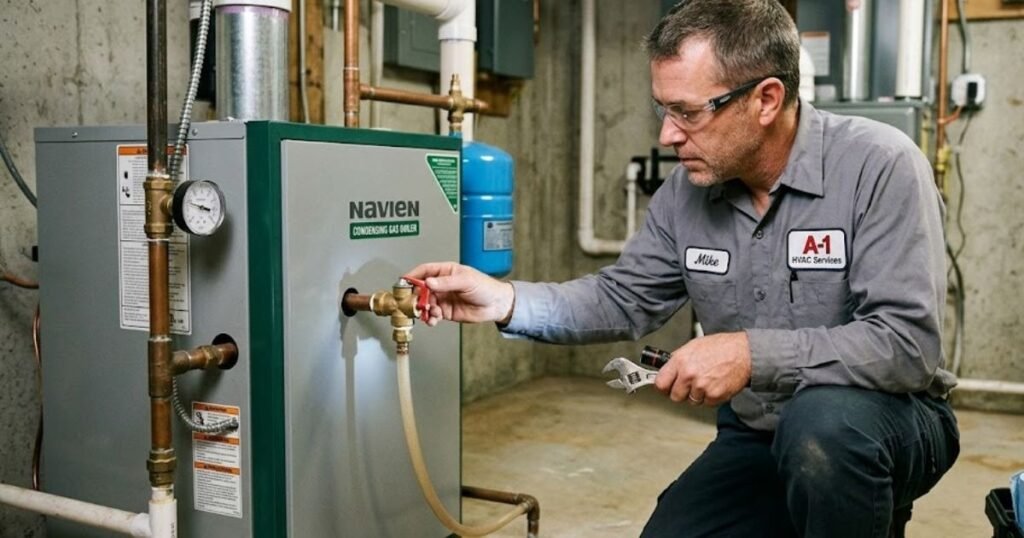
What Boiler Pressure Means
Most residential boilers used for central heating are sealed systems. Instead of being open to the atmosphere like an old-fashioned gravity-fed tank system, a sealed boiler circulates a fixed volume of water through a closed loop of pipes and radiators. That water needs to stay under a certain amount of pressure so it can circulate properly, push through the radiators, and rise to upper floors without air pockets forming.
That’s where the pressure gauge on the front of your boiler comes in. It’s usually a simple analog dial, sometimes with a colored zone (often green) marking the ideal range, with red zones on either side indicating “too low” and “too high.”
A few basics worth knowing:
- Normal cold pressure: Most residential sealed systems are designed to sit around 1–1.5 bar when the heating is off and the system is cold. Always check your specific boiler manufacturer’s manual, since acceptable ranges vary by model and by the height of your home’s radiators.
- Hot pressure runs higher: Once the system heats up, water expands and pressure naturally rises — often by 0.3–0.5 bar above the cold reading. This is expected and is managed by a component called the expansion vessel (more on that shortly).
- Circulation depends on pressure: If pressure drops too far, the circulator pump can struggle to move water efficiently, and the boiler’s safety controls may shut the system down entirely to prevent damage.
Think of the sealed system like a sealed water balloon threaded through your walls and radiators. As long as the “balloon” stays intact and properly pressurized, water moves where it needs to go. Once there’s a leak, an air pocket, or a failed component, that balance gets thrown off.
READ MORE: Weil‑McLain Boiler Reviews — Models, Costs, Pros & Cons
Signs Your Boiler Pressure Is Too Low
Low pressure rarely announces itself with a single dramatic symptom. It usually shows up as a pattern of small annoyances that get worse over time. Watch for:
- Radiators that stay cold or heat unevenly, especially upstairs or at the far end of the system
- Inconsistent or lukewarm hot water, particularly with combi boilers that rely on pressure for on-demand heating
- The boiler locking out or displaying an error code (often something like “low pressure,” “E10,” “F1,” or similar, depending on brand)
- A pressure gauge reading below the manufacturer’s recommended minimum, typically under 1 bar
- Gurgling, banging, or knocking noises from the pipes or radiators, often a sign of trapped air combined with low pressure
- A system that keeps needing to be refilled every few days or weeks
Any one of these on its own might be a one-off. Several happening together, or happening repeatedly, is a strong sign that something in the system needs attention.
READ MORE: Best Natural Gas Boilers for Home Heating: Review & Comparison
Why Boiler Pressure Drops
There isn’t one single reason boilers lose pressure there are several, ranging from simple and harmless to genuinely serious. Here’s a breakdown of the most common culprits.
1. Small Water Leak
The single most common cause of gradual pressure loss is a small leak somewhere in the system. These are often frustratingly hard to spot because they don’t always show up as a puddle on the floor. Common leak points include:
- Radiator valves that have loosened or developed worn seals over time
- Pipe joints, especially older soldered or compression fittings that have degraded
- Hidden leaks behind walls or under flooring, which may only show as a damp patch, discoloration, or a musty smell
- Under-floor pipework, particularly in homes with radiant floor heating loops
- Corrosion, which eats through metal fittings and pipe walls from the inside out, especially in older systems with high mineral content in the water
A leak doesn’t have to be dramatic to matter. Even a pinhole leak losing a few drops a day is enough to slowly drain pressure over a week or two.
2. Pressure Relief Valve (PRV) Problems
The pressure relief valve is a safety device designed to release water if system pressure climbs too high. Problems here include:
- A stuck valve that opens (or partially opens) when it shouldn’t, slowly bleeding off pressure
- A leaking discharge pipe, which is the small pipe that runs outside the home — if you see water dripping from it, the PRV is likely the culprit
- Worn seals inside the valve itself, which develop with age and repeated pressure cycles
3. Expansion Vessel Failure
The expansion vessel is a small tank inside (or attached to) the boiler that absorbs the extra volume created when water heats up and expands. Inside, a rubber diaphragm separates water from a cushion of pressurized air.
- Purpose: It prevents pressure spikes every time the heating fires up
- Failed diaphragm: If the diaphragm ruptures, the vessel can no longer do its job, and pressure swings become erratic
- Incorrect air charge: Even without a rupture, the air charge can leak out slowly over the years, reducing the vessel’s cushioning ability
- Symptoms: Pressure that spikes when the heating is on, then drops noticeably once it cools, is a classic expansion vessel red flag
4. Air Bleeding from Radiators
If you’ve recently bled air out of your radiators to fix cold spots, a small pressure drop afterward is completely expected. Releasing trapped air also releases a small amount of water, which naturally lowers system pressure. This is one of the most benign explanations on this list.
5. Recently Refilled System
If you (or a technician) topped up the system recently, don’t be surprised if the pressure settles slightly over the following day or two. Air can work its way out of the freshly added water, and the system needs a little time to stabilize. A small dip right after refilling isn’t automatically a red flag.
6. Faulty Filling Loop
The filling loop is the flexible hose used to top up system pressure from the mains water supply. If the valve doesn’t seal fully closed after use, water can slowly seep past it and in some cases pressure can even fluctuate in the opposite direction. A filling loop that isn’t shut properly is an easy, overlooked cause of “mystery” pressure changes.
7. Internal Boiler Component Leak
Sometimes the leak isn’t in the pipework at all it’s inside the boiler itself. Potential internal culprits include:
- The heat exchanger, especially in older units with corrosion or thermal stress cracking
- Internal valves that control water flow through the boiler
- Seals and gaskets that harden and crack with age and heat cycling
Internal leaks are trickier to diagnose because there’s often no visible puddle you may only notice a faint smell, staining inside the boiler casing, or a slow, unexplained pressure decline.
8. Automatic Air Vent Issues
Most boilers have an automatic air vent (AAV) that releases trapped air from the system without the homeowner needing to bleed anything manually. If this vent sticks open or the seal degrades, it can slowly weep water instead of just venting air, leading to gradual pressure loss.
9. Faulty Pressure Gauge
Occasionally, the problem isn’t the pressure at all it’s the gauge. A worn or miscalibrated gauge can show a false low reading even when actual system pressure is fine. This is less common but worth ruling out, especially if you’re topping up frequently but never see any physical signs of a leak.
10. System Age
Older boilers and heating systems are simply more prone to pressure issues. Years of heating and cooling cycles stress seals, fittings, and internal components. Corrosion accumulates gradually inside pipework, weakening joints from within. If your system is 10–15+ years old and pressure problems are becoming more frequent, age-related wear is a reasonable working theory.
READ MORE: Best 5 Navien Combi Boiler: Review, Comparison & Cost
Is It Normal for Boiler Pressure to Drop?
This is one of the most common questions homeowners ask, and the honest answer is: it depends on the pattern.
Generally normal:
- Slight seasonal changes in pressure between summer and winter
- A small dip after bleeding radiators
- Minor settling after a recent refill or service visit
Not normal:
- Needing to top up the system weekly
- Pressure dropping noticeably every single day
- Repeated boiler lockouts or shutdowns due to low pressure
If you find yourself topping up more than occasionally say, more than once every few months outside of a known cause like bleeding radiators that’s usually a sign of an underlying issue that should be investigated rather than repeatedly patched over.
Warning: Never assume frequent refilling is “just how the system is.” Repeated topping up can mask a worsening leak, introduce more mineral scale and oxygen into the system, and accelerate internal corrosion.
How to Diagnose Boiler Pressure Problems
Before calling a professional, a homeowner can do some basic detective work:
- Inspect the gauge. Note the current reading and compare it to the manufacturer’s recommended cold pressure (commonly 1–1.5 bar, but confirm with your manual).
- Inspect radiators. Look for damp patches, rust streaks, or drips around valves and joints.
- Check valves. Feel around bleed valves, lockshield valves, and thermostatic radiator valves (TRVs) for moisture.
- Inspect the discharge pipe. This small pipe usually exits outside near the boiler. Any dripping or staining suggests a PRV issue.
- Inspect the boiler itself. Open the front cover (if it’s designed to be user-accessible) and look for staining, water marks, or a damp base.
- Check visible piping. Walk the accessible pipe runs in the basement, utility closet, or crawlspace for corrosion or wet spots.
- Monitor overnight pressure changes. Note the reading before bed and again in the morning. A significant drop overnight (with the heating off) points toward a leak rather than normal expansion and contraction.
DIY Fixes Homeowners Can Safely Try
There’s a meaningful difference between tasks that are safe for a homeowner and repairs that involve pressurized gas components or sealed heat exchangers. Here’s what generally falls into the safe category:
- Topping up pressure using the filling loop, following your manufacturer’s instructions exactly, and closing the valve fully afterward
- Visually inspecting for leaks around radiators, valves, and visible pipework
- Bleeding radiators that have cold spots or trapped air, using a radiator key
- Tightening loose valve caps, where appropriate and without over-tightening
- Monitoring pressure over several days and recording readings to identify a pattern
- Recording error codes displayed on the boiler for reference when calling a technician
Safety Warning: Never attempt to open, dismantle, or repair the boiler’s internal components, gas connections, or combustion chamber yourself. Only top up pressure according to your manufacturer’s exact instructions, and never exceed the maximum pressure listed in your manual. If you smell gas at any point, leave the property and contact your gas utility or emergency services immediately do not attempt to diagnose the boiler yourself.
READ MORE: Combi Boiler Replacement Cost: Full USA Pricing Guide
Repairs That Require an HVAC Professional
Some fixes are simply outside the scope of homeowner DIY, both for safety reasons and because they require specialized tools and licensing. These include:
- Expansion vessel replacement or recharging, which involves draining the system and working with pressurized components
- Pressure relief valve replacement
- Heat exchanger repair or replacement
- Hidden pipe leaks behind walls, under floors, or in inaccessible areas
- Internal boiler leaks, which require disassembly and specialized diagnostic tools
- Any gas-related components, including gas valves and burners
- Combustion components, which affect both safety and carbon monoxide risk
A licensed HVAC or heating technician has the training, gauges, and diagnostic equipment to pinpoint these issues accurately and repair them to code.
Can You Keep Using a Boiler with Low Pressure?
Technically, a boiler might still run for a while at low pressure, but it’s not a good idea to let it continue. Running low on pressure can lead to:
- Reduced efficiency, since the system has to work harder to circulate water and heat the home
- Heating failure, particularly to radiators on upper floors or at the far end of the loop
- Component damage, as the pump and other parts weren’t designed to run outside their intended pressure range
- Lockout protection, where the boiler shuts itself down entirely as a built-in safety measure
- Energy waste, since an inefficient system burns more fuel for less heat output
In short: low pressure isn’t just an inconvenience, it’s a warning sign that, left unaddressed, tends to get more expensive over time.
READ MORE: Heat Pump vs. Furnace vs. Boiler: Cost & Efficiency Comparison
Boiler Pressure Troubleshooting Table
| Symptom | Possible Cause | DIY or Professional? |
| Pressure drops slightly after bleeding radiators | Air released during bleeding | DIY (top up pressure) |
| Pressure drops daily, no visible leak | Hidden pipe or internal leak | Professional |
| Discharge pipe dripping outside | Faulty pressure relief valve | Professional |
| Pressure spikes when heating is on, drops when off | Expansion vessel failure | Professional |
| Radiators cold at top, gurgling noises | Trapped air | DIY (bleed radiators) |
| Damp patch near a radiator valve | Small leak at valve or joint | Inspect yourself; repair by professional |
| Gauge reading seems inconsistent with system behavior | Faulty pressure gauge | Professional (diagnostic needed) |
| System needs topping up weekly | Underlying leak or component fault | Professional |
| Pressure won’t rise when using filling loop | Faulty filling loop valve | Professional |
| Boiler displays low-pressure error/lockout code | Multiple possible causes | Professional |
Boiler Pressure Maintenance Tips
- Schedule an annual inspection with a licensed HVAC technician, ideally before the heating season starts
- Monitor pressure monthly and keep a simple written or digital log
- Bleed radiators correctly, closing the valve as soon as water (not air) starts to escape
- Repair leaks immediately rather than repeatedly topping up pressure as a workaround
- Avoid frequent refilling without understanding the root cause
- Maintain proper inhibitor levels in the system water where applicable, since inhibitor helps prevent internal corrosion and scale buildup
- Keep your boiler’s manual and service records in an accessible place for quick reference
Common Boiler Pressure Myths
- “Low pressure always means I need a new boiler.” Not true — most pressure issues stem from a specific, repairable component like a valve, seal, or expansion vessel.
- “More pressure is always better.” Also false. Exceeding the manufacturer’s maximum pressure can trigger the pressure relief valve or stress system components.
- “Frequent topping up solves the problem.” Topping up treats the symptom, not the cause, and can accelerate corrosion by introducing fresh oxygen into the system repeatedly.
- “Every pressure drop is caused by a leak.” Trapped air, a faulty gauge, or a recent refill can all cause temporary or apparent drops without an actual leak.
READ MORE: Tankless Water Heater vs. Combi Boiler: Which Is Right for You?
Boiler Repair vs. Replacement
Deciding whether to repair or replace a boiler with recurring pressure issues depends on a few factors:
Consider repair when:
- The boiler is under 10 years old
- The issue is isolated to one component (like a PRV or expansion vessel)
- Repair costs are a small fraction of replacement cost
- The system has otherwise been reliable
Consider replacement when:
- The boiler is 15+ years old and increasingly unreliable
- Pressure issues are recurring alongside other failures (efficiency loss, frequent breakdowns)
- Repair costs are approaching a significant percentage of a new unit’s price
- A newer, more efficient model would meaningfully lower energy bills
Homeowner Safety Tips
- Never exceed the manufacturer’s maximum recommended pressure when topping up
- Don’t ignore repeated pressure loss, even if the boiler seems to keep working
- Know when to shut the system down — if you notice a strong smell, visible steam, or a rapidly dropping pressure gauge, turn off the boiler and contact a professional
- Understand carbon monoxide precautions: install a CO detector near sleeping areas, test it regularly, and never attempt to service combustion components yourself
- Schedule annual inspections to catch small issues before they become expensive repairs
Conclusion
A boiler that keeps losing pressure isn’t something to shrug off, but it also isn’t automatically a sign your heating system is on its last legs. Most of the time, the cause is identifiable and fixable a worn valve, a tired expansion vessel, or a small leak that a professional can track down with the right tools.
The key is paying attention to the pattern: an occasional dip is normal, but pressure that keeps falling week after week deserves a proper diagnosis rather than another top-up. Do the safe checks you can, keep an eye on that gauge, and don’t hesitate to bring in a qualified heating professional when the problem persists. Catching it early is almost always cheaper and a lot less stressful than waiting for a full breakdown in the middle of winter.
FAQs
Why does my boiler pressure keep dropping?
Frequent pressure loss is usually caused by a small leak somewhere in the system, a failing expansion vessel, or a faulty pressure relief valve. Trapped air and recent radiator bleeding can also cause temporary drops, but repeated loss over time typically points to a component issue that needs professional diagnosis.
Is it normal for boiler pressure to drop over time?
A very gradual, minor decline over several months can be normal in some systems, but regular weekly or daily drops are not. If you’re topping up more than occasionally, it’s worth having a technician investigate the cause.
Can I fix low boiler pressure myself?
You can safely top up pressure using the filling loop according to your manufacturer’s instructions and check for obvious visible leaks. However, repairs involving the expansion vessel, pressure relief valve, or internal boiler components should be left to a licensed HVAC professional.
How often should I need to refill boiler pressure?
Ideally, rarely perhaps a few times a year at most, often tied to routine maintenance like bleeding radiators. Needing to refill weekly or more frequently is a sign of an underlying leak or component fault.
Does low boiler pressure affect heating and hot water?
Yes. Low pressure can prevent radiators from heating evenly, cause inconsistent hot water (especially with combi boilers), and in more severe cases trigger a boiler lockout that stops heating and hot water altogether until pressure is restored.