Upgrading a residential heating system is one of the most significant investments a homeowner will make. As energy costs fluctuate and modern heating technology advances, old cast-iron boilers that waste up to 40% of their heat up the chimney are rapidly being retired. In their place, the modern high efficiency condensing boiler has become the primary choice for standard hydronic home heating.
However, transitioning to condensing technology is not as simple as swapping one appliance for another. Achieving true high-efficiency performance requires understanding critical factors beyond just the number printed on an ENERGY STAR label. Water return temperatures, proper equipment sizing, specialized venting materials, and installation craftsmanship all dictate whether a boiler lives up to its performance promise.
This comprehensive guide walks through everything you need to know about condensing technology, realistic U.S. installation costs, detailed reviews of five popular boiler models, and how to select the optimal setup for your property. Lets deep dive into “Best 5 High Efficiency Condensing Boiler: Review, Cost & Comparison”
READ MORE: Weil‑McLain Boiler Reviews— Models, Costs, Pros & Cons
What Is a High Efficiency Condensing Boiler?
A high efficiency condensing boiler is a modern hydronic heating appliance designed to extract maximum thermal energy from natural gas or liquid propane. In standard heating applications, a boiler burns fuel to heat water, which is then circulated through radiators, baseboards, or underfloor tubing.
The primary difference with a condensing boiler lies in how it handles exhaust gases. Traditional boilers must maintain very hot exhaust temperatures often between 300°F and 450°F to prevent moisture from condensing inside the flue, which would cause severe corrosion in standard metal chimneys. A high-efficiency condensing unit reverses this dynamic. It intentionally cools flue gases down to the point where water vapor within the combustion exhaust turns into liquid water (condensate).
Key Technical Concepts
- AFUE (Annual Fuel Utilization Efficiency): The standard measure of seasonal energy efficiency for boilers and furnaces. An AFUE of 95% means 95 cents of every fuel dollar spent goes directly into heating the home, while only 5 cents escapes up the flue.
- Secondary Heat Exchanger: Modern condensing units feature secondary heat exchangers (or single, dual-pass heat exchangers) typically constructed from corrosion-resistant 316L stainless steel or aluminum-silicon alloys. These materials safely withstand the acidic nature of boiler condensate.
- Return-Water Temperature: The temperature of the system water returning from the home’s heating loops back into the boiler. For a boiler to continuously operate in true “condensing mode,” this return-water temperature must stay below the dew point of the flue gas, typically around 130°F (54°C) for natural gas.
- ENERGY STAR Certification: According to current ENERGY STAR criteria updated in recent guidelines, gas-fired boilers must achieve an AFUE rating of 90% or higher to qualify for certification. The ENERGY STAR certified boiler database lists advanced residential models achieving up to 95%–98% AFUE.
How Does a Condensing Boiler Work?
Understanding the thermodynamic process inside a condensing boiler helps clarify why these systems save fuel. The process operates in a sequence designed to extract both sensible and latent heat.
- Fuel enters the burner: Natural gas or propane feeds into a variable-speed modulating burner, mixing precisely with outdoor combustion air.
- Combustion creates heat: The burner ignites the air-fuel mixture, generating intense primary heat within the combustion chamber.
- Primary heat transfer: The primary heat exchanger transfers immediate thermal energy (sensible heat) directly into the circulating heating water.
- Exhaust gases pass over secondary surfaces: Hot combustion exhaust is forced through a secondary heat-exchanger pathway (or the lower zone of a long single exchanger) rather than immediately exiting up a chimney.
- Cool return water chills flue gas: Cool system water returning from the home enters the coolest section of the heat exchanger, bringing the exhaust gas temperature down below its dew point (~130°F).
- Condensation occurs & latent heat is recovered: As water vapor inside the flue gas changes phase from a vapor to a liquid, it releases latent heat of vaporization. The heat exchanger absorbs this extra energy and transfers it into the heating system.
- Acidic condensate is drained: The acidic liquid runoff collects in a condensate collector pan at the base of the boiler and drains safely out of the unit through a dedicated drain line or neutralizer.
- Cool flue gas vents safely: Highly cooled exhaust gases (typically between 100°F and 130°F) are pushed out of the home through low-temperature plastic venting (PVC, CPVC, or polypropylene).
READ MORE: Best Natural Gas Boilers for Home Heating: Review & Comparison
Best 5 High Efficiency Condensing Boilers Review
When shopping for the best condensing boiler, homeowners will discover two primary configurations: heat-only boilers (which heat space hydronics and can hook to an indirect tank) and combination (combi) boilers (which handle space heating AND provide instant domestic hot water directly from a single wall unit).
Below are reviews of five widely discussed boiler models. Note: Always verify exact specs, local availability, and installation requirements with your HVAC contractor.
1. Rinnai i150SN Condensing Gas Boiler
The Rinnai i150SN is a dedicated heat-only wall-mounted gas condensing boiler designed primarily for residential space heating applications.
- Configuration & Fuel: Heat-only wall-mount design. Operates on Natural Gas with LP conversion capability.
- Input / Efficiency: Up to 150,000 BTU input. Delivers a 95% AFUE rating.
- Heat Exchanger: Durable 316L stainless-steel heat exchanger designed for optimal corrosion resistance against acidic condensate.
- Modulation & Controls: Features advanced self-modulating burner controls that adapt output to house demand.
- Venting: Direct-vent compatible using approved PVC, CPVC, or polypropylene piping.
- Warranty: Manufacturer residential warranties typically cover the heat exchanger for up to 12 years and parts for 5 years (check official registration terms).
- Pros:
- Dedicated heat-only design is less complex than combi systems.
- Reliable stainless-steel heat exchanger construction.
- Excellent option when pairing with an existing indirect hot water tank.
- Cons:
- Does not supply direct domestic hot water out of the box without a separate tank.
Verdict: An ideal choice for homeowners who already have a high-capacity indirect domestic hot water tank and want a robust, space-heating workhorse.

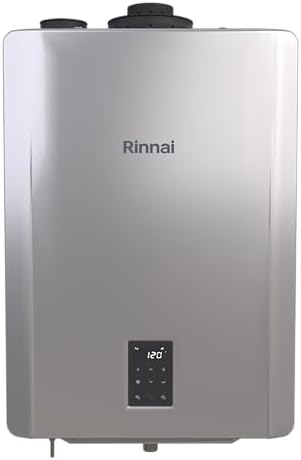
2. Rinnai IP150199C I-SERIES Plus Condensing Combi Boiler
The Rinnai IP150199C is an advanced indoor I-Series Plus combination boiler designed to satisfy space heating needs while providing instant domestic hot water.
- Configuration & Fuel: Combination (Combi) unit. Available in Natural Gas or Propane configurations.
- Input Capabilities: Up to 150,000 BTU input for hydronic space heating, and up to 199,000 BTU input dedicated to instant domestic hot water production.
- DHW Performance: Published maximum domestic hot water flow rates reach up to 9.8 GPM (depending on incoming cold water temperature rise).
- Modulation & Tech: Features proportional modulation, internal recirculation capability options, and ENERGY STAR certification.
- Warranty: Up to 12-year heat exchanger warranty, 5-year parts, 1-year labor upon professional installation and registration.
- Pros:
- High-capacity DHW output satisfies multiple simultaneous showers in standard homes.
- Compact space-saving design replaces both an old boiler and a traditional water heater.
- Modulating technology optimizes seasonal fuel usage.
- Cons:
- Combi design involves more internal valves, sensors, and water flow switches.
Verdict: Excellent for medium-to-large families looking to gain basement space by eliminating their standalone water heater without sacrificing shower performance.
3. Noritz CB199-DV-LP Indoor Direct Vent Combination Boiler
The Noritz CB199-DV-LP is a liquid propane-configured indoor direct-vent combination boiler built for dual hydronic heating and high-demand hot water.
- Configuration & Fuel: Combination unit; factory-configured for LP (Liquid Propane) applications (NG options/kits available across CB series).
- Heating & DHW Output: Provides up to 199,000 BTU total input, producing hot water flow rates published up to ~9.2–9.3 GPM under optimal temperature conditions.
- Heat Exchanger: Engineered with dual stainless-steel heat exchangers for maximum heat recovery and resistance to mineral buildup.
- Venting: Direct-venting system utilizing inexpensive 2-inch or 3-inch plastic venting lines.
- Warranty: Offers comprehensive heat exchanger coverage (note: warranty years may vary depending on whether continuous domestic recirculation loops are installed).
- Pros:
- High efficiency for homes utilizing propane fuel supplies.
- Compact wall-mount footprint with simple digital controls.
- Dual heat-exchanger design separates domestic water from boiler water cleanly.
- Cons:
- Propane setup requires careful gas line sizing and regulator setup.
Verdict: A standout pick for rural off-grid or propane-fueled homes that need a high-output combi system for space heating and continuous hot water.

4. Vaillant ecoTEC Intro VMW 18/24 kW AS/1-1 CNG Condensing Boiler
The Vaillant ecoTEC Intro is an extremely compact, European-engineered condensing combination boiler engineered for space-constrained residential dwellings.
- Configuration & Output: European combi specification yielding roughly 6.6 kW to 20.0 kW space heating output (along with higher domestic tap rating producing ~11.5 L/min flow).
- Heat Exchanger: High-grade stainless-steel condensing exchanger.
- U.S. Availability Notice: Crucial Note for U.S. Homeowners: Vaillant is a dominant market leader in Europe and international regions. However, this specific European model configuration uses metric connections and CE compliance standards. North American availability, AHRI listings, and local U.S. parts availability are severely limited compared to U.S.-certified brands.
- Pros:
- World-class engineering and extremely ultra-compact cabinet dimensions.
- Outstanding energy efficiency within European efficiency rating standards.
- Cons:
- Not generally certified, distributed, or supported by standard U.S. residential HVAC suppliers.
- Parts and qualified service technicians are difficult to find in North America.
Verdict: While Vaillant makes exceptional technology, U.S. homeowners should stick with North American-certified brands (such as Rinnai, Crown, Lochinvar, or Navien) to ensure local code compliance and quick parts availability.

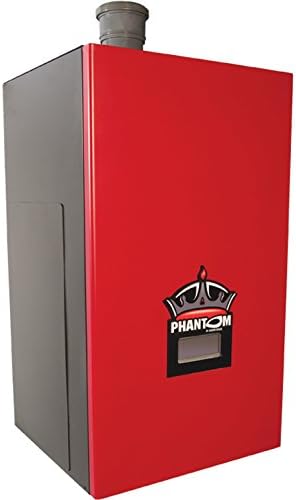
5. Crown Phantom 120K Nat Gas Hot Water Boiler
The Crown Phantom 120K (from Velocity Boiler Works / Crown) is a popular, American-supported high-efficiency wall-mount hydronic boiler.
- Configuration & Fuel: Dedicated hydronic heating boiler operating on Natural Gas (LP conversion kits available).
- Input & Efficiency: 120,000 BTU input capacity featuring an AFUE rating exceeding 95%.
- Heat Exchanger: Stainless-steel water-tube heat exchanger designed for low hydraulic head loss and reliable thermal transfer.
- Controls & Display: Features an advanced touchscreen boiler control system with built-in outdoor reset options and diagnostic logging.
- Warranty: 12-Year limited heat exchanger warranty and 1-year parts protection standard.
- Pros:
- Touchscreen control interface makes contractor setup and diagnostics straightforward.
- Highly respected brand with widespread North American wholesale distribution and parts availability.
- Low pressure drop through heat exchanger simplifies circulator pump selection.
- Cons:
- Requires an external indirect water heater if you want domestic hot water supply.
Verdict: A reliable, installer-friendly choice for mid-sized U.S. homes replacing an older hydronic system who want proven local service support.
READ MORE: Best 5 Navien Combi Boiler: Review, Comparison & Cost
Best 5 High Efficiency Condensing Boiler Comparison
The table below compares key manufacturer parameters for evaluating these systems.
| Feature | Rinnai i150SN | Rinnai IP150199C | Noritz CB199-DV-LP | Vaillant ecoTEC Intro | Crown Phantom 120K |
| Boiler Type | Heat-Only | Combi (Heat + DHW) | Combi (Heat + DHW) | Combi (Heat + DHW) | Heat-Only |
| Heating Input | 150,000 BTU | 150,000 BTU | ~120,000 BTU (Heat) | 6.6–20.0 kW (~68k BTU) | 120,000 BTU |
| Max Input (DHW) | N/A | 199,000 BTU | 199,000 BTU | ~24 kW (~81k BTU) | N/A |
| Primary Fuel | Natural Gas (LP kit) | Natural Gas / LP | Liquid Propane (LP) | Natural Gas | Natural Gas (LP kit) |
| AFUE Efficiency | 95% AFUE | 95% AFUE | 95% AFUE | ~92%+ (European) | 95%+ AFUE |
| DHW Flow Rate | N/A (Needs Tank) | Up to 9.8 GPM | Up to 9.2 GPM | ~11.5 Liters/min | N/A (Needs Tank) |
| Heat Exchanger | Stainless Steel | Stainless Steel | Dual Stainless Steel | Stainless Steel | Stainless Steel |
| Venting Material | PVC / CPVC / PP | PVC / CPVC / PP | PVC / CPVC / PP | Polypropylene | PVC / CPVC / PP |
| Mounting Style | Wall-Mounted | Wall-Mounted | Wall-Mounted | Wall-Mounted | Wall-Mounted |
| U.S. Availability | Widespread | Widespread | Widespread | Limited / Intl | Widespread |
| Best For… | Homes with storage tank | Large family homes | Propane off-grid homes | EU/Metric retrofits | Standard U.S. hydronics |
Condensing vs. Non-Condensing Boiler
| Feature | High Efficiency Condensing Boiler | Traditional Non-Condensing Boiler |
| Typical AFUE Efficiency | 90% to 98% AFUE | 80% to 84% AFUE |
| Heat Recovery Method | Extracts Sensible + Latent Heat | Extracts Sensible Heat Only |
| Exhaust Temperatures | Low (100°F – 130°F) | High (300°F – 450°F+) |
| Condensate Drain Required? | Yes (Requires continuous drainage) | No (Flue gases remain vaporized) |
| Venting Material | PVC, CPVC, Polypropylene, SS | B-Vent, Metal Chimney, Masonry Liner |
| Annual Operating Cost | Lower (15% – 30% fuel reduction) | Higher due to chimney heat loss |
| Upfront Equipment Cost | Higher initial equipment cost | Lower initial equipment cost |
| Maintenance Requirements | Annual (Cleaning traps, heat exchanger) | Standard (Basic burner/flue checks) |
| Best Applications | Radiant floor, modern low-temp loops | High-temp cast-iron baseboards/radiators |
READ MORE: Combi Boiler Installation Cost: USA Homeowner Pricing Guide
Benefits of a High Efficiency Condensing Boiler
Lower Fuel Consumption
Because a condensing gas boiler reclaims heat that traditional boilers blow into the atmosphere, it uses considerably less natural gas or propane per heating cycle. This reduction directly translates to fewer therms or gallons consumed throughout harsh winters.
Lower Heating Bills
Actual monetary savings vary based on several home performance factors:
- Local fuel prices and seasonal spikes
- Overall home insulation levels and air tightness
- Outdoor design temperatures in your geographic climate zone
- Boiler sizing accuracy and control configurations
- System water operating temperatures
While absolute dollar savings depend on these variables, upgrading from an old 70%–80% AFUE boiler to a 95%+ AFUE unit systematically lowers annual fuel consumption.
Better Modulation (Modulating Burners)
Unlike traditional “on/off” boilers that fire at 100% full capacity regardless of weather, modern condensing boilers feature turndown ratios (such as 5:1 or 10:1). A modulating boiler adjusts its heat output automatically. On a mild 45°F autumn day, the boiler may fire at just 15% to 20% capacity, matching the exact heat loss of the house. This prevents harsh temperature swings, reduces mechanical wear, and stops efficiency loss caused by short-cycling.
Compact Wall-Mounted Designs
Most residential condensing models feature compact, wall-hung cabinets. By freeing up basement or mechanical closet floor space, homeowners regain usable square footage.
Lower Exhaust Temperatures & Advanced Venting
Because exhaust temperatures are cool, these boilers do not require costly masonry chimneys or high-temperature metal B-venting. Instead, direct-vent piping (PVC, CPVC, or polypropylene) can run directly out through a side wall or roof penetration.
Environmental Benefits
Consuming less fuel lowers combustion emissions. A modern high efficiency boiler for home heating significantly reduces carbon dioxide (CO2) and nitrogen oxide (NOx) emissions produced by residential properties.
Are High Efficiency Condensing Boilers Worth It?
Investing in a condensing system makes clear financial and technical sense under specific home conditions, but it is not a universally effortless pay-off for every building structure.
Worth It If:
- You are replacing an outdated 70%–80% AFUE boiler that has reached the end of its lifespan.
- Your home is located in a cold climate zone with a long, intense heating season.
- Your heat distribution system operates at lower return-water temperatures (e.g., in-floor radiant tubing or oversized low-temperature hydronic baseboards).
- You plan to remain in the home long enough to recoup installation costs through lower monthly utility bills.
Less Attractive Payback If:
- Your heating load is exceptionally small, making fuel savings negligible relative to installation costs.
- Your current home setup requires massive, highly complex structural repiping and electrical modifications to accommodate low-temperature hydronics and direct venting.
- You live in an area with extremely mild winters where heating equipment rarely operates.
High Efficiency Condensing Boiler Installation Cost
Installing a high-efficiency boiler involves far more than simply replacing a box on the wall. Total installed prices vary significantly based on equipment brand, house size, piping complexity, venting retrofits, and local labor rates across the U.S.
On average, a complete residential condensing boiler installation cost in 2026 typically ranges between $6,500 and $14,000+, with complex premium installations reaching higher.
READ MORE: Tankless Water Heater vs. Combi Boiler: Which Is Right for You?
Installed Cost Factors Breakdown
| Cost Factor | Typical Cost Impact | Explanation |
| Boiler Equipment | $2,500 – $6,000 | Core boiler price, wall mounting bracket, and base controls. |
| Installation Labor | $2,000 – $5,000 | Highly skilled technician labor (16–30 total work hours). |
| Venting Modifications | $400 – $1,200 | Dedicated plastic intake/exhaust pipes replacing chimney vents. |
| Condensate Drainage | $150 – $400 | Condensate lines, neutralizer kit, and dedicated condensate pump. |
| Controls & Outdoor Reset | $250 – $750 | Outdoor temperature sensors, smart thermostats, and zone controllers. |
| Piping & Hydronic Work | $500 – $2,000 | Near-boiler piping, air separators, expansion tank, and primary/secondary loops. |
| Removal & Disposal | $200 – $600 | Draining, dismantling, and disposing of old heavy cast-iron boilers. |
| Permits & Inspection | $150 – $500 | Local municipal plumbing, gas line, and electrical permits. |
Note: Homeowners should always obtain at least three detailed quotes from licensed HVAC contractors who perform independent heat-loss calculations.
What Size Condensing Boiler Does a House Need?
One of the most common mistakes in residential heating is oversizing the boiler. Historically, contractors sized boilers based on rule-of-thumb square footage estimates or simply matched the oversized input of the old unit being removed.
Why Sizing Matters
- Oversizing Causes Short-Cycling: A boiler that is too large heats up water too quickly, shuts down, and restarts repeatedly. This degrades efficiency, stresses internal ignition parts, and causes uneven home temperatures.
- Undersizing Fails in Extreme Cold: A boiler that is too small cannot satisfy room heat loss during the coldest nights of the year.
The Manual J Heat Loss Calculation
A qualified HVAC professional will perform a formal Manual J heat-loss calculation (or equivalent hydronic load assessment). This calculation evaluates:
- Total exterior wall, window, and ceiling square footage
- Insulation R-values in walls, basements, and attics
- Local outdoor design temperatures (e.g., 0°F or -10°F depending on geography)
- Air infiltration and window quality
- Domestic hot water demand (for combination/combi boilers)
READ MORE: Heat Pump vs. Furnace vs. Boiler: Cost & Efficiency Comparison
Condensing Boiler AFUE Ratings Explained
Understanding AFUE ratings helps set realistic performance expectations. While a 97% AFUE boiler converts 97% of fuel into usable energy under testing conditions, achieving that efficiency in real life requires cool system water.
Key Technical Specs Defined
- AFUE: The seasonal efficiency percentage derived from standard laboratory test cycles.
- Input BTU: The maximum amount of gas fuel (in British Thermal Units per hour) consumed by the burner.
- Heating Capacity (Output BTU): The actual thermal energy delivered to the home’s water loop after combustion efficiency losses.
- Turndown Ratio: The ratio between maximum gas input and minimum gas input. A 100,000 BTU boiler with a 10:1 turndown ratio can throttle down to fire at just 10,000 BTU.
- DHW Flow Rate: For combi boilers, the volume of domestic hot water (gallons per minute, or GPM) the unit can heat instantly at a specified temperature rise.
Condensing Boiler Pros and Cons
Pros
- Substantial Energy Savings: Reclaims latent heat to reduce fuel bills by up to 15%–30% over old boilers.
- Environmentally Friendly: Significantly lower greenhouse gas emissions (CO2 and NOx).
- Flexible Wall-Hung Footprint: Reclaims floor space in basements and utility closets.
- Modulating Comfort: Eliminates severe indoor temperature swings through smart turndown burners.
- Direct Venting Options: No requirement for expensive masonry chimney rebuilds.
Cons
- Higher Upfront Investment: Standard equipment and labor costs are higher than standard 80% non-condensing units.
- Condensate Management Required: Must have a dedicated drain line and neutralizer to manage acidic runoff.
- Requires Proper Water Temps: Will NOT run in full condensing mode if return water temperatures remain above 130°F.
- Sensitive Controls: More printed circuit boards, sensors, and modulating gas valves mean annual service is essential.
Common High Efficiency Condensing Boiler Problems
When issues occur, modern boilers display specific error codes on their digital interfaces.
- Frozen/Blocked Condensate Pipe: In winter, uninsulated condensate drain lines running near exterior walls can freeze, backing up liquid and shutting down the boiler. Solution: Thaw pipe and wrap with insulation or heat cable.
- Short Cycling: The boiler turns on and off rapidly. Cause: Oversized equipment, improperly set outdoor reset curves, or stuck zone valves.
- Low System Water Pressure: Hydronic pressure drops below 10–12 PSI, triggering a low-water cutoff code. Cause: A leak in the home distribution loops or a failing expansion tank.
- Ignition / Flame Failure Error: The unit attempts to light but fails. Cause: Dirty flame sensor, clogged gas orifice, or improper intake air supply.
- No Domestic Hot Water (Combi Models): Heating works, but shower water stays cold. Cause: Scaled or mineral-clogged flat-plate heat exchanger or failed water flow turbine.
Warning: Gas valve adjustments, internal wiring, and combustion testing must strictly be performed by a qualified HVAC professional.
Condensing Boiler Venting Requirements
Unlike old heating systems that draft naturally up a warm brick chimney, condensing boilers use mechanical fans to blow cool exhaust gases sideways through walls or up through roof penetrations.
- Approved Plastic Piping: Schedule 40 PVC, CPVC, or polypropylene (such as Centrotherm InnoFlue) are required. Standard schedule 80 or foam-core PVC must never be used.
- Termination Clearance: Wall penetrations must maintain minimum clearances (typically 12 inches above expected snow lines and away from windows/doors) to prevent recirculating exhaust into the home.
- Slope Requirements: Vent pipes must slope backward toward the boiler at a pitch of at least 1/4 inch per foot so internal condensation drains back through the boiler’s trap rather than pooling in the pipe.
READ MORE: Best Bosch Boiler Review: Greenstar Models Rated
Condensing Boiler With Radiators vs. Baseboard vs. Radiant Floor
The performance of a high efficiency condensing boiler depends entirely on the delivery system inside the home.
Radiant Floor Heating (Best Match)
In-floor tubing requires supply water temperatures of just 100°F–110°F. The returning water comes back at ~90°F, allowing the boiler to run in peak condensing mode (95%–98% AFUE) 100% of the time.
Cast-Iron Radiators (Good Match)
Old cast-iron radiators were originally oversized for 180°F water. Because they have massive surface areas, homes can often be kept warm during moderate winter days with water temperatures under 130°F, allowing the condensing boiler to condense effectively.
Standard Copper Fin-Tube Baseboard (Requires Outdoor Reset)
Fin-tube baseboards were engineered for hot 180°F water. If the boiler must supply 180°F water, return water comes back at ~160°F—outside of condensing range. To solve this, contractors install an outdoor reset sensor that lowers system water temperatures automatically during milder weather.
Condensing Boiler vs. Heat Pump
With electrification expanding across North America, many homeowners compare a condensing boiler upgrade against installing an air-source heat pump.
| Feature | High Efficiency Condensing Boiler | Air-Source Heat Pump (Inverter) |
| Primary Fuel Source | Natural Gas or Propane | Electricity |
| Extreme Cold Performance | Uncompromised heat output at -20°F | Capacity/efficiency drops as temps plunge |
| Existing System Match | Direct drop-in for hydronic loops | Requires air ducts or wall cassette heads |
| Operating Cost | Economical in high-electric-rate regions | Economical in mild climates with cheap solar/power |
| Air Conditioning? | No (Heats water only) | Yes (Provides heating AND cooling) |
Best Practice: In freezing northern regions, many homeowners retain a high-efficiency hydronic boiler for extreme cold snaps while using heat pumps for shoulder-season heating and summer cooling.
How to Choose the Best High Efficiency Condensing Boiler
Use this practical checklist when reviewing proposals with your HVAC installer:
- [ ] Calculated Heat Loss: Has the installer performed a room-by-room load calculation?
- [ ] Turndown Ratio: Does the boiler feature a wide modulation range (e.g., 5:1 to 10:1)?
- [ ] Combi vs. Heat-Only: Do you need instant domestic hot water, or do you prefer an indirect storage tank?
- [ ] Heat Exchanger Alloy: Is the exchanger built from high-grade 316L stainless steel?
- [ ] Outdoor Reset Control: Is an outdoor temperature sensor included in the scope of work?
- [ ] Local Technical Support: Does the contractor stock common replacement parts for this specific brand locally?
- [ ] Piping Architecture: Is the contractor installing a proper primary/secondary piping loop to protect boiler flow rates?
Common Buying Mistakes to Avoid
- Buying an Oversized Boiler: Choosing a unit based on the old boiler’s rating rather than a current Manual J heat-loss calculation.
- Selecting Based Solely on Advertised AFUE: Ignoring water return temperatures and outdoor reset controls—without which a 96% AFUE boiler functions like an 86% unit.
- Ignoring Turndown Ratios: Choosing a unit with a weak 2:1 turndown ratio that short-cycles during mild autumn weather.
- Installing a Combi Boiler with High Simultaneous Water Needs: Expecting a single combi boiler to handle three high-flow showers simultaneously in cold northern regions.
- Hiring an Inexperienced Hydronic Installer: Allowing a standard warm-air duct installer with limited boiler experience to pipe a complex condensing system.
- Reusing Outdated Flue Venting: Trying to exhaust a condensing boiler into an old masonry chimney or standard B-vent pipe.
- Skipping a Condensate Neutralizer: Draining acidic condensate directly into cast-iron sewer pipes, which causes pipe corrosion over time.
- Comparing Equipment-Only Prices: Evaluating boiler cost online rather than comparing complete, installed proposals with warranties and labor included.
FAQs
What is a high efficiency condensing boiler?
A high-efficiency condensing boiler is a modern gas or propane heating unit designed to achieve 90%+ AFUE ratings. It works by routing combustion exhaust gases through specialized heat exchangers to condense water vapor out of the exhaust. This process captures latent heat that would otherwise be lost up a chimney, reducing fuel consumption and lower carbon emissions.
Is a high efficiency condensing boiler worth the money?
Yes, for most homeowners living in cold climates with moderate-to-high annual fuel bills. Upgrading an outdated 70%–80% AFUE boiler to a 95%+ AFUE condensing model can cut fuel consumption significantly. However, maximum energy savings are realized when the home’s heating distribution system allows cool water return temperatures (under 130°F).
What is the average lifespan of a condensing boiler?
With proper annual maintenance, a high-efficiency condensing boiler typically lasts between 15 to 20 years. Because these units contain complex electronic controls, modulating gas valves, and acidic condensate paths, regular annual service is required to maximize their operational lifespan.
How much does it cost to install a condensing boiler?
The total installed cost for a residential condensing boiler in the U.S. typically ranges from $6,500 to $14,000+. This price includes the boiler unit, labor, venting, near-boiler hydronic piping, condensate drainage, permits, and removal of the old heating system.
Can I use a condensing boiler with existing baseboard radiators?
Yes, but maximum condensing efficiency requires managing water temperatures. Standard copper fin-tube baseboards traditionally run at 180°F, which is above the condensing threshold. By installing an outdoor reset control, the boiler can run at lower, efficient temperatures during mild weather while ramping up heat only on extreme winter days.
Final Verdict
A high efficiency condensing boiler represents a major leap forward in modern hydronic home comfort. By capturing hidden latent heat trapped in exhaust vapor, these appliances convert up to 98% of fuel into comfortable home heat.
However, technology alone does not guarantee utility bill savings. Achieving peak operational efficiency requires proper sizing through a heat-loss calculation, modern low-temperature control strategies, correct plastic venting, and a properly executed primary/secondary piping loop.


Pingback: Power Vent Water Heater | How It Works, Cost, Pros & Cons - Plumbing Guider
Pingback: Boiler Leaking Water: Causes, Fixes, Costs & When to Call a Pro - Plumbing Guider