When summer rolls around and the heat index starts climbing into the triple digits, your outdoor AC unit becomes the unsung hero of your home. Most homeowners spend a lot of time thinking about the inside of their house the décor, the furniture, the smart devices but the unit sitting outside quietly doing all the heavy lifting? That often gets overlooked until something goes wrong.
If you’re a homeowner in the US looking to replace an aging unit, install a new system, or just figure out which outdoor air conditioner is worth your hard-earned money, you’re in the right place. This guide breaks down everything you need to know from what to look for before you buy to honest reviews of the 5 best outdoor AC units currently available in the American market. Lets deep dive into ‘Best Outdoor Air Conditioner Unit: Top 5 Picks for USA Homeowners in 2026″
READ MORE: Carrier Heat Pump Reviews— Models, Costs, Pros & Cons
What Is an Outdoor AC Unit and Why Does It Matter?
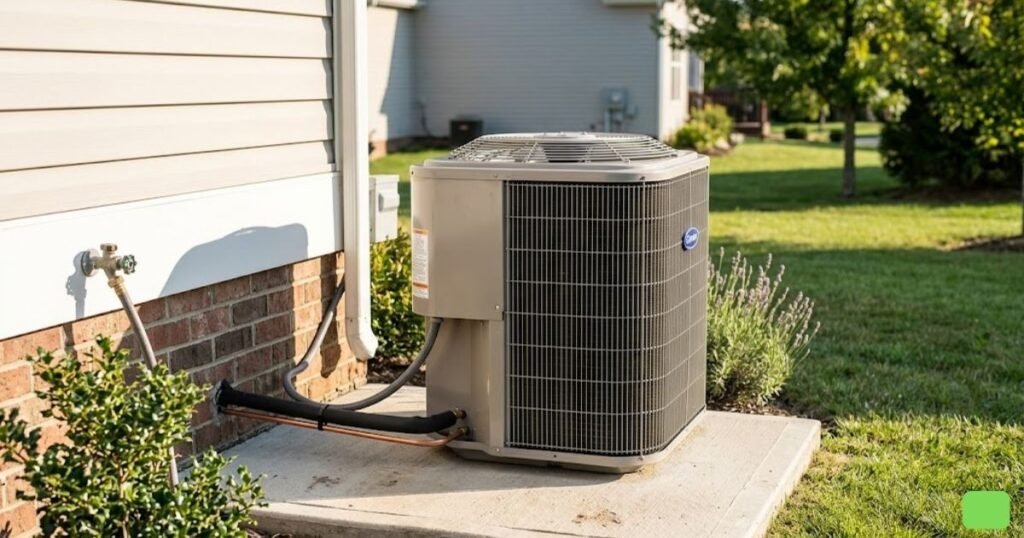
Before we dive into product recommendations, let’s clear something up. The “outdoor AC unit” also called the condenser unit is the big box sitting outside your home. It works in tandem with the indoor air handler or evaporator coil to cool your home. It’s responsible for:
- Releasing the heat absorbed from inside your home
- Housing the compressor, which is the heart of your entire cooling system
- Running the condenser coil and fan
- Regulating refrigerant flow
A poor-quality outdoor unit means inefficient cooling, sky-high electric bills, and frequent breakdowns. A good one? It runs quietly, lasts 15–20 years, and keeps your home comfortable without you ever having to think about it.
What to Look for Before Buying an Outdoor AC Unit
Shopping for an outdoor AC unit isn’t quite like buying a TV or a new fridge. There are technical specs that actually matter for your comfort and your wallet. Here’s what every USA homeowner should consider:
1. SEER2 Rating (Efficiency)
SEER2 (Seasonal Energy Efficiency Ratio 2) is the new federal standard as of January 2023. The higher the SEER2 rating, the more efficient the unit. In the southern US, the minimum requirement is 14.3 SEER2. Look for anything 16 SEER2 and above for real savings on your energy bill.
2. Tonnage (Cooling Capacity)
Tonnage refers to how much heat a unit can remove per hour. As a rough guide:
- 1.5 tons → up to 900 sq ft
- 2 tons → up to 1,200 sq ft
- 3 tons → up to 1,800 sq ft
- 4 tons → up to 2,400 sq ft
- 5 tons → up to 3,000 sq ft
Get a Manual J load calculation done by an HVAC pro before buying — don’t just guess based on square footage.
3. Single-Stage vs. Two-Stage vs. Variable-Speed Compressor
- Single-stage: Runs at 100% or off. Cheaper upfront, less efficient.
- Two-stage: Runs at low (around 70%) or high. More efficient, better humidity control.
- Variable-speed: Adjusts output continuously. Most efficient, quietest, best for comfort — but costs more.
4. Noise Levels
Most outdoor units run between 68–75 decibels. If you have neighbors nearby or a bedroom window facing the unit, look for models rated under 70 dB. Some premium units go as low as 55–58 dB.
5. Warranty
A good outdoor AC unit should come with at least:
- 10-year compressor warranty
- 10-year parts warranty
- 5-year labor warranty (from the dealer/installer)
Always register your unit after installation to activate the full warranty.
6. Climate Compatibility
If you live in a humid climate (Florida, Louisiana, Texas Gulf Coast), you need a unit with strong dehumidification. If you’re in the desert Southwest (Arizona, Nevada), look for units rated to operate in high ambient temperatures (up to 125°F).
7. Smart/Connected Features
Many modern units pair with smart thermostats (Nest, Ecobee) or have their own proprietary apps. If remote monitoring and energy tracking matter to you, this is worth checking.
READ MORE: Best 3.5 Ton AC Unit Available in 2026: Reviews, Comparison & Buying Guide
Top 5 Best Outdoor Air Conditioner Units Available in the USA
1. Carrier Infinity 26 Air Conditioner (Model: 24VNA6)
Best Overall | SEER2: Up to 26 | Variable-Speed
Carrier has been in the HVAC game since Willis Carrier invented modern air conditioning in 1902, and the Infinity 26 is the crown jewel of their residential lineup. This is as good as residential outdoor AC gets in the USA right now.
Key Specs:
- SEER2: Up to 26 (one of the highest available)
- Compressor: Greenspeed Intelligence (variable-speed)
- Noise Level: As low as 51 dB
- Available Sizes: 2–5 tons
- Refrigerant: R-410A
- Warranty: 10-year parts, limited lifetime compressor (when registered)
Review:
The Carrier Infinity 26 is built for homeowners who want the absolute best in energy efficiency and comfort. The Greenspeed compressor doesn’t just flip between two speeds it adjusts in tiny increments, which means your home maintains a remarkably steady temperature without the “blast on, blast off” cycle you get with cheaper units.
The noise level is genuinely impressive. At 51 dB, it’s quieter than a normal conversation. Neighbors won’t complain. You won’t even notice it from inside.
One thing to keep in mind: this unit works best when paired with Carrier’s Infinity system components (thermostat, air handler). You’ll get the most out of it as part of a full Carrier Infinity system. If you’re mixing brands, some of the smart features won’t function.
Pros:
- Exceptionally high efficiency — real savings on monthly bills
- Ultra-quiet operation
- Incredible temperature precision with variable speed
- Strong brand reputation and nationwide dealer network
- Outstanding warranty coverage
Cons:
- One of the most expensive units on the market
- Works best as part of a full Infinity system
- Professional installation is required (not a DIY unit)
Ideal For: Homeowners in the South or Southeast US who run their AC heavily for 8–10 months a year and want to recover the upfront cost through energy savings.
2. Lennox XC21 Air Conditioner
Best for Quiet Operation | SEER2: Up to 21.2 | Variable-Speed
Lennox has long been known for pushing the efficiency envelope, and the XC21 delivers exceptional performance at a slightly more accessible price point than the top-tier units.
Key Specs:
- SEER2: Up to 21.2
- Compressor: Variable-speed scroll compressor
- Noise Level: As low as 59 dB
- Available Sizes: 1.5–5 tons
- Refrigerant: R-410A
- Warranty: 10-year parts and compressor (registered)
Review:
The Lennox XC21 is a smart pick for homeowners who want variable-speed performance without going all-in on the Carrier Infinity system. It operates remarkably quietly and pairs seamlessly with the Lennox iComfort smart thermostat for app-based control and energy monitoring.
The XC21 does particularly well in humid climates because the variable-speed compressor allows longer, slower run cycles which pulls more moisture out of the air compared to single-stage units that blast on and off.
Installation matters here. Lennox has strict dealer requirements, so make sure you’re working with a Lennox-certified installer to get the full warranty.
Pros:
- Very high efficiency — significant monthly savings
- Excellent humidity control
- Low sound levels — good for noise-sensitive households
- Pairs well with iComfort smart thermostat
- Solid build quality with quality components
Cons:
- Must be installed by a Lennox dealer for full warranty
- Slightly higher cost than mid-range units
- Parts can be harder to source than brands like Trane or Carrier
Ideal For: Homeowners in humid climates like the Gulf Coast, the Carolinas, or the Mid-Atlantic looking for efficient, quiet, and humidity-conscious cooling.
READ MORE: Ultra Quietest Heat Pump for Your Home: Review, Comparison & Cost
3. Trane XR15 Air Conditioner
Best Value for Performance | SEER2: Up to 15.6 | Single-Stage
Trane is famous in the HVAC world for one reason: reliability. The saying “nothing stops a Trane” isn’t just marketing it’s backed up by decades of consistent performance. The XR15 hits the sweet spot between efficiency, durability, and price.
Key Specs:
- SEER2: Up to 15.6
- Compressor: Single-stage Climatuff compressor
- Noise Level: Around 72 dB
- Available Sizes: 1.5–5 tons
- Refrigerant: R-410A
- Warranty: 10-year limited parts, 10-year compressor (registered)
Review:
If you want a unit that’s going to run reliably for 15–20 years without drama, the Trane XR15 deserves serious consideration. Trane builds their own compressors in-house (the Climatuff), which means tighter quality control than brands that outsource this critical component.
It’s not the flashiest unit no variable speed, no ultra-low sound levels but it does its job consistently well. The 10-year warranty on parts and the compressor means you’re covered if anything goes wrong.
The XR15 is also one of the most widely serviced units in the country. If you live somewhere rural or semi-rural where specialized HVAC service might be hard to find, choosing a Trane means any competent technician can work on it.
Pros:
- Exceptional reliability and build quality
- In-house compressor manufacturing for better quality control
- Widely available service and parts across the entire USA
- Solid 10-year warranty
- Reasonable price for the reliability offered
Cons:
- Single-stage operation is less efficient than two-stage or variable-speed
- Louder than variable-speed alternatives
- Less advanced features compared to premium competitors
- Not ideal for high-humidity climates where longer run cycles help
Ideal For: Budget-conscious homeowners who prioritize long-term reliability over cutting-edge efficiency features, especially those in moderate climates or rural areas.
4. Goodman GSXM403610 (3-Ton, 16 SEER2)
Best Budget-Friendly Option | SEER2: 16 | Single-Stage
Goodman has earned a reputation as the go-to brand for homeowners who need solid, dependable cooling without breaking the bank. Owned by Daikin (a global HVAC giant), Goodman units are manufactured in the USA and come with surprisingly competitive warranties.
Key Specs:
- SEER2: 16
- Compressor: Single-stage scroll compressor
- Noise Level: Around 74 dB
- Available Sizes: 1.5–5 tons
- Refrigerant: R-410A
- Warranty: 10-year unit replacement warranty + 10-year parts (registered)
Review:
What makes Goodman stand out in the budget category is the warranty. Most budget brands offer a 5-year parts warranty and hope you don’t ask questions. Goodman offers a 10-year unit replacement warranty and a 10-year parts warranty which is remarkable at this price point.
The GSXM series meets the new federal SEER2 minimum requirements for the South (14.3) and exceeds them comfortably. You’re not getting variable-speed operation or super-quiet performance, but you’re getting honest, reliable cooling that will last a decade or more with proper maintenance.
This is a particularly good choice for rental property owners or homeowners who need to replace a failed unit quickly without spending a fortune.
Pros:
- Lowest price point of any recommended unit here
- Exceptional warranty for the price
- Manufactured in the USA (Houston, TX)
- Widely available through HVAC distributors
- Easy to find parts and technicians
Cons:
- Louder than premium alternatives
- No variable-speed or two-stage compressor option in this model line
- Less energy efficient than premium models (higher long-term utility costs)
- Fewer smart features
Ideal For: Budget-conscious homeowners, rental property owners, or anyone who needs a reliable, no-frills replacement unit at a fair price.
5. Daikin DX20VC Heat Pump / Air Conditioner
Best for Heat + Cool Combo | SEER2: Up to 23.9 | Variable-Speed
Daikin is the world’s largest HVAC manufacturer, and while they haven’t always had the American brand recognition of Carrier or Trane, their technology is top-shelf. The DX20VC is a variable-speed unit that doubles as a heat pump, making it a standout choice for homeowners in moderate climates who want year-round efficiency.
Key Specs:
- SEER2: Up to 23.9
- Compressor: Variable-speed inverter-driven scroll compressor
- Noise Level: As low as 58 dB
- Available Sizes: 2–5 tons
- Refrigerant: R-32 or R-410A (varies by model)
- Warranty: 12-year parts, 12-year compressor (registered — one of the longest available)
Review:
The DX20VC is a compelling choice for two key reasons. First, the 12-year warranty is the longest of any unit on this list and one of the longest in the industry that’s a major selling point. Second, if you live in a climate where winters are mild (the Mid-Atlantic, the Pacific Northwest, the Gulf States), the heat pump functionality means you might be able to skip a gas furnace entirely, saving on both equipment and monthly heating costs.
Daikin’s inverter technology is mature and proven; they’ve been refining it in commercial and residential applications globally for decades. The DX20VC runs quietly and maintains temperature precisely. It pairs with Daikin’s One+ smart thermostat for full system monitoring.
Pros:
- Outstanding 12-year warranty (best on this list)
- Very high SEER2 — excellent long-term savings
- Heat pump functionality for year-round use
- Quiet variable-speed operation
- Excellent build quality backed by global manufacturing expertise
Cons:
- Daikin’s US dealer network is smaller than Carrier or Trane
- Heat pump function is less effective in extreme cold (below 30°F)
- Higher upfront cost
- May require a Daikin-certified technician for warranty service
Ideal For: Homeowners in mild-to-moderate climates (Southeast, Pacific Northwest, Mid-Atlantic) who want a dual-purpose heating and cooling system with exceptional efficiency and the best warranty available.
READ MORE: Air Conditioner Replacement Cost 2026: What USA Homeowners Should Expect
Outdoor Air Conditioner Comparison Table: (carrier vs goodman vs trane vs lennox vs daikin)
| Feature | Carrier Infinity 26 | Lennox XC21 | Trane XR15 | Goodman GSXM | Daikin DX20VC |
| SEER2 Rating | Up to 26 | Up to 21.2 | Up to 15.6 | 16 | Up to 23.9 |
| Compressor Type | Variable-speed | Variable-speed | Single-stage | Single-stage | Variable-speed |
| Noise Level | 51 dB | 59 dB | 72 dB | 74 dB | 58 dB |
| Heat Pump Option | No | No | No | No | Yes |
| Warranty (Parts) | 10 years | 10 years | 10 years | 10 years | 12 years |
| Warranty (Compressor) | Lifetime* | 10 years | 10 years | 10 years | 12 years |
| Smart Thermostat Integration | Infinity System | iComfort | ComfortLink II | Daikin One+ capable | Daikin One+ |
| Best For | Maximum efficiency | Humid climates | Reliability | Budget buyers | Mild climates |
| Price Range (installed) | $4,500–$8,500 | $3,800–$7,000 | $2,800–$5,500 | $2,000–$4,000 | $4,000–$7,500 |
| US Dealer Network | Excellent | Good | Excellent | Excellent | Moderate |
Carrier lifetime compressor warranty requires registration within 90 days of installation.
READ MORE: Best Small Room 8000 BTU Portable Air Conditioner Units (Comparison & Reviews)
Efficiency vs. Upfront Cost: Which is Right for You?
Here’s a practical way to think about which unit fits your situation:
Choose the Carrier Infinity 26 if:
- You live in a hot climate and run your AC 8+ months a year
- You plan to stay in your home long-term and want to recoup the cost through energy savings
- Noise is a concern — you have a bedroom near the unit or close neighbors
Choose the Lennox XC21 if:
- Humidity control is a priority (Florida, the Gulf Coast, the Carolinas)
- You want variable-speed performance at a slightly lower price than Carrier
- You’re already invested in or open to the Lennox ecosystem
Choose the Trane XR15 if:
- Reliability and simplicity are your top priorities
- You live in a moderate climate where extreme efficiency isn’t critical
- You want a unit any HVAC tech in the country can service
Choose the Goodman GSXM if:
- Budget is the primary concern
- You need a quick, cost-effective replacement for a failed unit
- You own rental property or investment real estate
Choose the Daikin DX20VC if:
- You want heating AND cooling in one system
- You live in a mild climate where a heat pump is effective year-round
- Warranty length is important to you — 12 years is hard to beat
READ MORE: Central Heat Pump Installation Cost: Homeowner Price Guide
How to Get the Most Out of Your Outdoor AC Unit
Buying the right unit is only half the battle. Here’s how to protect your investment:
- Change your air filter monthly during heavy use seasons. A clogged filter makes your outdoor unit work harder.
- Keep the area around the unit clear. Trim back plants and clear debris. Leave at least 18–24 inches of clearance on all sides.
- Schedule annual professional maintenance. Have an HVAC tech clean the condenser coils, check refrigerant levels, and inspect electrical connections every spring.
- Install a programmable or smart thermostat. Pair it with your unit to reduce runtime when you’re away.
- Register your unit immediately after installation to activate the full manufacturer warranty.
- Don’t run the AC when outdoor temps drop below 60°F. Most standard AC units aren’t designed to operate efficiently below that — use your heat pump or furnace instead.
FAQs (Real Google Search Questions Answered)
What is the best outdoor AC unit for a 2,000 square foot house?
For a 2,000 sq ft home, you’ll typically need a 3-ton outdoor AC unit. However, square footage alone doesn’t determine the right size — your home’s insulation quality, ceiling height, window size, local climate, and sun exposure all matter. A proper Manual J load calculation by a licensed HVAC professional is the best way to know for sure.
How long does an outdoor AC unit last?
A well-maintained outdoor AC unit lasts 15 to 20 years on average. Some units, especially those from Carrier, Trane, and Lennox can push past 20 years with proper annual maintenance.
Is it worth buying a high-SEER outdoor AC unit?
Yes if you live in a hot climate and use your air conditioner heavily, a high-SEER unit can pay for itself in energy savings over 5–10 years. Here’s a quick example: upgrading from a 10 SEER unit to a 20 SEER unit cuts your cooling energy use roughly in half.
What size outdoor AC unit do I need?
Under 800 sq ft → 1.5 tons
800–1,200 sq ft → 2 tons
1,200–1,800 sq ft → 2.5–3 tons
1,800–2,500 sq ft → 3.5–4 tons
2,500–3,200 sq ft → 4–5 tons
How much does it cost to replace an outdoor AC unit in the USA?
the average cost to replace an outdoor AC unit in the United States ranges from $2,000 to $8,500 or more, including equipment and installation.
Final Thoughts: Which Outdoor AC Unit Should You Buy?
There’s no one-size-fits-all answer when it comes to outdoor air conditioners. But here’s the simple version:
- If money isn’t the first concern and you want the best, go with the Carrier Infinity 26.
- If you need a reliable workhorse that any tech can fix anywhere in the country, Trane XR15 is your pick.
- If you’re watching your budget, Goodman GSXM gives you genuine value and a surprisingly good warranty.
- If humidity is your enemy, Lennox XC21 handles it better than most.
- If you want one system for both heating and cooling with a rock-solid 12-year warranty, Daikin DX20VC is the move.
Whatever you choose, make sure it’s professionally installed by a licensed HVAC contractor, properly sized for your home, and registered with the manufacturer right away. A great unit installed wrong performs like a bad unit and a great unit not registered loses its warranty protection.
Stay cool out there.
Disclaimer: Prices listed are estimates based on national averages for mid-2026 and can vary depending on your location, installation complexity, and local labor rates. Always get at least 2–3 quotes from licensed HVAC contractors before purchasing. Product specifications are subject to change; verify current specs with the manufacturer.